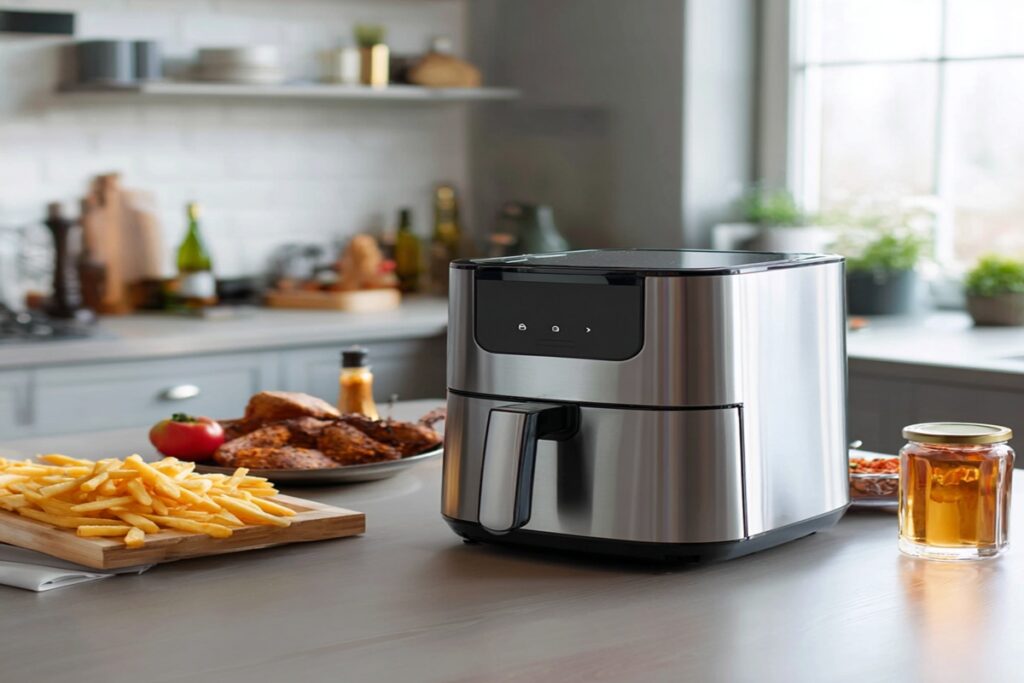
Are air fryers safe? I started asking the same question about two years ago — not because I read an article about it, but because I actually smelled something coming out of ours during the first few uses. It wasn’t a burning smell exactly. More like heated plastic mixed with something chemical. My wife noticed it too, and our older son asked if we should open a window.
That smell sent me down a research rabbit hole that I’m still in today. I drive a bus for a living, so I have a lot of time between routes to read. I went through manufacturer specs, material safety documents, and a lot of consumer reports. Here’s what I actually found about air fryer safety — and what matters most when choosing one for your family.
If you want to skip straight to safer options, check out: Best PFAS-Free Air Fryers for 2026
Are Air Fryers Safe to Use?
The short answer is yes — air fryers are generally safe when used correctly. They work like compact convection ovens, circulating hot air around food at high speed. The cooking method itself isn’t the problem.
The concerns come from something else entirely: the materials used inside the appliance, specifically the coatings on the basket or cooking chamber.
I used our first air fryer for almost a year before I started questioning what it was made of. Once the basket coating started showing wear marks, that’s when I got serious about researching what was actually in it.
Why Some People Question Air Fryer Safety
The main concern isn’t the air fryer itself — it’s the nonstick coating that lines most baskets. Many air fryers use PTFE-based coatings, which is the same material used in Teflon pans. Some of these coatings contain or were manufactured using PFAS chemicals.
The issues most people run into:
- Coatings that scratch or chip over time, especially with metal utensils
- Chemical off-gassing at very high temperatures (above 500°F)
- Uncertainty about whether “PFOA-free” also means fully PFAS-free
- No clear labeling on many budget models
Modern coatings are generally stable at normal cooking temperatures. But if you’re using your air fryer daily at high heat — which most families do — it’s worth understanding what’s inside.
For a deeper look: Do Air Fryers Contain PFAS?
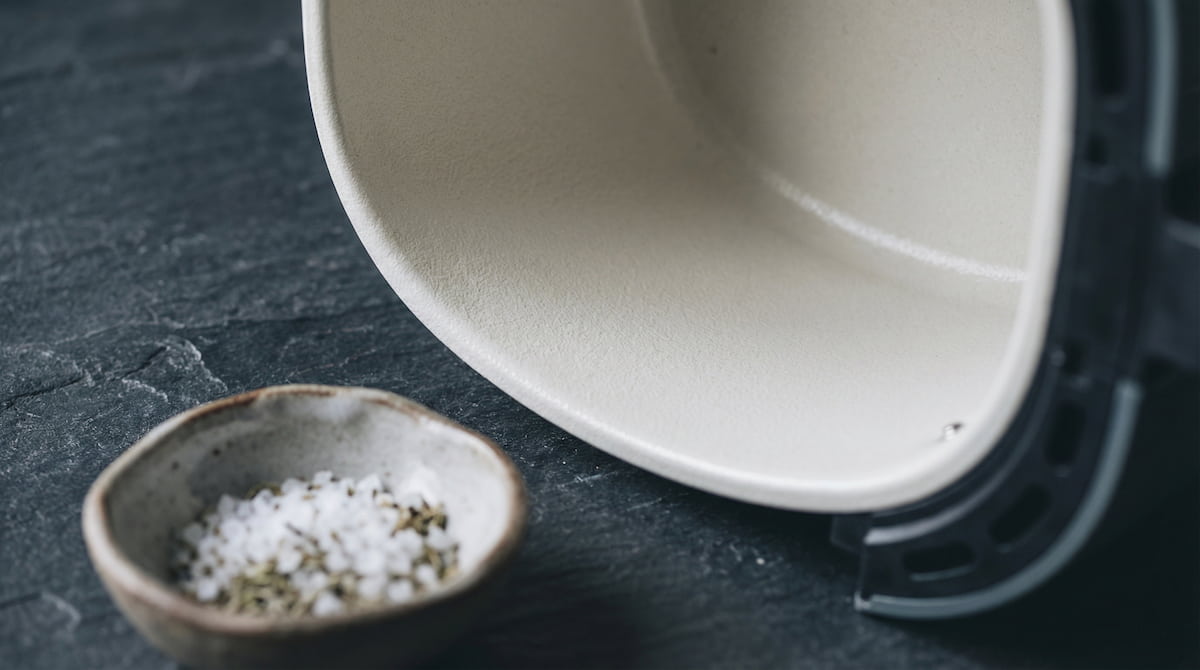
Do Air Fryers Release Harmful Chemicals?
Under normal cooking conditions — temperatures between 300°F and 400°F — air fryers do not release harmful chemicals in significant amounts. This is true for most modern models with intact coatings.
Problems are more likely to happen when:
- The nonstick coating is scratched, chipped, or visibly worn
- Temperatures exceed the coating’s safe range repeatedly
- The appliance is used without cleaning, causing residue buildup
- A low-quality coating was used to begin with
That last point is what pushed me toward ceramic and stainless steel options. Not because I panicked, but because I wanted a cleaner baseline — especially cooking for my kids.
Safer Air Fryer Materials
Once I started looking at materials seriously, I found three options that most safety-conscious cooks tend to gravitate toward:
- Ceramic coatings — Generally PFAS-free, easy to clean, and widely available. The coating can still chip if you’re rough with it, but it doesn’t carry the same concerns as PTFE.
- Stainless steel interiors — No coating at all. More durable long-term and a better choice if you cook at high heat frequently.
- Glass bowls — Fully transparent, no coatings, and easy to inspect. Less common, but a legitimate option for anyone who wants full visibility.
For a full comparison: Ceramic vs Stainless Steel Air Fryer
Our Current Setup and What I Recommend
After going through a couple of air fryers and doing more research than I expected to, we landed on two options depending on what we’re cooking.
For quick everyday cooking — frozen food, reheating, small portions — a ceramic basket model works well. The Ninja AF150AMZ has a ceramic-coated basket that’s held up well and doesn’t give off any smell even at higher temperatures.
For bigger meals or when my wife is batch cooking for the week, we use a stainless steel oven-style model. The Instant Pot Omni Plus has a stainless interior — no coating to worry about — and handles larger portions well.
How to Use an Air Fryer Safely
Even with a safer material, how you use and maintain your air fryer matters. Here’s what I actually do at home:
Check the Basket Before Every Use
Takes about five seconds. If the coating looks scratched, chipped, or is flaking — stop using it. A replacement basket is a lot cheaper than a new appliance and much better than cooking off a degraded surface.
Stay Within the Recommended Temperature Range
Most air fryers are rated for up to 400°F. Going higher than the manufacturer’s recommended range repeatedly puts unnecessary stress on coatings. Stick to what the manual says.
Clean It After Every Use
Burnt residue on the basket or heating element creates smoke and odors — and over time it degrades the surface faster. A quick wash after cooking keeps everything in better shape longer.
Ventilate While Cooking
This is what we do at home — run the range hood or crack a window. It’s not because our current air fryer is releasing anything harmful, it’s just good kitchen hygiene regardless of what you’re cooking.
Frequently Asked Questions
Are air fryers safe for everyday use?
Yes, for most households air fryers are safe for daily cooking. The key is maintaining the appliance properly and choosing one with materials you’re comfortable with — ceramic or stainless steel if you want to avoid nonstick coatings entirely.
Do air fryers release toxic fumes?
Not under normal cooking conditions. PTFE-based coatings can off-gas at very high temperatures (above 500°F), but standard air frying temperatures stay well below that. If your basket is damaged or heavily worn, that changes the equation.
Are air fryers healthier than deep frying?
From a fat and calorie standpoint, yes — air fryers use a fraction of the oil. Whether that makes them “healthy” overall depends more on what you’re cooking than how you’re cooking it.
What should I do if my air fryer smells like chemicals?
A chemical smell on first use is sometimes normal — it can be manufacturing residue burning off. Run it empty at 400°F for 10 minutes before cooking with it. If the smell continues after the first few uses, or returns after months of use, that’s worth paying attention to. It’s what made me start researching this in the first place.
Which air fryer material is safest?
Stainless steel interiors and high-quality ceramic coatings are the most commonly recommended options. See our full breakdown: Safest Air Fryer Materials Guide
Is it safe to use a scratched air fryer basket?
It depends on the coating. A mildly scratched stainless steel surface is fine. A scratched nonstick basket is worth replacing — especially if the coating is visibly flaking or peeling into food.
Looking for the safest air fryer options available right now?
→ See the Complete PFAS-Free Air Fryer Guide for 2026
Affiliate Disclosure: This post contains affiliate links. If you purchase through our links, we may earn a small commission at no extra cost to you. We only recommend products we’ve genuinely researched and believe are worth considering.