Disclosure: This post contains affiliate links. If you purchase through them, I earn a small commission at no extra cost to you. I only recommend products I personally trust for my family.
Air fryer burning food on low heat is one of those problems that makes you question whether the unit is malfunctioning or whether you’re doing something wrong. I’m Wook, a bus driver and dad who cooks for my family almost every night. When our air fryer started burning the outside of chicken while leaving the inside undercooked — even at temperatures I’d used successfully dozens of times — I worked through every possible cause until I found the real problem.
Here’s the complete breakdown of why air fryers burn food even on low heat settings, and exactly how to fix each cause.
Why Is My Air Fryer Burning Food on Low Heat? 7 Causes
1. Temperature Sensor Failure (Most Serious)
If the temperature sensor malfunctions, the unit may run significantly hotter than the displayed setting — burning food at temperatures that should be safe. This is the most serious cause because it’s not user error and can’t be fixed with technique changes. If food burns consistently across different recipes and settings, test the actual internal temperature with an oven thermometer. A unit running 50°F+ hotter than displayed needs to be replaced.
2. Overcrowding the Basket
This is the most common user-side cause. When the basket is too full, hot air can’t circulate properly. Instead of flowing evenly around all the food, it concentrates in the gaps between pieces — creating hot spots that burn some areas while leaving others undercooked. The fix is simple: cook in smaller batches with a single layer and space between pieces.
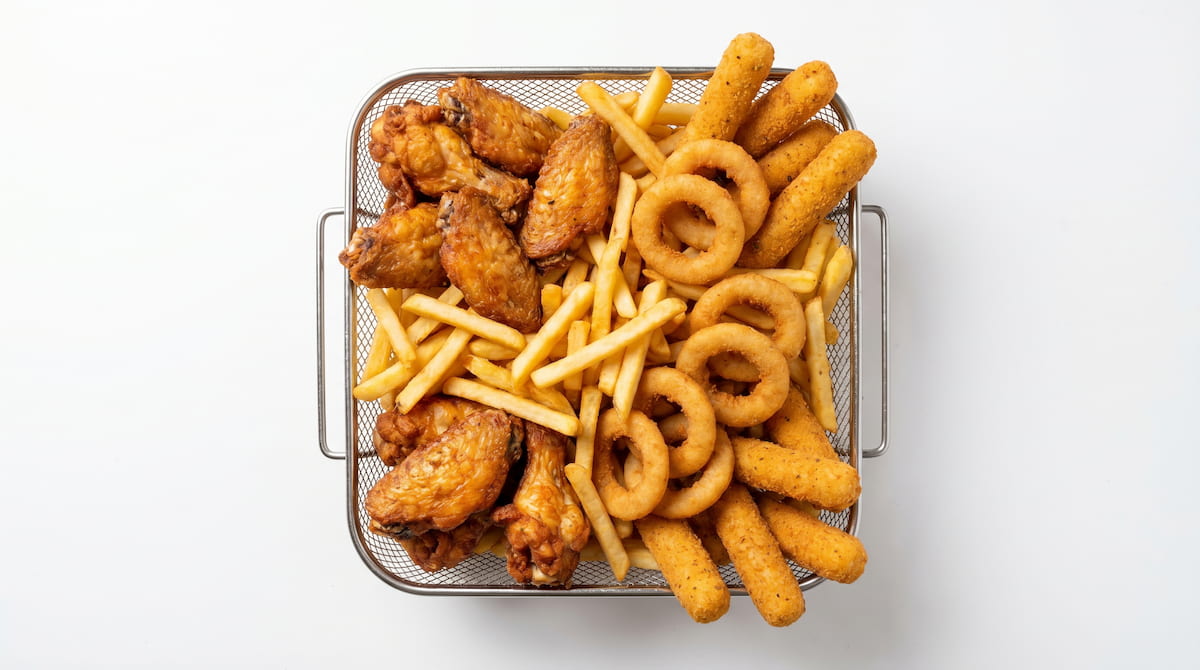
An overcrowded basket is the most common reason air fryers burn food — airflow needs space to work properly.
3. Grease Buildup on the Heating Element
Accumulated grease on the heating element burns during cooking and creates additional heat beyond the set temperature. This extra radiant heat from burning grease can scorch food even when the thermostat is set low. Regular heating element cleaning — every 2–4 weeks with daily use — prevents this heat amplification effect.
4. Food Too Close to the Heating Element
Some foods — particularly those that rise or expand during cooking like bread, muffins, or stuffed items — can come into direct contact with the heating element above the basket. Direct contact with the element will burn food instantly regardless of the temperature setting. Always leave at least 2 inches of clearance between the top of food and the heating element.
5. Using Oil on a High-Sugar Marinade or Coating
Sugar burns at relatively low temperatures — around 320°F. Foods with sugary marinades, glazes, or coatings will burn on the outside before the inside cooks through, even at low air fryer settings. For sugary foods, reduce the temperature by 25°F, shorten cook time, and check more frequently. Add glazes in the final 2–3 minutes rather than at the start.
6. Preheating With Food Already Inside
Preheating with food in the basket exposes food to the hottest temperatures the unit reaches — typically higher than the set cooking temperature during the initial ramp-up phase. Always preheat empty, then add food once the unit has reached the set temperature.
7. Thin or Small Food Pieces
Thin cuts of meat, small vegetables, or finely sliced foods cook much faster than standard pieces. A recipe designed for full chicken thighs will burn thin-sliced chicken breast at the same settings. For thin or small pieces, reduce temperature by 15–25°F and check 5 minutes earlier than the recipe suggests.
Burning Food Diagnosis Guide
| Burning Pattern | Likely Cause | Fix |
|---|---|---|
| Burns on every recipe, every setting | Temperature sensor failure | Test with thermometer, replace if off |
| Burns outside, raw inside | Overcrowding or sugary coating | Single layer, reduce temp for glazed food |
| Burning smell without visual burning | Grease on heating element | Clean heating element thoroughly |
| Top of food burns, bottom fine | Food too close to element | Use smaller portions, more space above |
| Burns only at start of cook | Food added before preheating done | Always preheat empty first |
| Thin cuts burn, thick cuts fine | Food size mismatch with recipe | Reduce temp and time for thin pieces |
How to Test If Your Air Fryer Temperature Is Accurate
Place an oven-safe thermometer inside the basket, set the unit to 350°F, and run for 5 minutes after the preheat cycle completes. The thermometer reading should be within 10–15°F of the set temperature. A reading 30°F+ higher than set confirms a faulty temperature sensor.
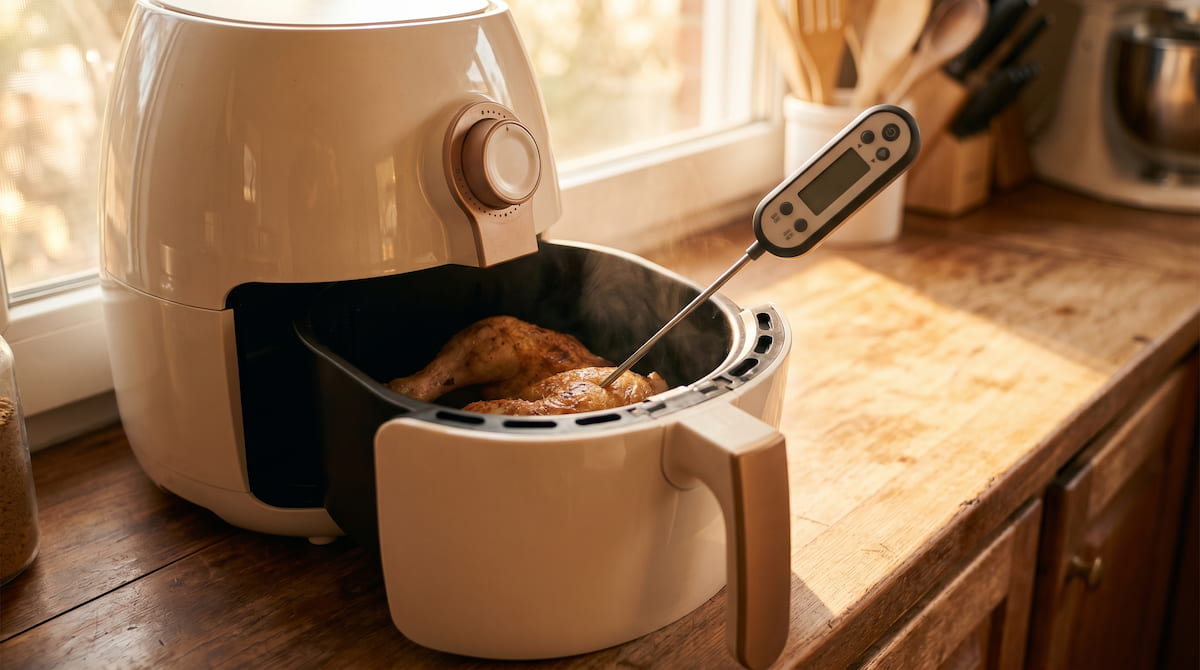
Testing actual temperature with a kitchen thermometer reveals whether a faulty sensor is the cause of burning food.
Does Burning Food Signal a Safety Problem?
Usually not — most burning food issues are technique-related rather than safety-related. The exception is a malfunctioning temperature sensor, which does create a safety concern: a unit that runs significantly hotter than displayed also puts more stress on the basket coating, potentially accelerating PFAS release in units with traditional nonstick surfaces.
If your air fryer is overheating alongside burning food, that combination warrants immediate attention: Air Fryer Overheating: Is It Dangerous and What Should You Do?
For oil-free cooking techniques that reduce burning risk on lean proteins and vegetables: How to Cook Without Oil in an Air Fryer (and Keep It Non-Toxic)
Bottom Line
An air fryer burning food on low heat is almost always caused by one of seven things — and six of them are fixable with technique adjustments alone. Cook in single layers, preheat empty, keep food away from the element, and adjust temperature for thin cuts and sugary coatings. The one cause that requires action beyond technique is a faulty temperature sensor — test it with an oven thermometer, and if the unit is running significantly hotter than displayed, replace it before it damages food quality and accelerates coating breakdown.