Disclosure: This post contains affiliate links. If you purchase through them, I earn a small commission at no extra cost to you. I only recommend products I personally trust for my family.
Air fryer overheating is something most people don’t think about until it happens — and when it does, it can be genuinely alarming. I’m Wook, a bus driver and dad who cooks for my family almost every night. I’ve had our air fryer shut itself down mid-cook twice, and both times I had no idea whether it was a normal safety feature kicking in or a sign something was seriously wrong.
This guide covers exactly why air fryers overheat, what the warning signs look like, and what to do in each situation to keep your family safe.
Can an Air Fryer Actually Overheat?
Yes — and it’s more common than most people realize. Air fryers are high-wattage appliances that generate significant heat in a compact space. Most modern units have built-in thermal cutoff protection that shuts the unit down if internal temperature exceeds safe limits. That protection exists for good reason — an air fryer that overheats without shutting off is a fire risk.
According to the U.S. Consumer Product Safety Commission, overheating appliances are among the leading causes of kitchen fires in American homes. Understanding why it happens is the first step to preventing it.
Why Is My Air Fryer Overheating? 6 Common Causes
1. Blocked Air Vents
Air fryers circulate hot air through intake and exhaust vents. If either is blocked — by a wall, cabinet, another appliance, or even a kitchen towel — heat builds up inside the unit rapidly. This is the single most common cause of overheating and the easiest to fix.
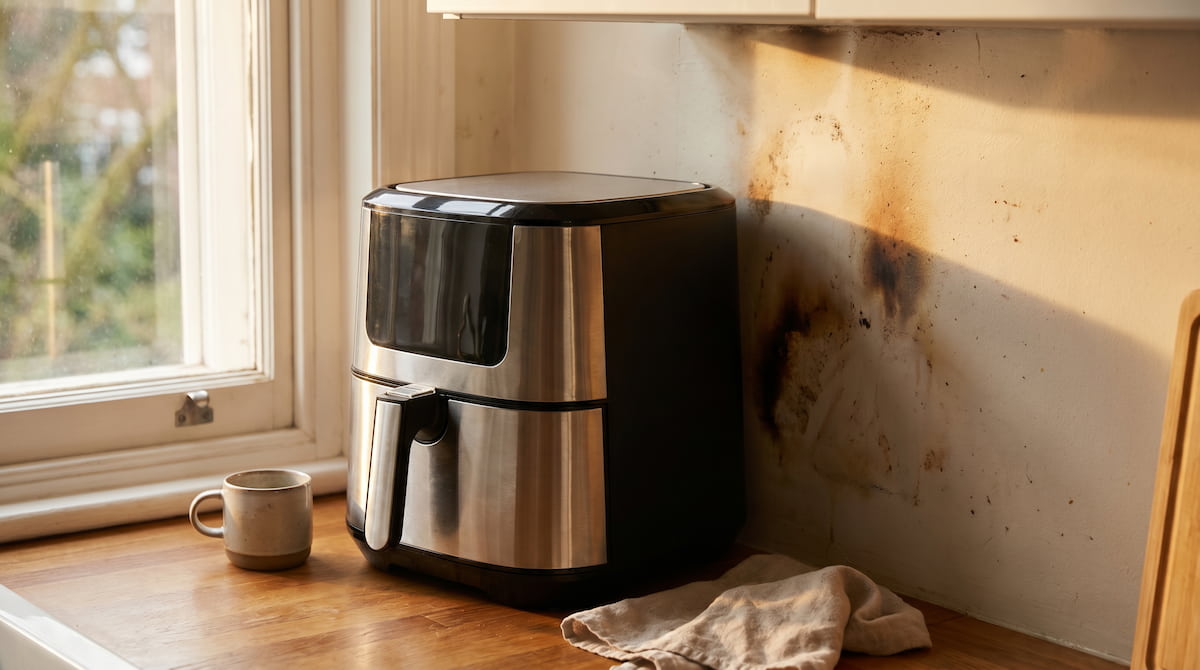
Placing an air fryer too close to a wall blocks ventilation and is a leading cause of overheating.
2. Insufficient Clearance Around the Unit
Most manufacturers recommend at least 5 inches of clearance on all sides and above the unit. Placing an air fryer in a tight corner, under a cabinet, or directly against a backsplash restricts airflow and causes heat to accumulate. Always check clearance before every cook.
3. Extended Continuous Use
Running an air fryer for multiple consecutive long cook cycles without a rest period allows internal components to accumulate heat beyond their designed operating range. Most units are designed for single-session cooking, not hours of back-to-back use. If you’re batch cooking, give the unit a 10–15 minute rest between extended sessions.
4. Grease Buildup on Heating Element
Accumulated grease on the heating element acts as insulation, trapping heat and causing the element to run hotter than it should. This contributes to both overheating and the thermal cutoff triggering prematurely. Regular heating element cleaning prevents this buildup from becoming a problem.
5. Faulty Thermostat or Temperature Sensor
If the unit’s temperature sensor malfunctions, it may fail to regulate heat properly — allowing the internal temperature to climb beyond safe limits. A unit that consistently overheats despite proper placement and cleaning may have a sensor issue that warrants manufacturer contact.
6. Overfilled Basket
Overfilling the basket restricts airflow inside the cooking chamber, causing hot air to recirculate rather than flow through efficiently. This creates hot spots, uneven cooking, and internal heat buildup that can trigger the thermal cutoff or cause genuine overheating.
Warning Signs Your Air Fryer Is Overheating
| Warning Sign | What It Means | Action |
|---|---|---|
| Unit shuts off mid-cook | Thermal cutoff triggered | Unplug, cool 30 min, check clearance |
| Exterior feels extremely hot | Insufficient ventilation | Improve clearance immediately |
| Burning smell from housing | Plastic components overheating | Unplug, inspect placement |
| Food burning on low settings | Temperature sensor failure | Contact manufacturer |
| Display shows error code | Overtemp protection triggered | Unplug, cool, reset |
| Smoke from vents | Grease burning or component failure | Unplug immediately, inspect |
What to Do If Your Air Fryer Overheats
Step 1 — Unplug Immediately
Don’t just turn it off — unplug it from the wall. This eliminates any electrical current running through the unit while it’s in a potentially compromised state.
Step 2 — Move It Away From the Wall
Place the unit in an open area with maximum airflow on all sides. Let it cool completely — at least 30–45 minutes — before inspecting or attempting to use it again.
Step 3 — Check All Clearances
Before the next use, measure the distance from the unit to every surrounding surface. Minimum 5 inches on all sides, minimum 8 inches above the exhaust vent. Rearrange your counter setup if necessary.
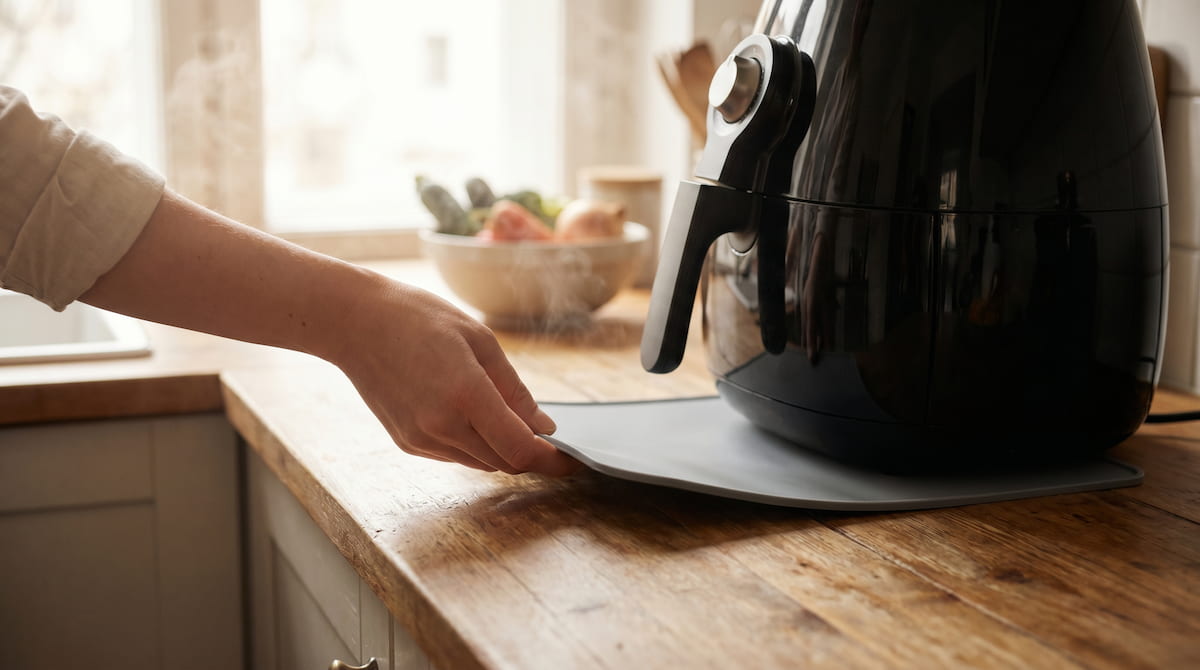
Proper clearance on all sides is the single most effective way to prevent air fryer overheating.
Step 4 — Clean the Heating Element
Grease buildup is a contributing factor in most overheating cases. Before the next cook, clean the heating element thoroughly with a soft brush and damp cloth to remove any accumulated grease.
Step 5 — Monitor the First Cook After
Don’t leave the unit unattended for the first cook after an overheating event. Stay nearby and watch for any repeat signs — shutoff, unusual smells, or excessive exterior heat.
When Overheating Means It’s Time to Replace
A single overheating event caused by blocked vents or extended use is usually fixable. But if your air fryer overheats repeatedly despite proper placement and cleaning, or if overheating is accompanied by burning smells, error codes that won’t clear, or visible damage — the unit needs to be replaced.
Repeated overheating also accelerates basket coating breakdown. If you’re seeing overheating alongside coating wear, replace the whole unit rather than just the basket. For more on reading these combined warning signs, see: How to Use Air Fryer More Safely Every Day
And if you’re concerned about whether overheating could lead to a fire, this covers that question directly: Can Air Fryer Start a Fire? Prevention and Safety Guide
Bottom Line
Air fryer overheating is most commonly caused by blocked vents, insufficient clearance, extended use, or grease buildup — all of which are preventable. The thermal cutoff protection in modern air fryers is a safety feature, not a malfunction, but repeated triggering is a warning sign that something needs to change. Fix the placement and clean the unit first. If overheating continues, it’s time to upgrade to a unit that handles heat management more reliably.