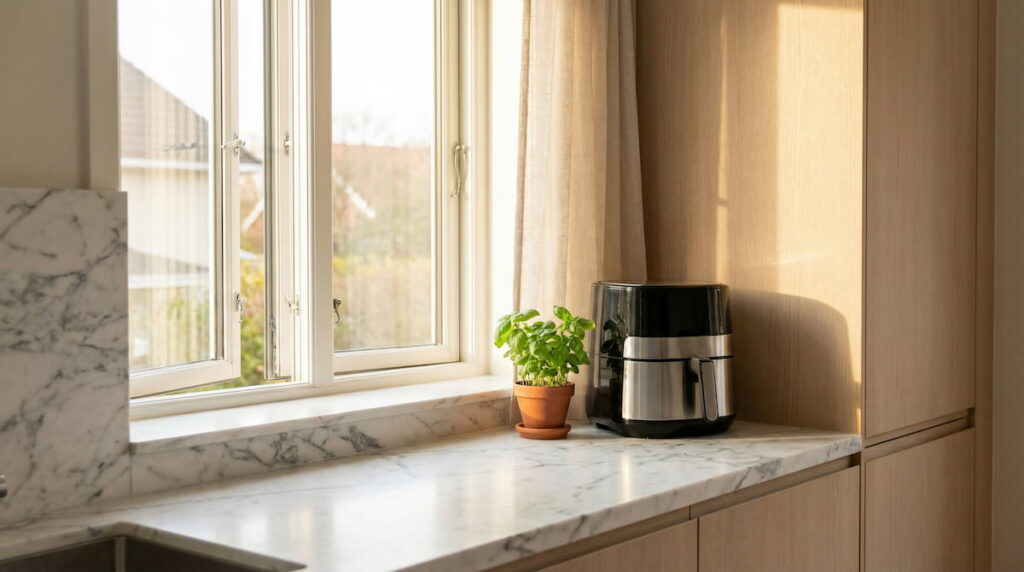
Are air fryers bad for your lungs? I asked myself the same question not long after I started using one almost every day. As someone who spends long hours on the road driving a city bus, I’m already exposed to exhaust and fine dust. The last thing I want is to bring more invisible pollutants into my own kitchen.
At first, air frying felt like a clear upgrade — less oil, easier cleanup, and faster meals for the family. But over time, I started noticing small things: a faint haze after cooking at high heat, occasional smells during the first few uses, and a “new appliance” scent that lingered longer than I expected. That’s when I started paying closer attention to what’s actually happening in the air while we cook.
This guide breaks it down practically — no fear tactics, just clear explanations and what you can realistically do about it.
Are Air Fryers Actually Harmful to Your Lungs?
Air fryers are not inherently harmful to your lungs. However, they can affect indoor air quality depending on how you use them, what materials they’re made of, and how well your kitchen is ventilated. Those three factors make a much bigger difference than the appliance brand or price point.
The main concerns worth knowing about are fine particles released during high-heat cooking (PM2.5), smoke from burnt oil or food residue, and off-gassing from certain non-stick coatings. The good news is that all of these can be reduced significantly with a few practical adjustments — none of which require replacing your appliance.
What Actually Gets Into the Air When You Use an Air Fryer
A lot of people assume air fryers are completely “clean” cooking devices. They’re cleaner than deep frying, but they’re not emission-free. The main concern for lung health is PM2.5 — fine particulate matter produced when oils and fats are heated at high temperatures. If you’ve ever noticed a light haze or a lingering smell after cooking, that’s what you’re seeing.
What’s important to understand is that this isn’t unique to air fryers. The same process happens with pan frying, oven roasting, and grilling. In many cases, air fryers actually produce less airborne grease because they require significantly less oil overall. The comparison point isn’t “air fryer vs. clean air” — it’s “air fryer vs. other cooking methods,” and air frying generally comes out ahead.
For a broader look at how air fryer materials affect what you’re exposed to during cooking, the Safest Air Fryer Materials guide covers this in detail.
Off-Gassing: What That Smell Is During the First Few Uses
One of the first things I noticed with our air fryer was the smell during initial use. That “plastic” or “chemical” scent is called off-gassing — it happens when internal materials like plastics, adhesives, or coatings release small amounts of volatile organic compounds (VOCs) when heated for the first time.
For most people, this is temporary and fades after a few uses. It can feel more noticeable if you have sensitive lungs, asthma, or allergies. Running the air fryer empty for 10–15 minutes with the windows open before first use helps clear most of it.
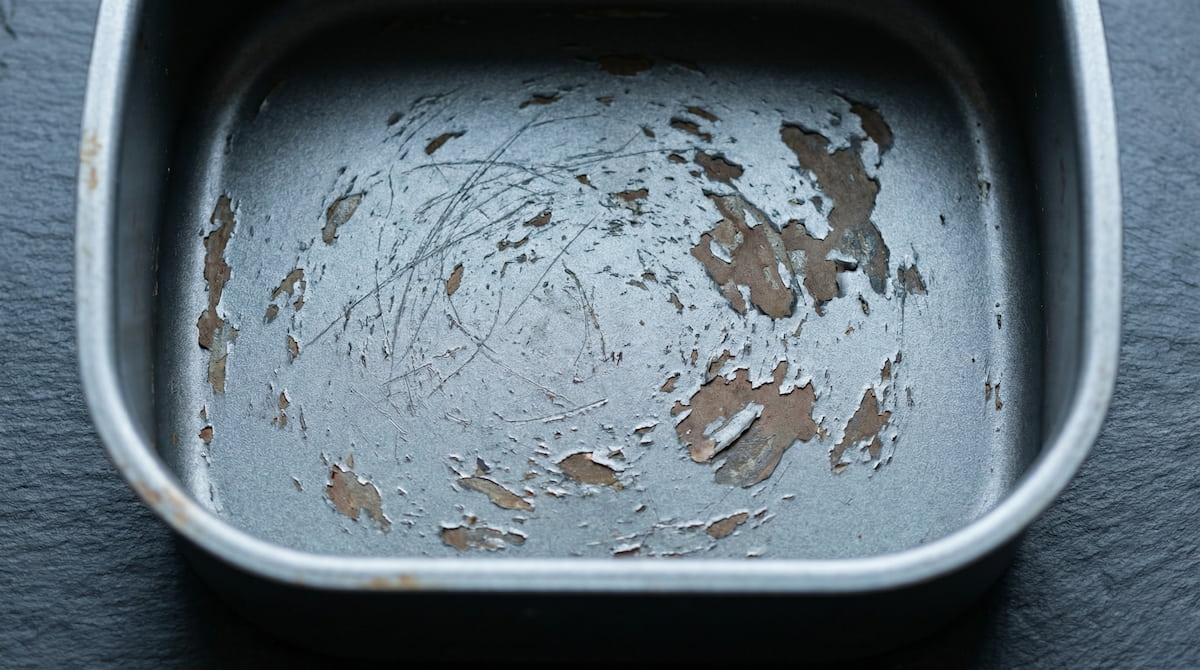
Non-stick coatings like PTFE — commonly known as Teflon — come up often in this context. They’re generally stable at normal cooking temperatures, but concerns increase when coatings are overheated, visibly scratched, or degrading. If your basket is showing wear, that’s worth paying attention to. The Ceramic vs Nonstick Air Fryer breakdown is a good place to compare your options.
Smoke Is the Real Lung Issue — Not the Appliance
If there’s one factor that affects your lungs the most during air frying, it’s smoke from burnt food or grease buildup — not the air fryer itself. When oil drips onto heating elements or food is overcooked, it produces smoke that contains airborne irritants. This is where most real-world problems come from, and it’s also the most preventable.
A few habits that make a consistent difference: avoid overcooking food (golden brown is the target, not dark brown or black), clean the basket and drip tray after every use, and don’t let grease accumulate over multiple sessions. None of these are complicated, but skipping them regularly is what leads to visible smoke and that sharp smell that lingers in the kitchen.
Ventilation: The Most Overlooked Fix
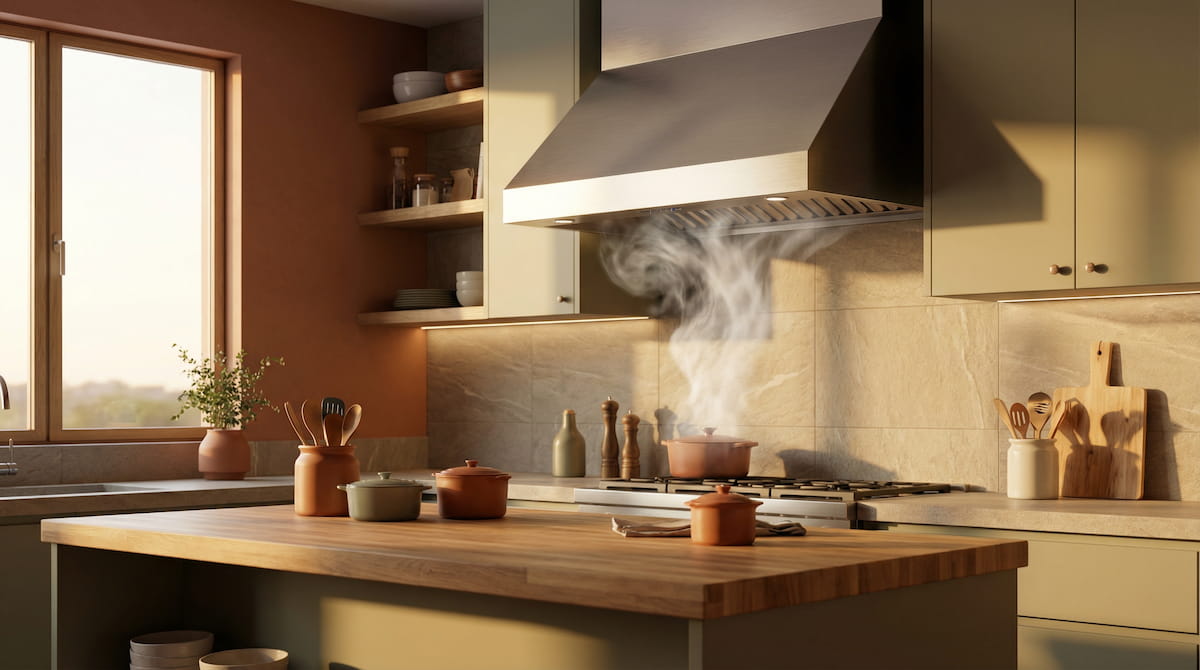
You can have the safest air fryer on the market, but if you’re using it in a closed kitchen with no airflow, you’re still breathing everything it produces. This is the single biggest practical difference-maker I’ve found, and it costs nothing.
What actually works: use a range hood if you have one and turn it on before you start cooking, not after smoke appears. If you don’t have a range hood, cooking near an open window makes a significant difference. Small enclosed kitchens with no cross-ventilation are where indoor air quality drops the fastest during cooking — any cooking method, not just air frying.
On my days off when I’m cooking for the whole family, I make a habit of opening the kitchen window before the air fryer even turns on. It’s a small thing, but the difference in how the kitchen smells afterward is noticeable.
Why Air Fryer Materials Matter for Lung Health
After using several different air fryers, one pattern became clear: the material inside the cooking chamber directly affects what you’re exposed to during use. When there’s no coating to degrade, there’s no coating smell, no off-gassing after scratches, and one fewer variable to manage.
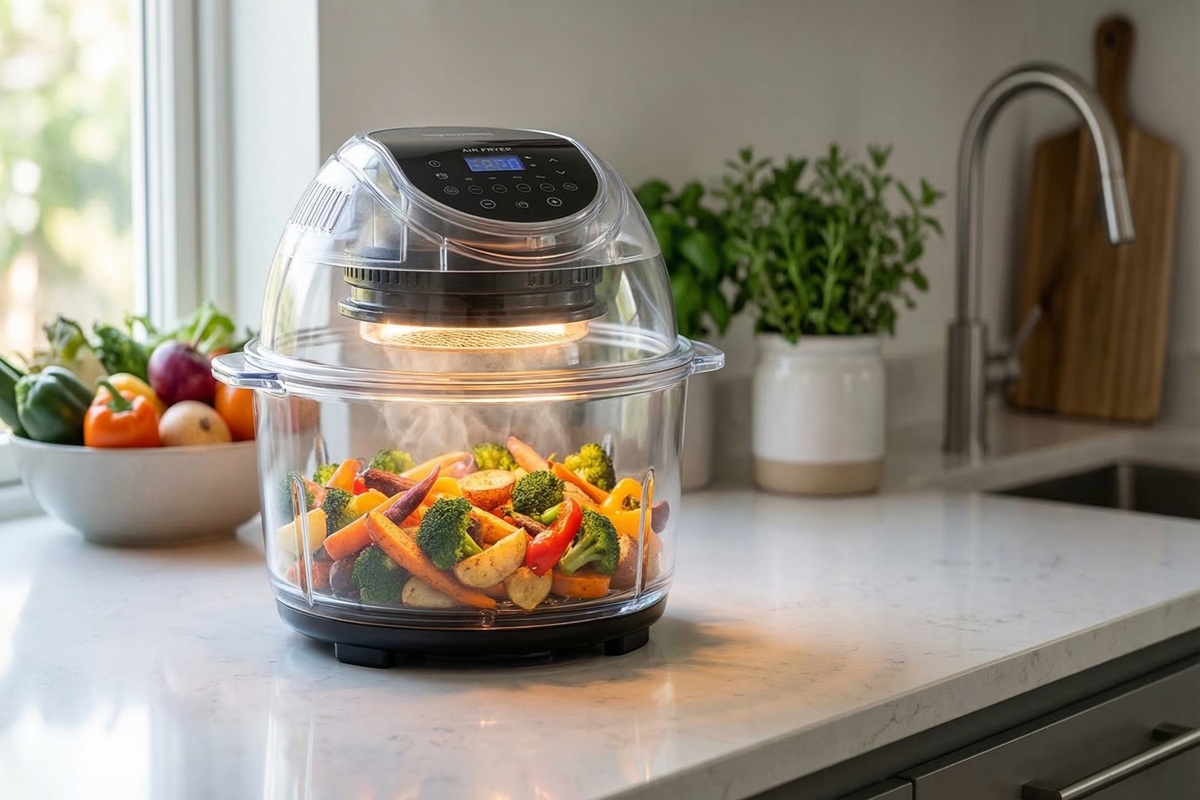
The materials worth considering are stainless steel interiors (no coating at all — nothing to degrade or release), ceramic-coated baskets (non-stick performance without PTFE or traditional PFAS chemistry), and glass cooking chambers (fully inert, nothing hidden, and you can see exactly what’s happening inside). Each has trade-offs in terms of convenience and cleanup, but all three remove the coating concern from the equation.
After I switched to a glass-based air fryer, the difference was noticeable — no chemical smell during use, less visible haze after cooking, and a generally cleaner feel in the kitchen. It’s not a dramatic transformation, but it removes one variable you don’t have to think about anymore. The Glass vs Stainless Steel Air Fryer comparison covers how these two options stack up day to day.
PFAS-Free Options That Reduce the Variables
| Model | Material | Type | Capacity | Best For |
|---|---|---|---|---|
| Ninja AF150AMZ | Ceramic-Coated Basket | Basket Air Fryer | 4 qt | Everyday Use |
| Instant Pot Omni Plus | Stainless Steel Interior | Air Fryer Oven | 18L | Large Families |
| Big Boss 16Qt | Glass | Air Fryer Oven | 16 qt | Batch Cooking |
Ninja AF150AMZ — Ceramic Basket, No PTFE
For anyone who wants a straightforward daily driver without traditional PFAS-based coatings, this is a practical starting point. The ceramic-coated basket delivers non-stick performance without PTFE, and at 4 quarts it’s sized well for a small household. My sister-in-law has been using one for several months without any coating issues. It’s also dishwasher-safe, which makes the cleanup habit easier to stick to.
Instant Pot Omni Plus — Stainless Steel, Nothing to Degrade
This is the option I’d point toward for a family that cooks in volume. The 18-liter stainless steel interior has no coating at all — which means no off-gassing, no coating wear to monitor, and no PFAS concern on the cooking surface. It also functions as a toaster oven and dehydrator. Cleanup takes slightly more effort than a ceramic basket, but for long-term use it’s one of the most durable setups available.
Big Boss 16Qt — Glass, Fully Inert
The most transparent option here, literally. No coated surface anywhere in the cooking chamber. You can see the food cooking through the glass sides, and there’s nothing to scratch, degrade, or off-gas. It’s heavier and takes up more counter space than a basket fryer. But if removing every coating variable is the priority, this is the cleanest option available.
Practical Summary: How to Use an Air Fryer Without Affecting Your Lungs
- Ventilate before you start — Open a window or turn on the range hood before cooking, not after smoke appears
- Run it empty first — For a new air fryer, run it empty at medium heat for 10–15 minutes with the windows open to clear initial off-gassing
- Don’t burn the food — Smoke from overcooked food is the primary lung irritant, not the appliance itself
- Clean after every use — Grease buildup on the basket and drip tray is what causes smoke in subsequent cooking sessions
- Check the coating regularly — If you have a non-stick basket, inspect it periodically. Visible scratches or flaking are a signal to replace the basket
- Choose safer materials — Ceramic, stainless steel, and glass reduce or eliminate coating-related concerns entirely
Are Air Fryers Bad for Your Lungs Long-Term?
For most people, using an air fryer regularly does not pose a significant long-term lung risk when used properly. The key variables are ventilation, avoiding burnt food, keeping the appliance clean, and choosing materials that minimize unnecessary exposure. None of those require expensive equipment or complicated routines — just consistent habits.
Like most cooking methods, the impact depends on how you use the appliance, not the appliance itself. An air fryer in a well-ventilated kitchen, kept clean, with a ceramic or stainless steel interior is about as low-risk as everyday cooking gets. For a full breakdown of which models check all those boxes, the Best PFAS-Free Air Fryers guide is the best place to start.
Frequently Asked Questions
Do air fryers release toxic fumes?
Not under normal use. New appliances may off-gas VOCs during the first few uses, which fades quickly. Smoke from burnt food or degrading coatings is the more common real-world concern, and both are preventable.
Are air fryers safe for people with asthma?
Generally yes, with good ventilation and clean equipment. People with respiratory sensitivities may notice off-gassing more strongly on first use — running the appliance empty before cooking food helps reduce this.
Is the smell from a new air fryer dangerous?
The initial smell is typically off-gassing from plastics and coatings and fades within a few uses. It’s worth ventilating well during those first sessions. If a strong chemical smell persists after several uses, that’s worth investigating with the manufacturer.
Which air fryer material is best for indoor air quality?
Stainless steel and glass have no coating to degrade or off-gas. Ceramic-coated baskets are a practical middle ground — non-stick performance without PTFE. All three are better than traditional non-stick coatings from an air quality standpoint.
Does cleaning an air fryer reduce lung risk?
Yes, directly. Grease and food residue left in the basket and drip tray are what produce smoke during subsequent cooking. Regular cleaning after each use is one of the most effective things you can do.
Disclosure: This post contains affiliate links. If you purchase through these links, I may earn a small commission at no extra cost to you. I only recommend products I’ve researched and would consider for my own kitchen.