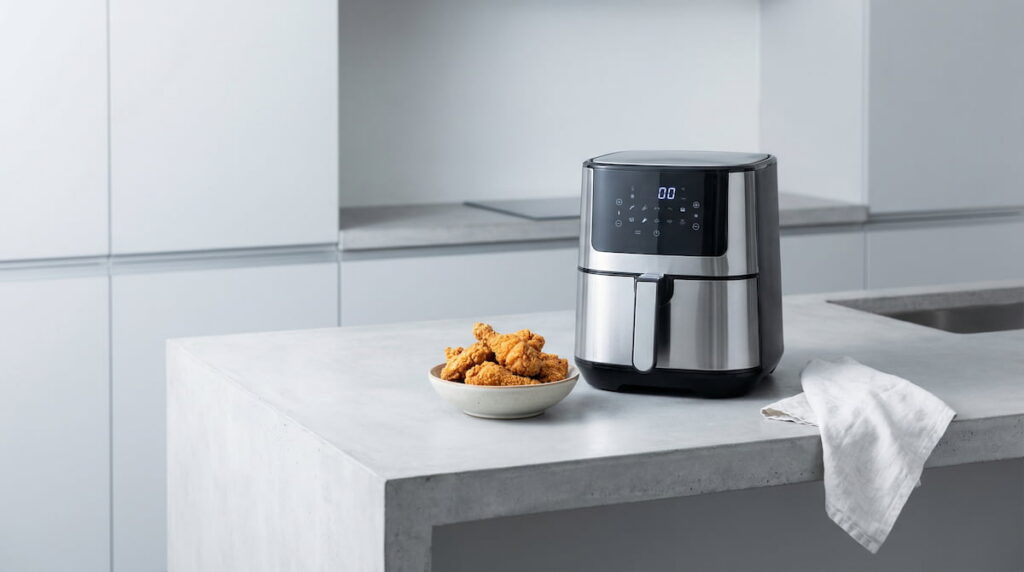
Are air fryers healthier than frying? I started asking this after I switched our family away from the deep fryer we’d had for years. My wife had been reading about cooking oils and fat content, and I was curious whether an air fryer would actually make a measurable difference — or whether it was just marketing. What I found was more straightforward than I expected.
The short version: yes, air frying is generally healthier than deep frying. But there’s more to it than just oil. The materials inside your air fryer matter too, and that’s something most articles skip over entirely.
How Air Frying Compares to Deep Frying
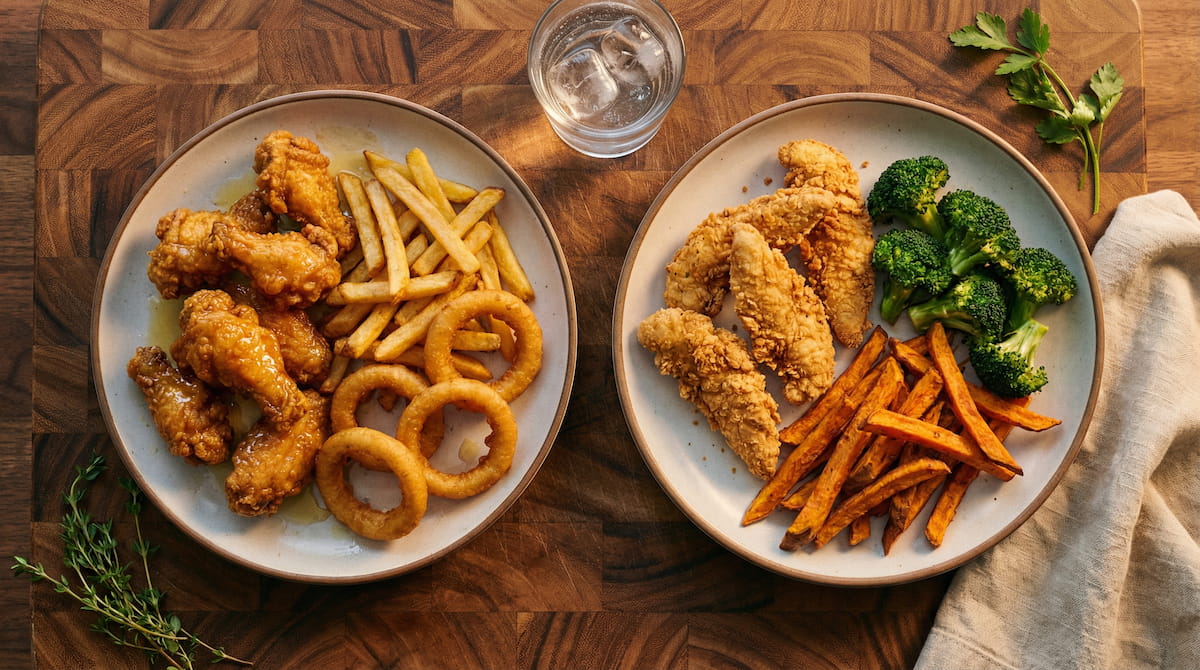
Deep frying works by submerging food in hot oil, which the food absorbs as it cooks. That’s where the majority of the added fat and calories come from. Air frying replaces the oil bath with rapidly circulating hot air, which creates a similar crispy exterior without the absorption.
The difference in numbers is significant. A deep-fried chicken breast can contain two to three times the fat of the same piece cooked in an air fryer. For a family that eats fried foods regularly — and mine does, especially my two teenage boys — that adds up fast over the course of a week.
What the Research Actually Shows
Studies on air frying consistently show reduced fat content in cooked food compared to deep frying. A few things worth knowing:
- Fat reduction — Air frying typically uses 70–90% less oil than deep frying, which directly reduces the fat content of the finished food
- Calorie difference — Lower fat means lower calories per serving, especially for foods like fries, chicken, and fish
- Acrylamide formation — Both methods can produce acrylamide, a compound that forms when starchy foods are cooked at high heat. Air frying tends to produce less, but it’s not eliminated entirely
- Retained nutrients — Because cook times are often shorter, some nutrients are better preserved in air-fried food than in deep-fried or oven-roasted versions
None of this means air-fried food is a health food. But as a regular cooking method, it’s a meaningfully better option than dropping everything in a vat of oil.
The Part Most People Miss: What’s Inside the Air Fryer
Here’s where I spent most of my research time. After switching to an air fryer, I noticed a faint chemical smell on the first few uses. That sent me down a rabbit hole about non-stick coatings, PFAS, and what the inside of these machines is actually made of.
Most air fryers use some form of non-stick coating on the basket. Traditional coatings often rely on PTFE — the same material used in Teflon — which is part of a broader class of chemicals called PFAS. At normal cooking temperatures, intact coatings are generally considered stable. But if the coating is scratched, overheated, or degrading, that’s a different story.
The safer alternatives are:
- Ceramic-coated baskets — Non-stick performance without PTFE or traditional PFAS-based chemistry. Most durable when hand-washed and used with silicone or wooden tools
- Stainless steel interiors — No coating at all. Food may stick more than with a non-stick surface, but there’s nothing to degrade or flake over time
- Glass construction — Fully inert, zero coating concerns, and you can see the food cooking. Less common, bulkier, and heavier than basket-style fryers
For a deeper look at how these materials compare, the Ceramic vs Stainless Steel Air Fryer guide breaks it down in detail.
Air Fryer vs Oven: Which Is Actually Healthier?
This comes up a lot, and honestly the answer is closer than most people expect. Both use dry heat rather than oil submersion. The main differences:
- Speed — Air fryers preheat faster and cook faster due to the compact, concentrated airflow
- Texture — Air fryers produce crispier results on the outside because the hot air circulates more aggressively around the food
- Fat content — Roughly comparable if you’re using the same amount of oil in both. The difference shows up most when comparing to deep frying
- Convenience — For smaller portions, an air fryer is faster and uses less energy than heating a full oven
Neither is dramatically “healthier” than the other. But if you’re replacing a deep fryer, either one is a step in the right direction. My family uses both — the air fryer for quick weeknight meals, the oven for bigger batches.
PFAS-Free Air Fryers Worth Considering
| Model | Material | Type | Capacity | Best For |
|---|---|---|---|---|
| Ninja AF150AMZ | Ceramic-Coated Basket | Basket Air Fryer | 4 qt | Everyday Use |
| Instant Pot Omni Plus | Stainless Steel Interior | Air Fryer Oven | 18L | Large Families |
| Big Boss 16Qt | Glass | Air Fryer Oven | 16 qt | Batch Cooking |
Ninja AF150AMZ — Ceramic Basket, Compact and Easy to Use
This is the model I’d point someone toward if they’re switching from a deep fryer for the first time. The ceramic-coated basket avoids traditional PFAS-based coatings and still delivers solid non-stick performance. At 4 quarts, it’s the right size for two to three people. My wife uses it almost every day and hasn’t had any issues with the coating after regular use. The basket is dishwasher-safe, which is a practical win for a busy household.
Instant Pot Omni Plus — Stainless Steel, Built for Families
If you’re cooking for four or more people, the 18-liter capacity makes a real difference. The stainless steel interior has no coating at all — nothing to worry about degrading over time. It also functions as a toaster oven and dehydrator, which means it replaces several appliances at once. Cleanup requires a bit more effort than a ceramic basket, but it’s not a deal-breaker. This is what I’d recommend for anyone who wants a longer-term investment.
Big Boss 16Qt — Glass, Fully Transparent
This is the most unusual option on the list, and also the one that eliminates coating concerns entirely. The cooking chamber is glass — no coated surface anywhere — and you can watch the food cook through the sides. It’s heavier and bulkier than a basket-style fryer, and it takes up more counter space. But for anyone who wants complete peace of mind about what their food is touching, it’s hard to match.
Practical Tips for Healthier Air Frying
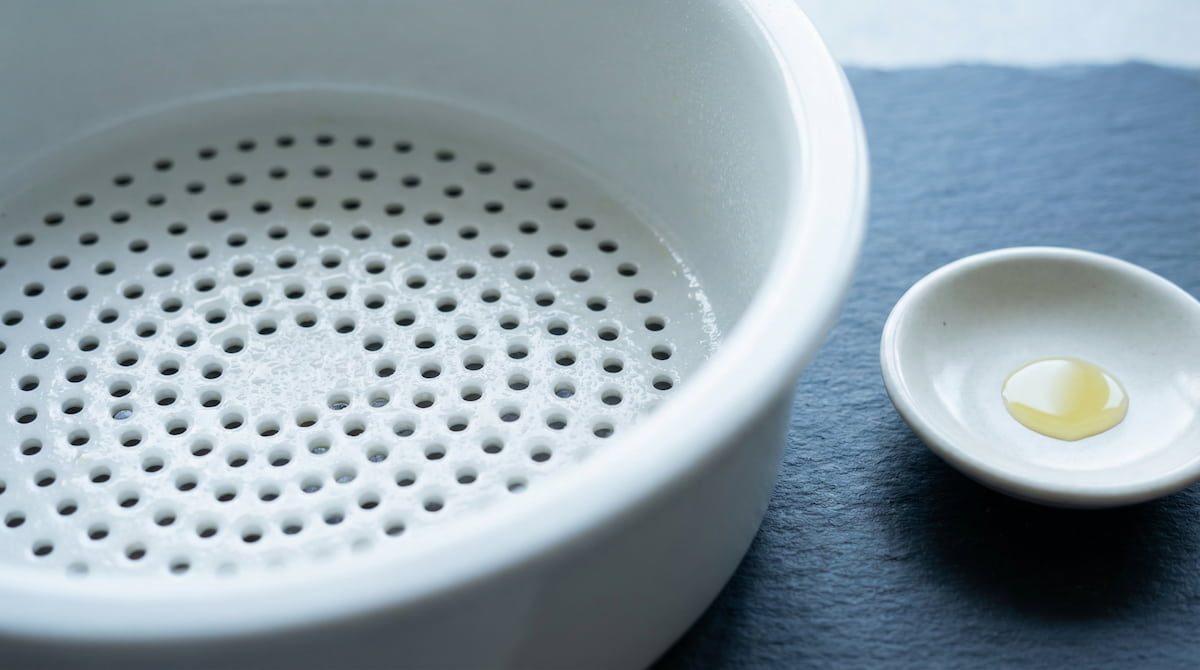
Getting the most out of an air fryer isn’t complicated, but a few habits make a difference:
- Use oil sparingly — A light spray or brush is usually enough. More than that and you’re closer to pan-frying than air frying
- Don’t overcrowd the basket — Food needs space for the air to circulate. Overcrowding leads to steaming instead of crisping
- Avoid low smoke point oils at high temps — Oils with low smoke points can break down and produce compounds you don’t want in your food
- Check the coating periodically — If you have a non-stick basket, inspect it occasionally. Visible scratches or flaking are a sign it’s time to replace the basket
- Use parchment liners carefully — They help with cleanup, but make sure airflow isn’t blocked, and never preheat an empty fryer with a liner inside
If you’re looking at the full picture — both the health benefits and the material safety side — the Best PFAS-Free Air Fryers guide covers both in one place. And if you’re trying to figure out which non-toxic models are worth the price, Best Non-Toxic Air Fryer is a good starting point.
Frequently Asked Questions
Are air fryers healthier than deep frying?
Yes, in most cases. Air frying uses significantly less oil, which reduces fat and calorie content. The cooking method also tends to produce less acrylamide than deep frying.
Is air-fried food actually good for you?
Compared to deep-fried food, yes. Air frying reduces fat absorption substantially. That said, the nutritional quality of the food you start with still matters — air frying vegetables is different from air frying frozen breaded snacks.
Do air fryers cause cancer?
There’s no solid evidence that air frying itself causes cancer. Some concern exists around acrylamide formation in starchy foods at high heat, but this applies to many cooking methods, not air frying specifically. Using PFAS-free materials removes one additional variable.
What air fryer material is the safest?
Stainless steel and glass have no coating to degrade or release compounds. Ceramic-coated baskets are generally considered PFAS-free and a safe middle ground between convenience and material safety.
Should I replace my non-stick air fryer?
If the coating is intact and undamaged, most manufacturers consider it safe at normal cooking temperatures. If you’re seeing scratches, peeling, or flaking — or if the coating smell concerns you — switching to a ceramic or stainless steel model is a reasonable step.
Disclosure: This post contains affiliate links. If you purchase through these links, I may earn a small commission at no extra cost to you. I only recommend products I’ve researched and would consider for my own kitchen.