The best air fryer for chemical sensitivity isn’t just about price or size — it’s about what materials touch your food and what goes into the air while you cook. If you or someone in your family reacts to synthetic fragrances, off-gassing plastics, or nonstick coating fumes, choosing the wrong air fryer can make every meal uncomfortable. I’ve been through this research myself, and here’s what actually matters.
Why Chemical Sensitivity Makes Air Fryer Selection Critical
Most air fryers on the market use nonstick coatings containing PTFE (the chemical behind Teflon), plastic components that off-gas when heated, and synthetic materials that release VOCs during cooking. For most people, these amounts are small enough to ignore. For someone with chemical sensitivity, multiple chemical sensitivity (MCS), or reactive airways, even low-level exposure can trigger headaches, nausea, throat irritation, or worse.
The good news: there are air fryers specifically suited for chemically sensitive households. The key is knowing which materials are actually inert at cooking temperatures — and which ones aren’t. Our full breakdown on air fryer fumes and what you’re actually breathing covers the science behind this in detail.
What to Look for: Safe Materials for Chemical Sensitivity
For anyone with chemical sensitivity, these are the only three material categories worth considering:
- Ceramic-coated basket: No PTFE, no PFOA, no PFAS-related coatings. Ceramic is chemically stable at high heat and doesn’t release detectable fumes under normal cooking conditions.
- Stainless steel interior: Completely inert. No coating to degrade, no chemicals to off-gas. The cleanest option from a materials standpoint.
- Glass bowl: Also inert. The Big Boss 16Qt uses a glass cooking chamber — nothing but glass and stainless steel touches your food.
What to avoid: bare nonstick (PTFE/Teflon) baskets, unknown “non-stick” coatings on budget models, and air fryers with significant plastic components in the food zone.
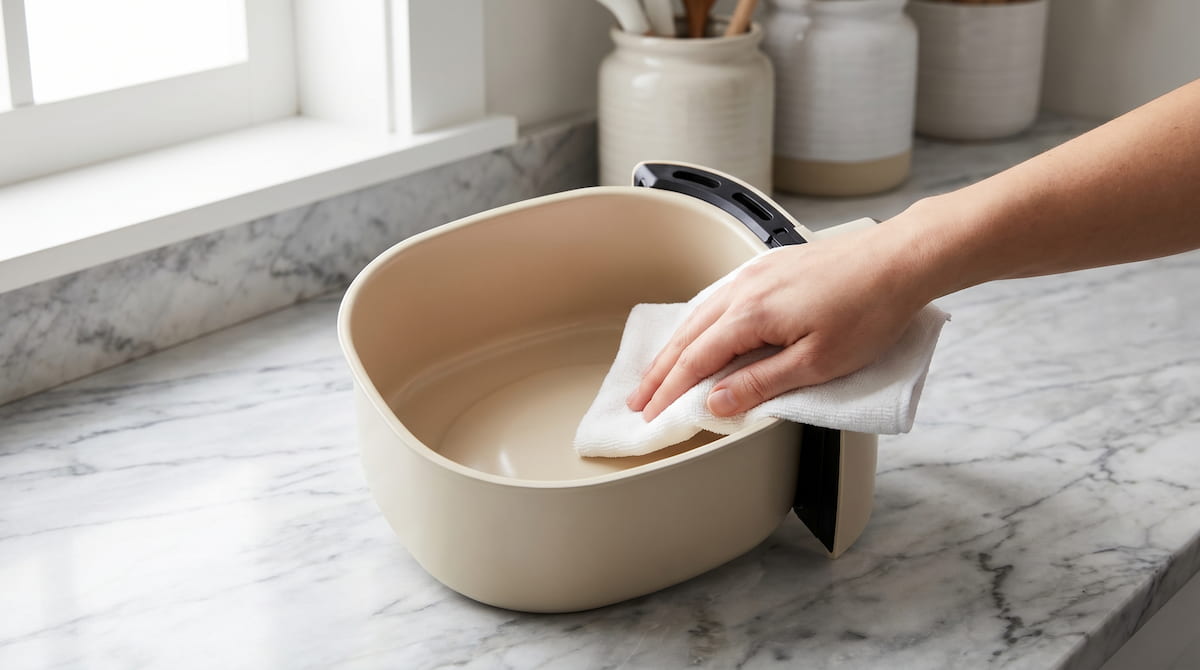
A ceramic-coated basket is one of the safest options for households with chemical sensitivity.
Best Air Fryers for Chemical Sensitivity (2026)
| Model | Material | PFAS-Free? | Best For |
|---|---|---|---|
| Ninja AF150AMZ | Ceramic-coated basket | ✅ Yes | Daily cooking, compact kitchens |
| Big Boss 16Qt Glass | Glass bowl + stainless rack | ✅ Yes | Maximum material safety, families |
| Instant Pot Omni Plus | Stainless steel interior | ✅ Yes | Large batches, oven-style cooking |
| Cosori TurboBlaze | Ceramic-coated basket | ✅ Yes | Fast cooking, mid-size families |
Our Top Pick: Ninja AF150AMZ
For most households dealing with chemical sensitivity, the Ninja AF150AMZ is the most practical starting point. Its ceramic-coated basket contains no PTFE, PFOA, or PFAS-related compounds — which eliminates the primary fume concern with standard nonstick air fryers. The basket is also dishwasher safe, so cleaning doesn’t require harsh chemical scrubbing.
It runs quietly, heats evenly, and at its size it’s manageable for 2–4 person households. We’ve covered the full material breakdown in our Ninja ceramic basket safety review — worth reading before you buy.
For Maximum Safety: Big Boss 16Qt Glass Air Fryer
If chemical sensitivity is severe — MCS, reactive airway disease, or extreme fragrance sensitivity — the Big Boss 16Qt Glass Air Fryer is the most chemically inert option available. The cooking chamber is glass. The rack is stainless steel. There is no coating anywhere in the food zone that could degrade, flake, or off-gas.
It’s larger than a standard basket air fryer, which makes it less practical for one or two people, but for families who need the absolute safest material setup, it’s unmatched. See our full review: Is the Big Boss Glass Air Fryer worth it?
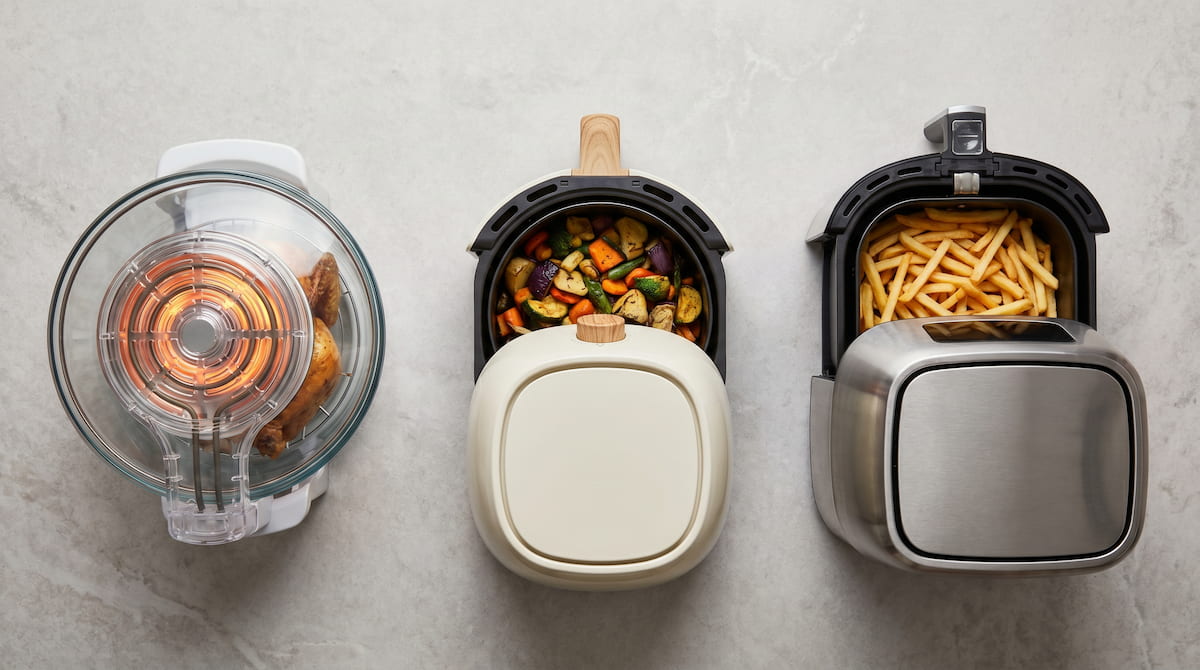
Glass, ceramic, and stainless steel — the three safest material categories for chemically sensitive households.
For Large Batches: Instant Pot Omni Plus 18L
The Instant Pot Omni Plus has a stainless steel interior — no coating at all on the walls of the cooking chamber. For chemically sensitive users who cook larger portions or want oven-style flexibility (roast, bake, air fry, dehydrate), this is the most versatile safe option. The interior tray is stainless, and the unit doesn’t produce the plastic smell that cheaper air fryers are notorious for on first use.
Additional Tips for Chemically Sensitive Air Fryer Users
- Always run a break-in cycle: Even PFAS-free air fryers can have manufacturing residues. Run the unit empty at 400°F for 15–20 minutes before first food use, with windows open.
- Ventilate every time: Open a window or run a range hood fan during cooking — not because ceramic or glass is dangerous, but because any heated cooking produces some airborne particles.
- Avoid cheap accessories: Plastic-tipped tongs, low-grade silicone mats, or unknown-brand liners can introduce their own off-gassing. Stick with stainless or verified food-grade silicone accessories.
- Skip the parchment liners with dyes: Some parchment liners use bleaching agents or dyes. Choose unbleached, plain parchment if you use liners at all.
- Replace if smell returns: If a ceramic-coated basket develops a persistent chemical smell after months of use, the coating may be compromised. Replace the basket or the unit.
Quick Safety Checklist: Air Fryer for Chemical Sensitivity
✅ Safe for sensitive households:
- Ceramic-coated basket (PTFE-free, PFAS-free)
- Glass cooking bowl
- Stainless steel interior
- Brand discloses full material specs
⚠️ Use with caution:
- New units — always do a break-in burn before first food use
- Silicone accessories — verify food-grade rating
- Parchment liners — choose unbleached only
❌ Avoid entirely:
- PTFE / Teflon nonstick baskets
- Budget models with no material disclosure
- Any unit with persistent chemical smell after break-in
- Plastic-heavy interiors with no stainless or ceramic food zone
FAQ
What is the safest air fryer for someone with chemical sensitivity?
The Big Boss 16Qt Glass Air Fryer offers the most chemically inert cooking surface — glass bowl, stainless rack, no coatings. For a more compact option, the Ninja AF150AMZ ceramic basket is PFAS-free and the most practical choice for daily use.
Do ceramic air fryers off-gas?
Under normal cooking conditions, ceramic coatings that are PTFE-free and PFAS-free do not produce detectable fumes. They are significantly safer than traditional nonstick coatings for chemically sensitive users.
Can air fryer fumes trigger chemical sensitivity reactions?
Yes — particularly fumes from overheated PTFE coatings, plastic components, or low-quality nonstick baskets. This is well-documented in the context of VOCs and indoor air quality. Switching to ceramic, glass, or stainless eliminates this specific risk.
Is the Instant Pot Omni Plus safe for chemical sensitivity?
Yes — the stainless steel interior means no coating to degrade or off-gas. It’s one of the cleanest large-capacity options available for chemically sensitive households.
How do I reduce fumes when using any air fryer?
Always ventilate — open a window or run exhaust fan. Do a break-in burn before first use. Avoid overheating the basket beyond recipe requirements. And choose ceramic, glass, or stainless over traditional nonstick.
For a full comparison of every PFAS-free air fryer option we recommend for families, visit our complete PFAS-free air fryer guide.