
Air fryers are often marketed as a healthier alternative to deep frying.
But a growing number of consumers are asking an important question:
Do air fryers release toxic fumes?
The short answer:
👉 Some can — under specific conditions.
👉 But not all air fryers pose the same risk.
In this guide, we’ll break down when fumes can occur, what materials matter most, and how to choose a safer option for your kitchen.
Why People Worry About Toxic Fumes
Concerns usually center around:
- PFAS (per- and polyfluoroalkyl substances)
- PTFE (commonly known as Teflon)
- Overheating non-stick coatings
When PTFE coatings are heated beyond recommended temperatures (typically above 500°F / 260°C), they may begin to degrade and release fumes.
While most air fryers do not normally reach these temperatures, misuse, empty preheating, or damaged coatings can increase the risk.
When Can an Air Fryer Release Fumes?
Air fryers may release odors or fumes if:
- The non-stick basket coating is scratched or peeling
- The unit is overheated
- Manufacturing residue burns off during first use
- The basket is heated while empty
New units sometimes emit a temporary smell during first use. This is typically harmless and fades after a few cycles.
However, persistent chemical odors may indicate coating degradation.
Are PFAS-Free Air Fryers Safer?
PFAS-free models reduce concerns related to fluorinated coatings.
Safer material alternatives include:
- Ceramic-coated baskets
- Fully stainless steel baskets
- Glass cooking chambers
For example, the Ninja AF150AMZ uses a ceramic-coated basket designed to reduce PFAS-related concerns.
(Insert Core Trio naturally within article — not aggressively.)
Ceramic and stainless steel options are often preferred by buyers who want to minimize synthetic coating exposure.
Ceramic vs Stainless vs Glass: Which Is Safest?
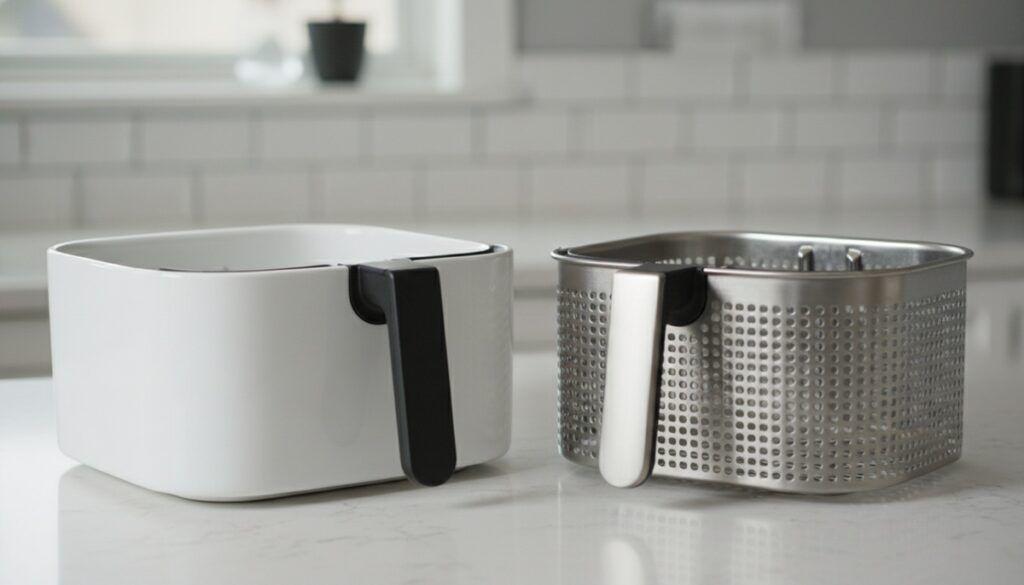
Each material has trade-offs:
Ceramic
- PFAS-free in most cases
- Non-stick surface
- Can wear over time
Stainless Steel
- No coating
- Extremely durable
- May require light oil for best results
Glass
- No coating
- Chemically inert
- Heavier design

How to Minimize Any Risk
You can reduce potential exposure by:
- Avoiding empty preheating
- Not exceeding recommended temperatures
- Replacing scratched baskets
- Cleaning gently (no metal scrubbers)
Choosing a well-constructed model with safer materials is the most important step.
Final Verdict: Are Air Fryers Toxic?
Most air fryers are safe when used properly.
However, models that rely on low-quality non-stick coatings may degrade over time.
If you want extra peace of mind, consider models made with ceramic, stainless steel, or glass cooking components.
Leave a Reply