Disclosure: This post contains affiliate links. If you purchase through them, I earn a small commission at no extra cost to you. I only recommend products I personally trust for my family.
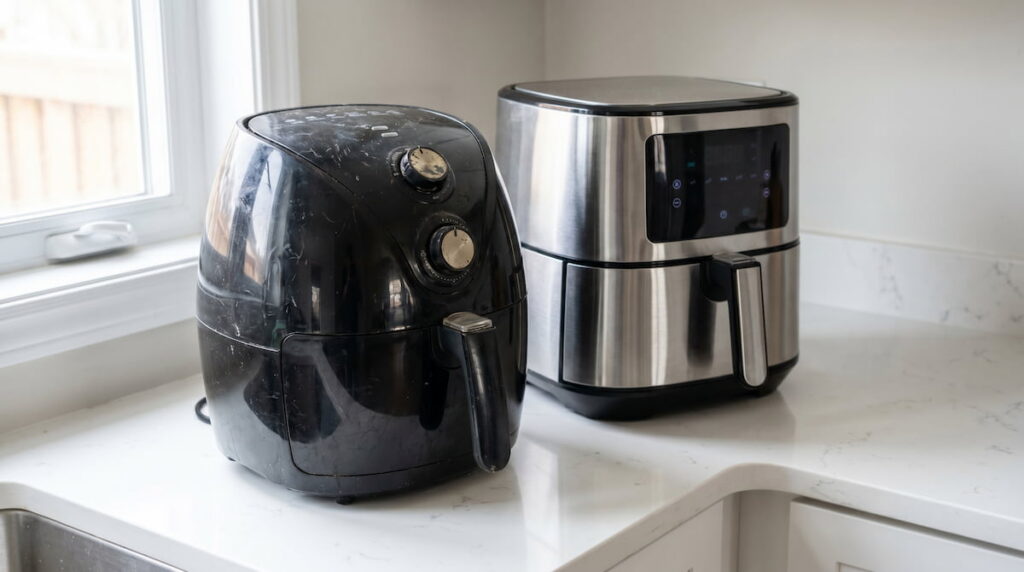
Is it safe to use an old air fryer is a question most people never think to ask — until they notice the coating looking different, the food tasting off, or the unit behaving in ways it didn’t before. I’m Wook, a bus driver and dad who cooks for my family almost every night. I used our first air fryer well past the point I should have, and looking back, the signs were there for months before I finally replaced it. Here’s what age actually does to an air fryer — and how to know when yours has crossed the line from worn to unsafe.
Does Age Make an Air Fryer Unsafe?
Yes — but not automatically on a fixed timeline. An air fryer becomes unsafe when specific components degrade to the point where they create health or fire risks. That threshold depends more on usage patterns, cleaning habits, and basket material than on age alone. A well-maintained ceramic basket air fryer used daily can stay safe for 3–5 years. A cheap nonstick unit used heavily and cleaned poorly may become a concern within 12–18 months.
What Age Does to an Air Fryer
1. Basket Coating Breakdown
This is the most direct safety concern in aging air fryers. Traditional nonstick coatings degrade with heat cycles over time — the repeated expansion and contraction from heating and cooling gradually weakens the coating’s bond to the underlying metal. As the coating degrades, it begins to off-gas during cooking and eventually flakes physically into food.
According to the U.S. EPA, PFAS chemicals found in traditional nonstick coatings are persistent in the body and environment. A coating that’s visibly degrading is releasing these compounds into the food and air of your kitchen with every cook cycle.
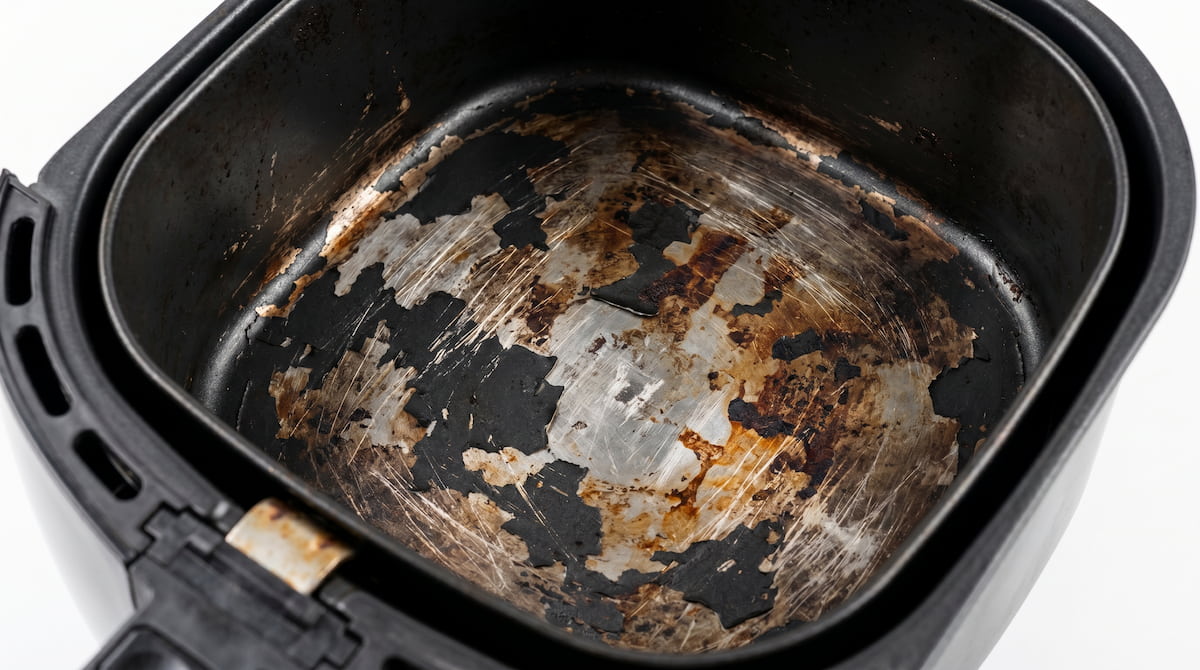
Visible scratches, discoloration, and coating damage on an old basket are direct indicators the unit has become unsafe to use.
2. Electrical Component Wear
Internal wiring insulation, capacitors, and circuit board components all have finite lifespans. In units used daily for years, these components gradually degrade — increasing the risk of electrical shorts, arcing, and fire. This wear isn’t visible from the outside, which is why behavioral changes like unexpected shutoffs, error codes, or burning smells become the only indicators.
3. Fan Motor Degradation
Fan motor bearings wear with use. An aging motor runs less efficiently, generates more heat, and eventually fails — either stopping entirely or running in a degraded state that causes uneven cooking and internal heat buildup. A fan that sounds different than it did when the unit was new is showing age.
4. Heating Element Efficiency Loss
Heating elements lose efficiency over years of thermal cycling. An older unit may take longer to reach temperature, struggle to maintain consistent heat, or require higher settings to achieve the same results — all of which indicate element degradation.
5. Seal and Gasket Deterioration
In oven-style air fryers, door seals and gaskets harden and shrink with age and heat exposure. Deteriorated seals allow heat to escape during cooking, reducing efficiency and causing the unit to run longer and hotter to compensate.
How Old Is Too Old? Lifespan by Basket Type
| Basket Type | Safe Lifespan (Daily Use) | Key Risk at End of Life |
|---|---|---|
| Traditional nonstick (PTFE) | 1–2 years | PFAS off-gassing and flaking |
| Ceramic coated | 2–4 years | Coating wear, food sticking |
| Stainless steel | 5–10 years | Electrical components, not coating |
| Budget nonstick models | Under 1 year | Rapid coating failure |
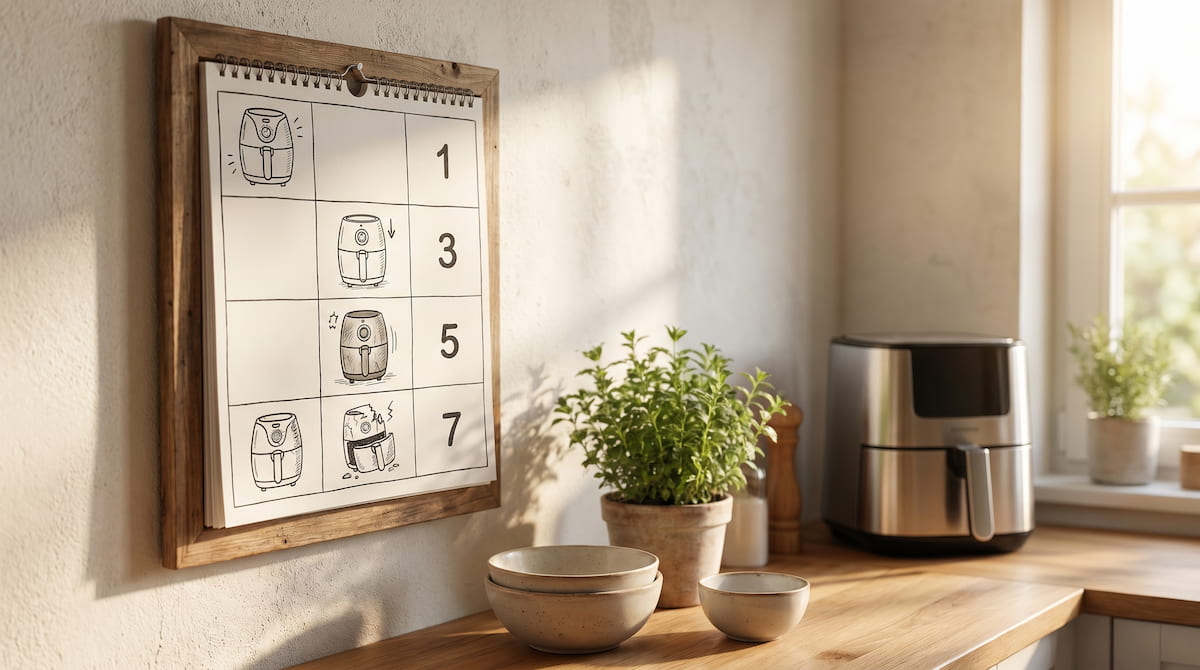
Air fryer lifespan varies significantly by basket material — ceramic and stainless steel outlast traditional nonstick by years.
Signs Your Old Air Fryer Has Become Unsafe
- Visible coating flaking or peeling — stop immediately, replace now
- Persistent chemical or burning smell — coating off-gassing, replace now
- Food consistently tasting off — coating particles in food, replace now
- Repeated unexpected shutoffs — electrical component failure, replace
- Grinding or squealing fan — bearing failure, replace
- Significant temperature inaccuracy — sensor failure, replace
- Visible rust anywhere inside — replace immediately
Is Cleaning Enough to Make an Old Air Fryer Safe Again?
Cleaning addresses grease buildup and food residue — both of which contribute to smoke and odor. But cleaning cannot reverse coating degradation, repair electrical component wear, or restore a worn fan motor. If the safety concern is coating-related, cleaning buys time at best. If the coating is visibly damaged, no amount of cleaning makes the unit safe again.
For the full checklist of replacement signals, see: How to Tell When Your Air Fryer Needs to Be Replaced (Safety Signs)
And if your old air fryer’s coating is scratched but not yet flaking, this covers what that stage of wear actually means for safety: What Happens If Your Air Fryer Coating Gets Scratched?
What to Replace an Old Air Fryer With
When our old nonstick air fryer reached the end of its safe life, we replaced it with the Ninja AF150AMZ ceramic basket model. Ceramic coating doesn’t contain PFAS compounds, handles daily use better than traditional nonstick, and gives significantly more peace of mind when cooking for the family every night.
Bottom Line
Is it safe to use an old air fryer? It depends on the basket material, how well it’s been maintained, and whether any of the key warning signs are present. A ceramic or stainless steel unit with no visible coating damage, consistent performance, and no electrical symptoms can continue to be used safely. A traditional nonstick unit showing coating wear, persistent chemical smells, or behavioral changes has crossed into unsafe territory regardless of how old it is. Watch the basket, not the calendar — and when the signs appear, replace rather than delay.