When choosing a non-toxic air fryer, many buyers focus on two materials: glass and stainless steel.
Both are considered safer alternatives to traditional nonstick coatings like Teflon, but they work in different ways.
Glass air fryers offer complete transparency and zero coating, while stainless steel air fryers are known for durability and professional-grade cooking performance.
In this guide, we’ll compare glass vs stainless steel air fryers to help you decide which option is best for PFAS-free cooking and long-term kitchen safety.
If you want to see the safest models available right now, check the full guide below.
Why Air Fryer Materials Matter
Many traditional air fryers use baskets coated with PTFE or other nonstick coatings.
Over time, high heat and repeated use may cause these coatings to degrade or wear down.
Because of this, more consumers are searching for PFAS-free air fryers made with safer materials.
Two of the most common alternatives are:
- Glass cooking chambers
- Stainless steel interiors
Both materials eliminate the need for nonstick coatings and are often recommended for non-toxic kitchens.
If you’re specifically looking for stainless steel models, you can also read this guide:
Glass Air Fryer: Pros and Cons
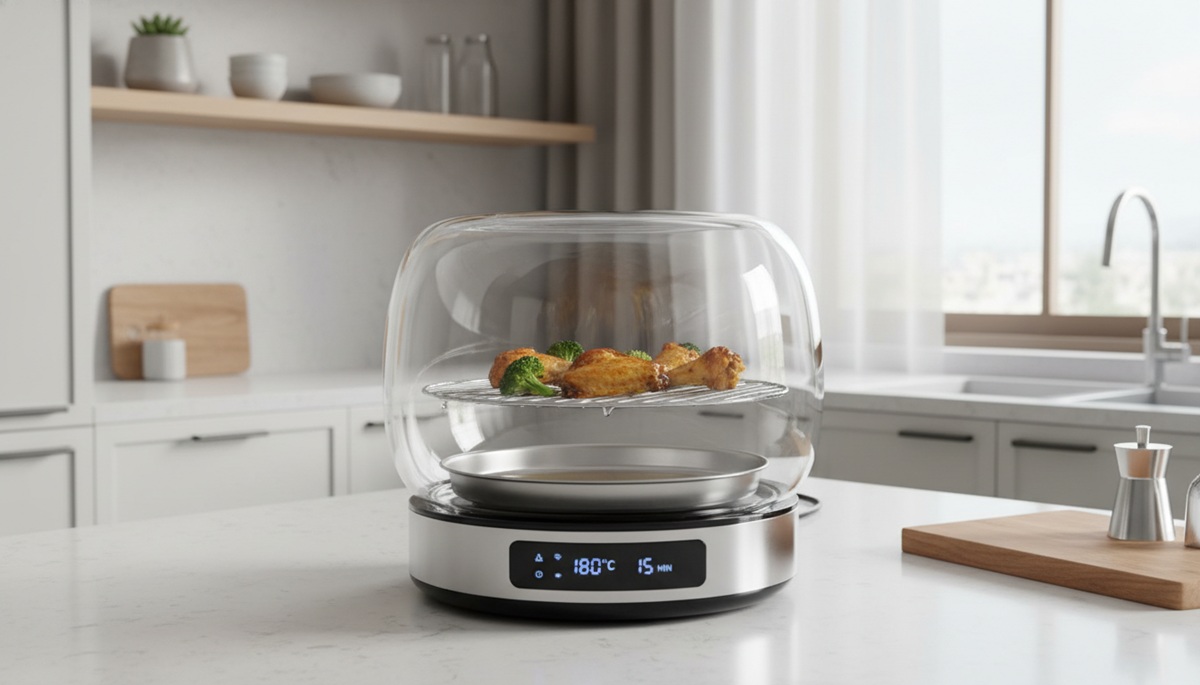
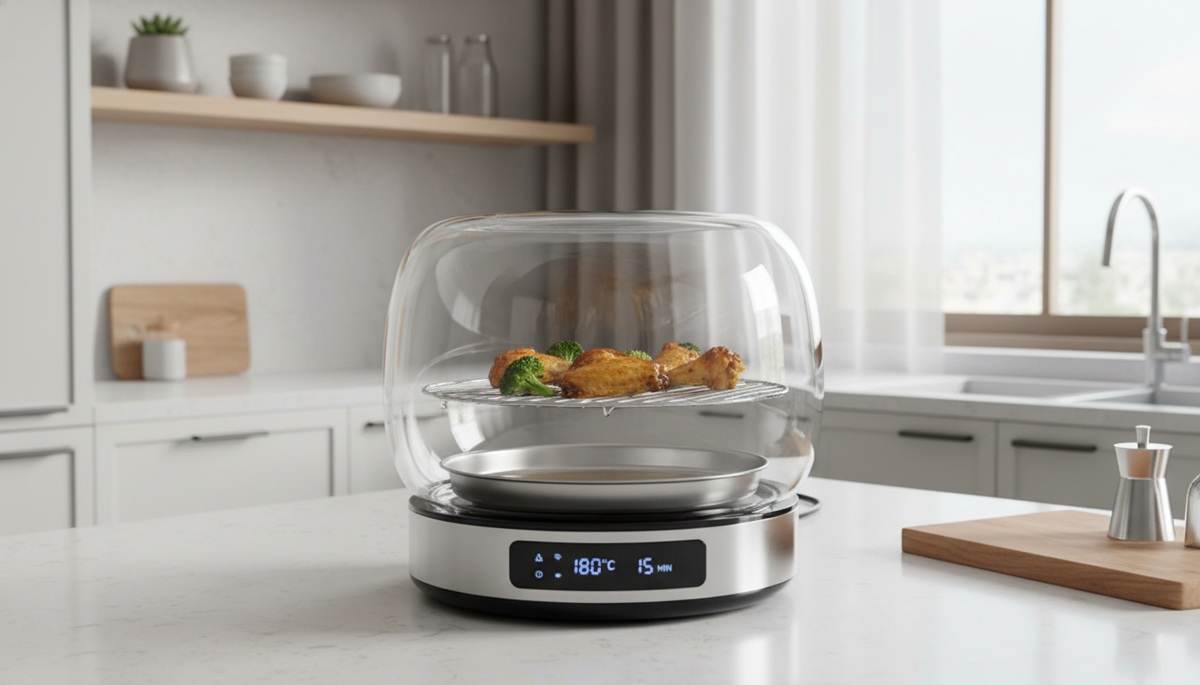
Glass air fryers typically use a large heat-resistant glass bowl where food is cooked using convection heat.
Advantages
- Completely non-coated cooking surface
- Easy to see food while cooking
- No risk of coating peeling
- Very easy to clean
Disadvantages
- Glass can be heavy
- Larger countertop footprint
- Fewer digital features in some models
One popular model is the Big Boss 16Qt Glass Air Fryer, which uses a transparent bowl and convection heating system.
If you want a deeper breakdown of glass models, read this guide:
Stainless Steel Air Fryer: Pros and Cons
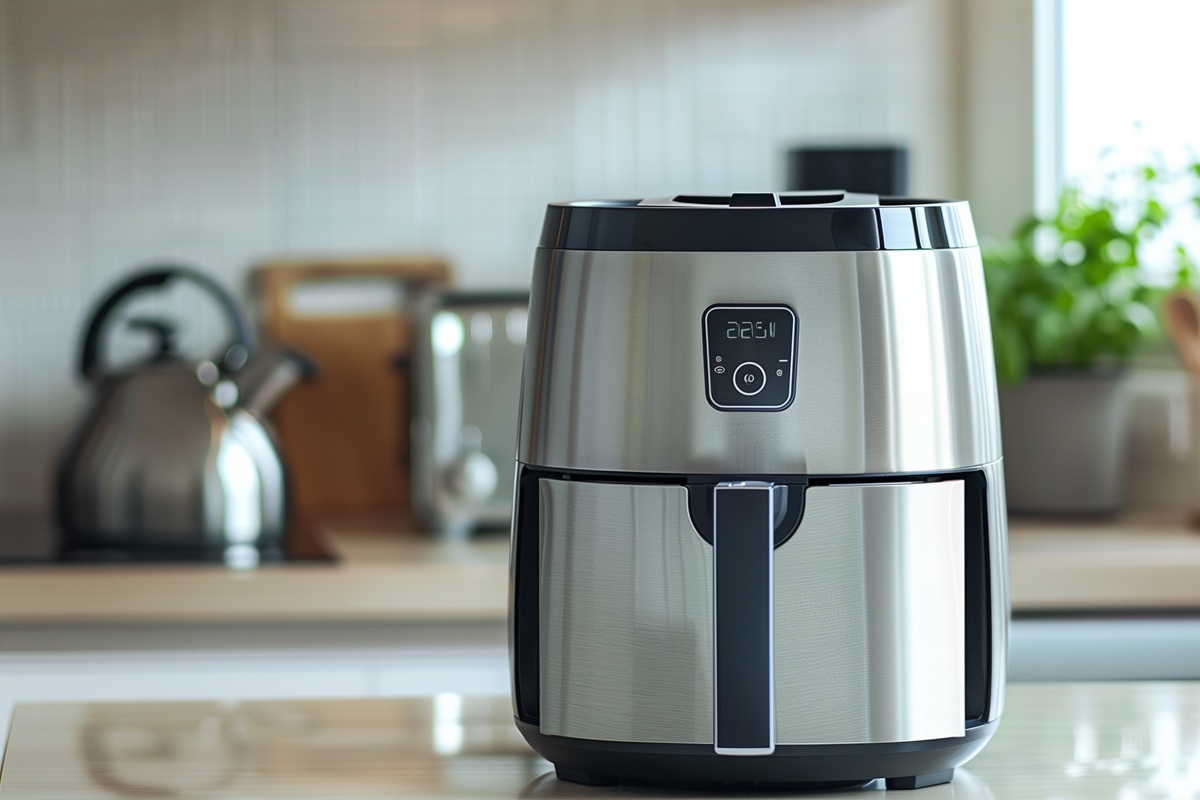
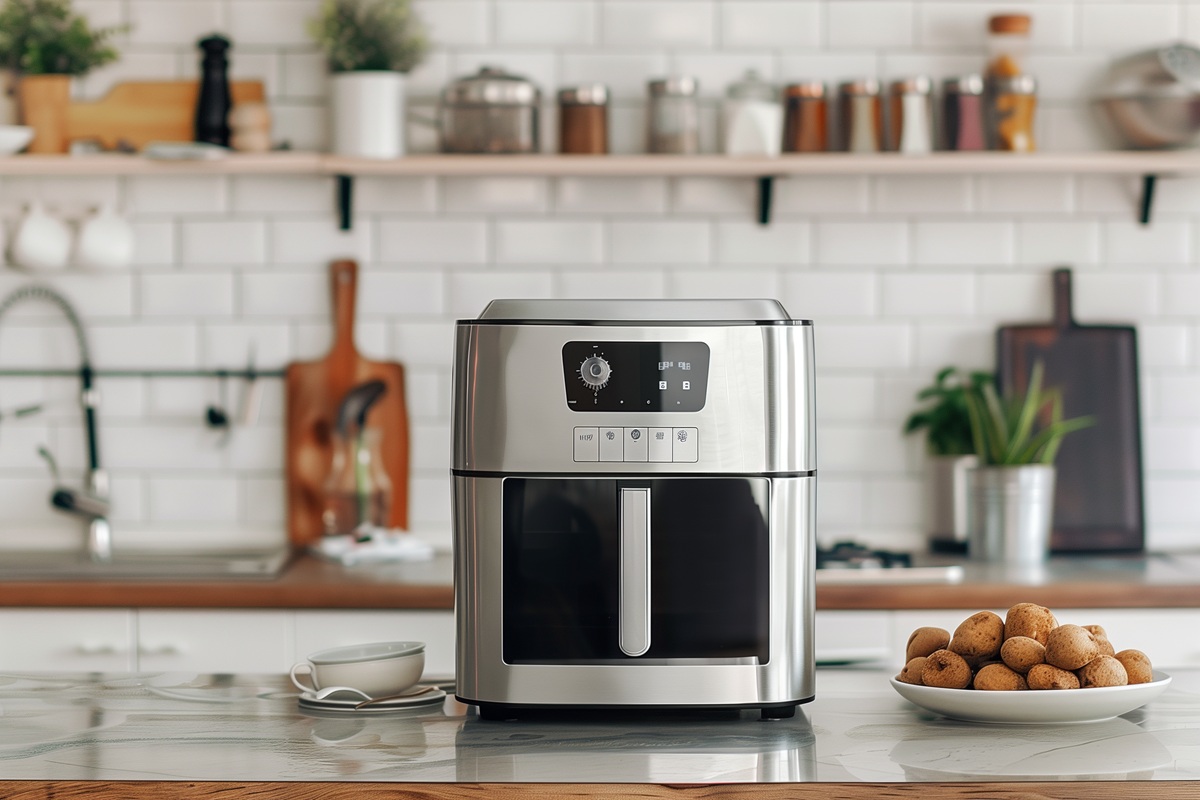
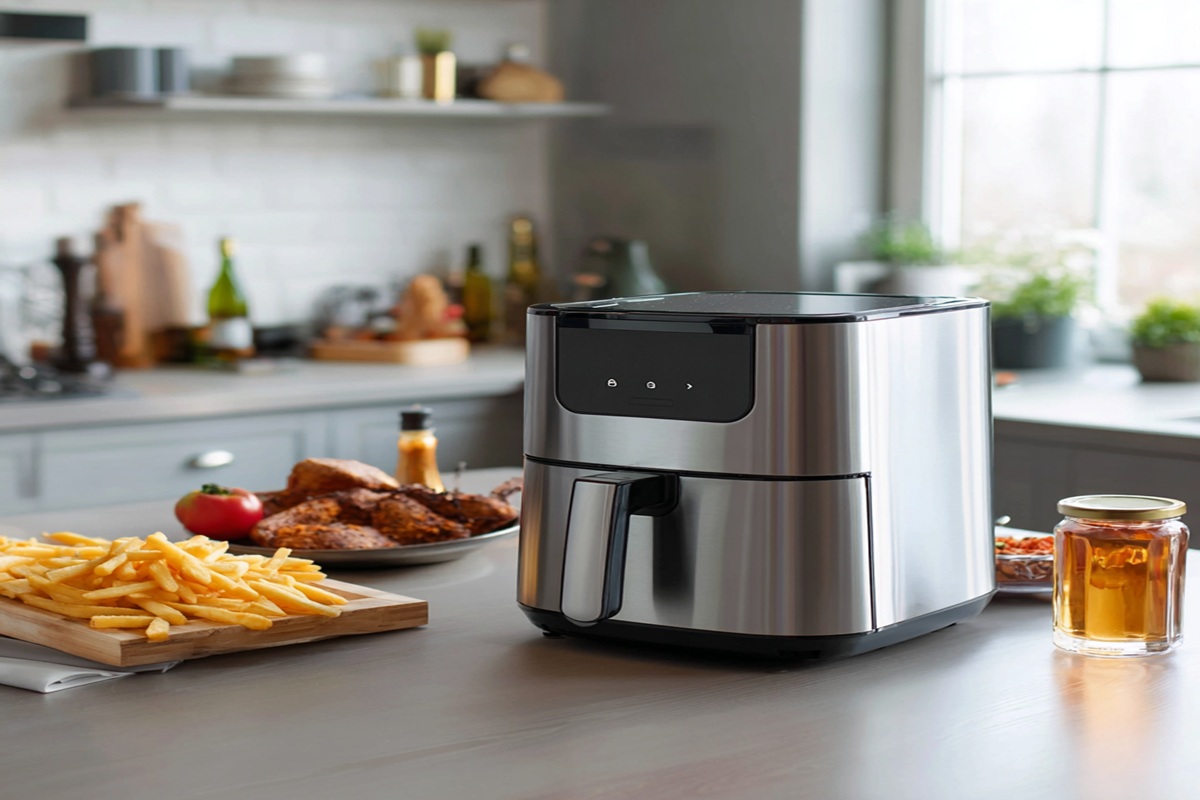
Stainless steel air fryers typically use a metal interior with racks or trays rather than a basket.
Advantages
- Extremely durable material
- Used in professional kitchens
- No chemical coatings
- Often part of multi-function air fryer ovens
Disadvantages
- Cannot see food while cooking
- Exterior can become hot
- Slightly harder to clean grease
A well-known stainless steel option is the Instant Pot Omni Plus, which features a stainless steel interior and multi-rack system.
Glass vs Stainless Steel Air Fryer: Key Differences
| Feature | Glass Air Fryer | Stainless Steel Air Fryer |
|---|---|---|
| Material | Heat-resistant glass | Stainless steel |
| Coating | None | None |
| Visibility | Full visibility | No visibility |
| Durability | Can break if dropped | Very durable |
| Cleaning | Very easy | Moderate |
| Cooking style | Bowl convection | Oven-style airflow |
Both materials are widely recommended for PFAS-free cooking appliances.
Which One Is Safer?
In terms of chemical safety, both materials are considered very safe.
Glass is chemically inert, meaning it does not react with food.
Stainless steel is food-grade metal that has been used in cookware for decades.
The main difference is:
Glass offers zero metal interaction, while stainless steel offers maximum durability.
Either option is generally far safer than traditional air fryers that rely on nonstick coatings.
How to Choose the Right Option
Choose a glass air fryer if you want:
- Full transparency during cooking
- A completely non-coated cooking surface
- Easy cleaning
Choose a stainless steel air fryer if you want:
- A more durable appliance
- Multi-function cooking features
- Oven-style air frying
Final Verdict
Both glass and stainless steel air fryers are excellent options for people who want to avoid PFAS and nonstick coatings.
Glass air fryers offer the purest cooking surface, while stainless steel air fryers provide durability and versatility.
If your goal is to build a PFAS-free kitchen, either material is a strong upgrade from traditional nonstick air fryers.
For a full list of recommended PFAS-free models, see the guide below.
FAQ
Are glass air fryers safer than stainless steel ones?
Both materials are considered safe. Glass is chemically inert, while stainless steel is durable and commonly used in cookware.
Do glass air fryers contain PFAS?
No. Glass air fryers usually use a glass bowl with no chemical coatings.
Are stainless steel air fryers non-toxic?
Yes. Food-grade stainless steel is widely used in cookware and does not contain PFAS coatings.