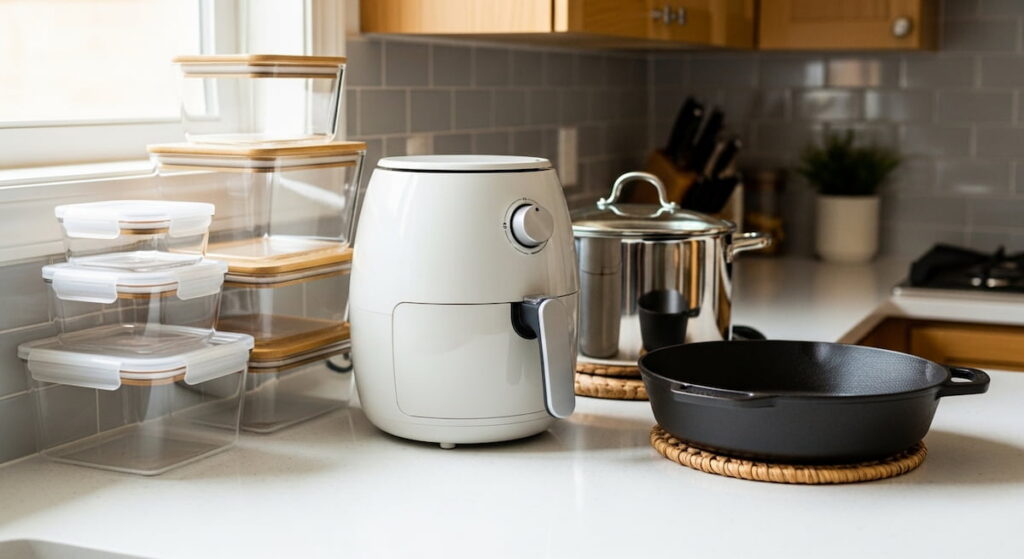
The safest non toxic cookware for new parents is a question that gets urgent fast — usually around the time a baby starts solid foods and you realize every pan, pot, and appliance in your kitchen was chosen before you were thinking about what touches your child’s food at high heat. I went through this exact process in our house. Here’s the priority order that actually makes sense.
Why New Parents Need to Think Differently About Cookware
Before a baby arrives, cookware safety is an abstract concern for most households. After a baby starts eating, it becomes concrete: the same nonstick pan you’ve used for years is now cooking food that goes directly into a small body with a developing immune system, endocrine system, and organ function. The stakes are different, and the cookware choices should reflect that.
The primary concern is PFAS — per- and polyfluoroalkyl substances — used in nonstick coatings on pans, baking sheets, and air fryer baskets. The EPA has identified PFAS compounds as an area of serious ongoing health concern, with research linking chronic exposure to immune system effects, hormone disruption, and developmental impacts. For an infant or toddler eating from PFAS-coated cookware multiple times daily, the cumulative exposure picture is different from an adult eating the same way.
The good news is that the swap doesn’t have to happen all at once. Replacing the highest-exposure items first — the ones that contact food at high heat most frequently — covers most of the risk with a fraction of the cost of replacing everything simultaneously.
Safest Non Toxic Cookware for New Parents: Priority Order
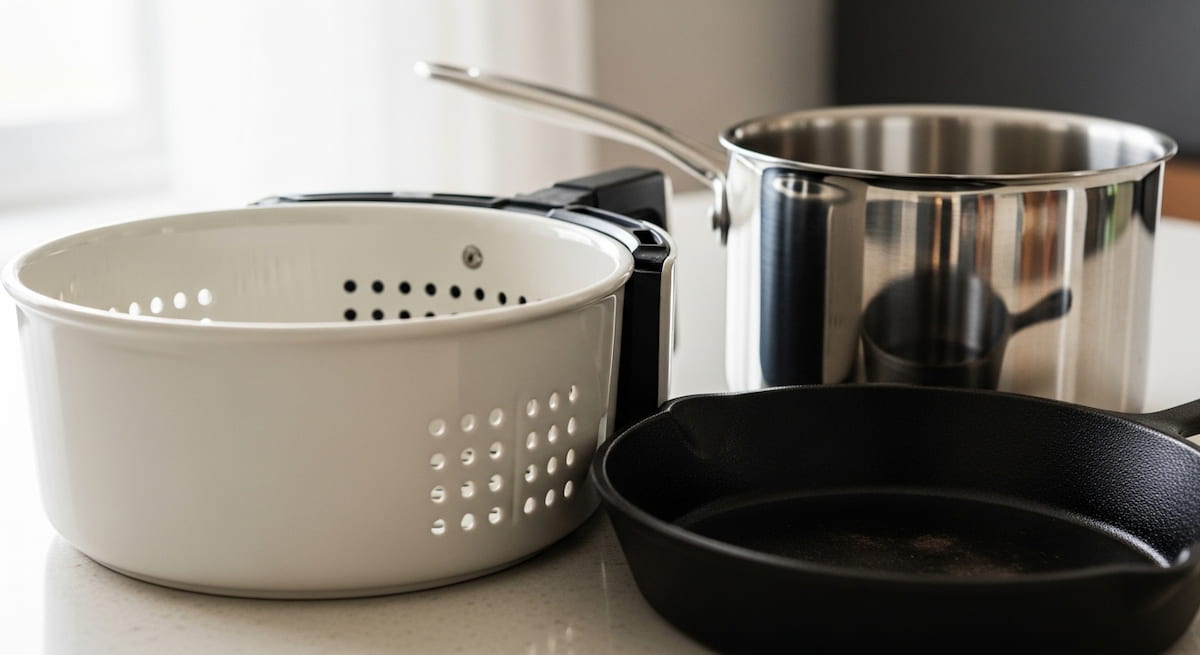
Ceramic air fryer, cast iron skillet, and stainless steel saucepan — the three highest-impact cookware swaps for new parents eliminating PFAS from the kitchen.
1. Air Fryer: Replace PTFE Basket With Ceramic First
If you use an air fryer regularly — and most families with young children do, because it’s the fastest way to cook kid-friendly food on a weeknight — the basket coating is your highest-priority swap. Air fryers run at high heat with food in direct contact with the basket surface, and they run frequently. A PTFE-coated basket that’s scratched or worn releases fluorinated compounds into the food cooking against it.
The Ninja AF150AMZ uses a ceramic-coated basket with no PTFE and no PFAS anywhere on the cooking surface. It’s compact enough for everyday family cooking, dishwasher safe, and holds up under the kind of daily use that comes with feeding young children. This is the first swap I’d make in any new parent’s kitchen.
2. Everyday Frying Pan: Replace Nonstick With Ceramic Coated
The nonstick frying pan is the second-highest priority because it’s used daily, often at high heat, and often for the proteins and eggs that make up most of a young child’s diet. A scratched PTFE frying pan coating contaminates food the same way a scratched air fryer basket does — and most nonstick pans in active family kitchens show significant wear within 12 to 18 months of daily use.
Ceramic-coated pans are the most direct replacement — same nonstick performance, no PTFE. Cast iron is the most durable alternative — no coating at all, lasts indefinitely, and adds a small amount of dietary iron to food cooked in it. Either works well. For new parents who need an easy transition, ceramic-coated is the lower learning-curve option. For those willing to adjust cooking technique slightly, cast iron is the most long-term reliable choice.
3. Saucepan: Switch to Stainless Steel for Purees and Baby Food
If you’re making purees — whether for traditional spoon-feeding or to use alongside baby led weaning — the saucepan that cooks those purees matters. A nonstick-coated saucepan heats soft vegetables and proteins at direct contact for extended periods. Stainless steel saucepans have no coating at all — nothing to degrade, nothing to transfer, and they’re dishwasher safe and effectively indestructible under normal use.
For large-volume family cooking, the Instant Pot Omni Plus gives you oven-style air frying capacity in a stainless steel interior — no PTFE coating anywhere on the cooking surfaces, and enough capacity to cook for the whole family while simultaneously preparing a separate toddler portion.
4. Food Storage: Replace Plastic With Glass
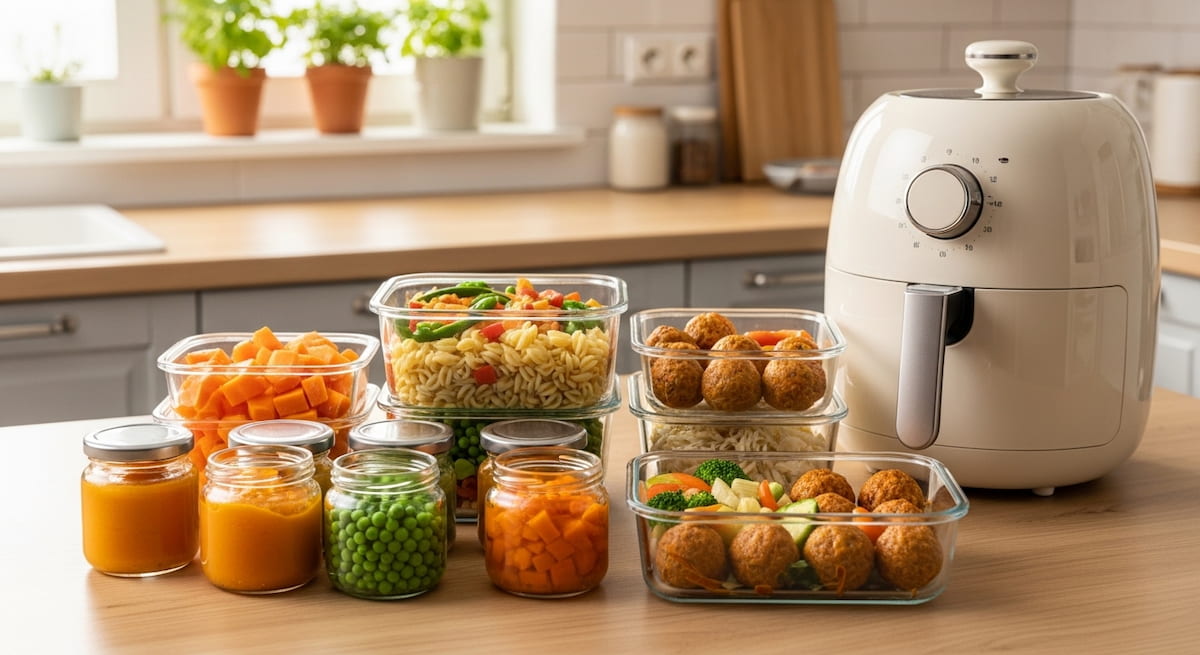
Glass food storage containers eliminate chemical migration from plastic — especially important when storing warm purees or reheating toddler meals.
Plastic food storage containers are a consistent PFAS and plasticizer exposure source — particularly when used to store warm food or reheated in a microwave. Heat accelerates chemical migration from plastic surfaces into food, and baby purees stored warm in plastic containers are one of the highest-exposure food storage scenarios in a new parent’s kitchen.
Glass containers eliminate this entirely. Nothing migrates from glass regardless of temperature. Replace plastic containers incrementally — start with the ones used most often for hot food storage and puree portioning, then work through the rest as they wear out or as budget allows.
Non-Toxic Cookware Priority Summary for New Parents
| Priority | Item to Replace | Safe Replacement | Why This Priority |
|---|---|---|---|
| 1st | PTFE air fryer basket | Ceramic air fryer (Ninja AF150AMZ) | Daily high-heat direct food contact |
| 2nd | Nonstick frying pan | Ceramic-coated or cast iron pan | Daily use, high heat, direct contact |
| 3rd | Nonstick saucepan | Stainless steel saucepan | Purees and baby food cooking |
| 4th | Plastic food containers | Glass storage containers | Hot food storage and reheating |
| 5th | Nonstick baking sheets | Uncoated stainless steel sheets | Oven cooking surfaces |
What You Don’t Need to Replace Right Away
Not everything needs to change at once. Stainless steel and cast iron items you already own are fine — they have no coating to degrade and no PFAS concern. Silicone bakeware and utensils rated for high heat are generally safe. Wooden utensils and cutting boards present no chemical concern. The items worth prioritizing are specifically the ones with synthetic nonstick coatings that contact food at high heat on a daily basis — the air fryer basket and the everyday frying pan cover the vast majority of that exposure in most households.
For more on reducing PFAS exposure across the whole kitchen, our guide on how to reduce PFAS exposure in your kitchen covers every swap worth making. And for the full breakdown of safe air fryer options specifically, our PFAS-free air fryer guide is the place to start.