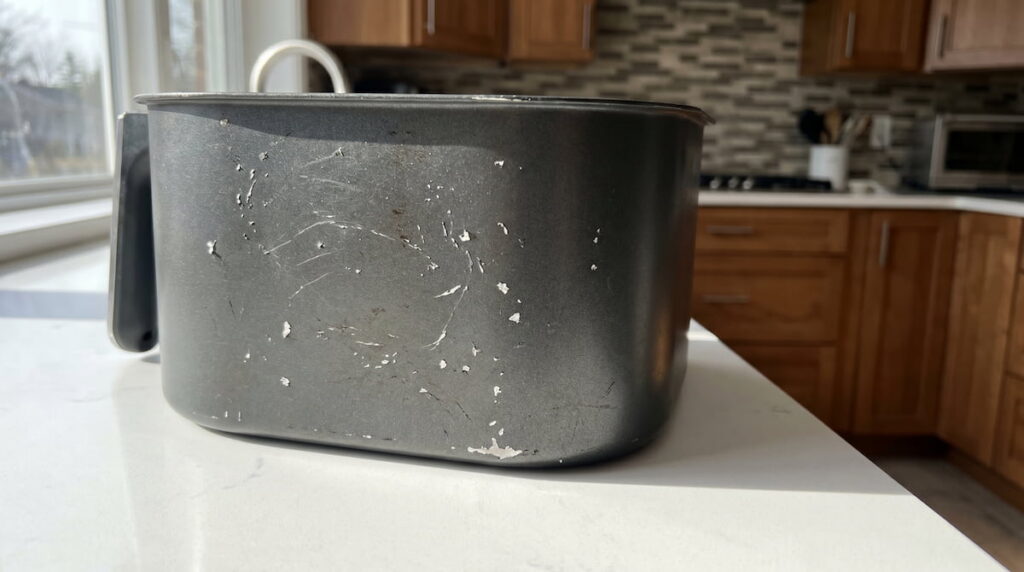
Is a scratched air fryer basket dangerous? Yes — depending on the coating type, a scratched basket can release chemical particles directly into your food, and most families don’t realize this until the damage is already done.
I’m Wook, a bus driver and dad of two teenage boys. When I noticed deep scratches on our air fryer basket about eight months into daily use, I started digging into what those coatings are actually made of — and what happens when they break down. Here’s everything I found.
What Is the Coating Inside Your Air Fryer Basket?
Most air fryer baskets are coated with one of three materials:
- PTFE (Teflon) — the most common nonstick coating, made with fluoropolymers
- Ceramic — a silica-based coating marketed as PFAS-free
- Stainless steel — no coating at all, naturally non-toxic
The problem is that PTFE coatings — including older formulations that contained PFOA — can begin to degrade when scratched or overheated. According to the EPA’s PFAS overview, certain fluoropolymer chemicals have been linked to health concerns with prolonged exposure.
Is a Scratched Air Fryer Basket Dangerous? Here’s the Real Answer
It depends on what your basket is coated with and how deep the scratches are.
| Coating Type | Scratched Risk Level | What Happens |
|---|---|---|
| PTFE (Teflon) | ⚠️ High | Flakes can enter food; fumes release at high heat |
| Ceramic | 🟡 Low–Medium | Inert particles; less chemical risk but coating wears faster |
| Stainless Steel | ✅ Minimal | No coating to peel; safest when scratched |
Surface-level scratches on a ceramic basket are far less alarming than deep gouges on a PTFE-coated basket used at 400°F every day. The heat is what activates the danger — scratches just accelerate the breakdown.
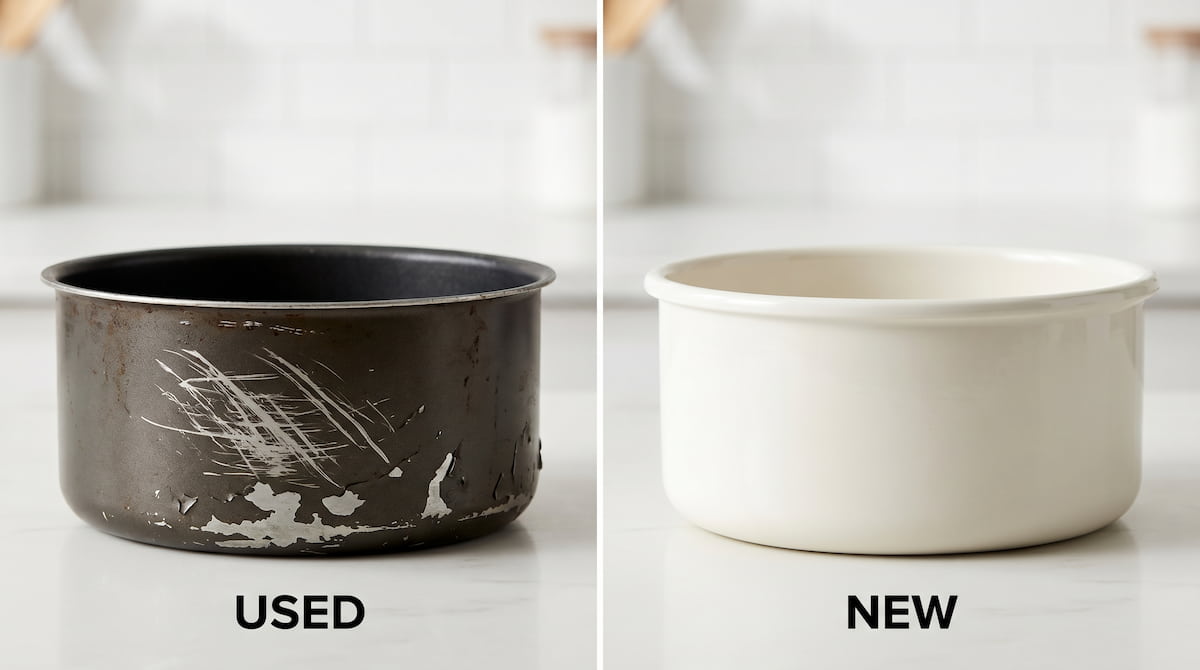
How to Tell If Your Basket Is Past the Safe Point
These are the signs I personally look for when checking our basket each month:
- Visible flaking or peeling — black or dark specks in food after cooking
- Scratches deep enough to expose the bare metal underneath
- Discoloration or bubbling near the scratched area
- A chemical or plastic smell during normal cooking temps
If you see any of these, stop using the basket immediately. No amount of careful washing fixes a compromised coating.
What My Family Did After We Found the Scratches
We stopped using our old basket the same week I found deep gouges in the bottom. After researching for a few weeks, we switched to the Ninja AF150AMZ, which uses a ceramic-coated basket that’s free of PTFE and PFAS. The difference in peace of mind alone was worth it for our family.
For families who want to go even further, the Big Boss 16Qt Glass Air Fryer eliminates the coating question entirely — you’re cooking in a glass bowl with no chemical surface at all.
If you want a full breakdown of which baskets are actually safe, our PFAS-Free Air Fryer Guide covers every major material type with specific product recommendations.

Can You Still Use a Lightly Scratched Basket?
Light surface marks on a ceramic basket — the kind metal tongs leave — are generally considered low risk. The ceramic layer is inert, meaning even if small particles enter your food, they don’t carry the same chemical risk as PTFE flakes.
That said, once scratches deepen and you can see the metal base layer, it’s time to replace. We also recommend checking whether your specific model sells a replacement ceramic basket — many do, which is a far cheaper fix than buying a whole new unit.
The Safest Long-Term Solution
If your basket is scratched beyond surface level, here are your three options in order of cost:
- Buy a replacement basket — works if your model supports it (Ninja usually does)
- Upgrade to a ceramic model — lower long-term risk than PTFE
- Switch to stainless or glass — eliminates coating risk permanently
For most families, a ceramic replacement basket is the best middle ground. For families with young kids or anyone with chemical sensitivities, going straight to glass or stainless is the smarter move.
See Today’s Price on Amazon →If you’re also noticing a chemical smell from your air fryer — which often accompanies coating damage — our next guide in this series covers exactly what those fumes are and whether they’re dangerous for your household.