
Chemicals air fryers release during cooking are rarely listed on the box — but they’re worth understanding before you use one daily in a family kitchen. The type and quantity of compounds released depends almost entirely on what your basket is made of and how hot it runs, not on the brand name or price tag.
I went through this research process after noticing that some air fryer sessions left our kitchen smelling noticeably different than others. The difference turned out to be coating material — and once I understood what each material releases under heat, the choice of which air fryer to use became a lot clearer.
Here’s a complete breakdown of what air fryers actually release, which materials are the source, and what your family can do about it.
The Main Chemicals Air Fryers Release
There are four primary categories of compounds that air fryers can release during normal operation. Not all air fryers release all of these — the specific mix depends heavily on basket material and cooking conditions.
1. PTFE Decomposition Byproducts
PTFE — polytetrafluoroethylene, the compound in Teflon — is the most discussed chemical source in air fryer safety conversations. Under normal temperatures it is largely inert, but when a PTFE-coated basket is scratched, overheated, or degrading, it begins releasing fluorinated compounds. These include perfluorocarboxylic acids and ultrafine fluorinated particles that are inhaled and not easily cleared by the body.
2. PFAS-Related Compounds
PFAS — per- and polyfluoroalkyl substances — are a broader class of chemicals that includes PTFE. Some air fryer coatings use PFAS compounds beyond just PTFE, and these can off-gas during heating. PFAS are often called “forever chemicals” because they accumulate in body tissue and the environment without breaking down. According to the EPA’s PFAS overview, exposure has been linked to hormonal disruption, immune system effects, and certain cancers at high long-term doses.
3. VOCs From Heated Coatings and Oil
Volatile organic compounds are released both from coating surfaces under heat and from cooking oil that burns onto basket surfaces. Common VOCs from air fryer cooking include formaldehyde, acetaldehyde, and acrolein — all respiratory irritants at elevated concentrations. Our detailed guide on air fryer VOC emissions breaks down which materials release the most.
4. Ultrafine Particles
High-heat cooking generates ultrafine particles — airborne particles smaller than 0.1 microns that penetrate deep into lung tissue. These come from both food and from coating surfaces under thermal stress. A HEPA filter captures particles down to 0.3 microns, meaning some ultrafine particles pass through even quality air purifiers — which is why ventilation during cooking matters regardless of appliance type.
Which Air Fryer Materials Release the Most Chemicals?
| Basket Material | PTFE Risk | PFAS Risk | VOC Risk | Overall |
|---|---|---|---|---|
| Standard Nonstick (PTFE) | ❌ High | ❌ High | ⚠️ Moderate | ❌ Highest risk |
| Generic Nonstick (unknown) | ⚠️ Unknown | ⚠️ Unknown | ⚠️ Moderate | ⚠️ Unverified |
| Ceramic Coating | ✅ None | ✅ None | ✅ Low | ✅ Low risk |
| Stainless Steel Interior | ✅ None | ✅ None | ✅ Very Low | ✅ Very low risk |
| Glass Interior | ✅ None | ✅ None | ✅ Very Low | ✅ Lowest risk |
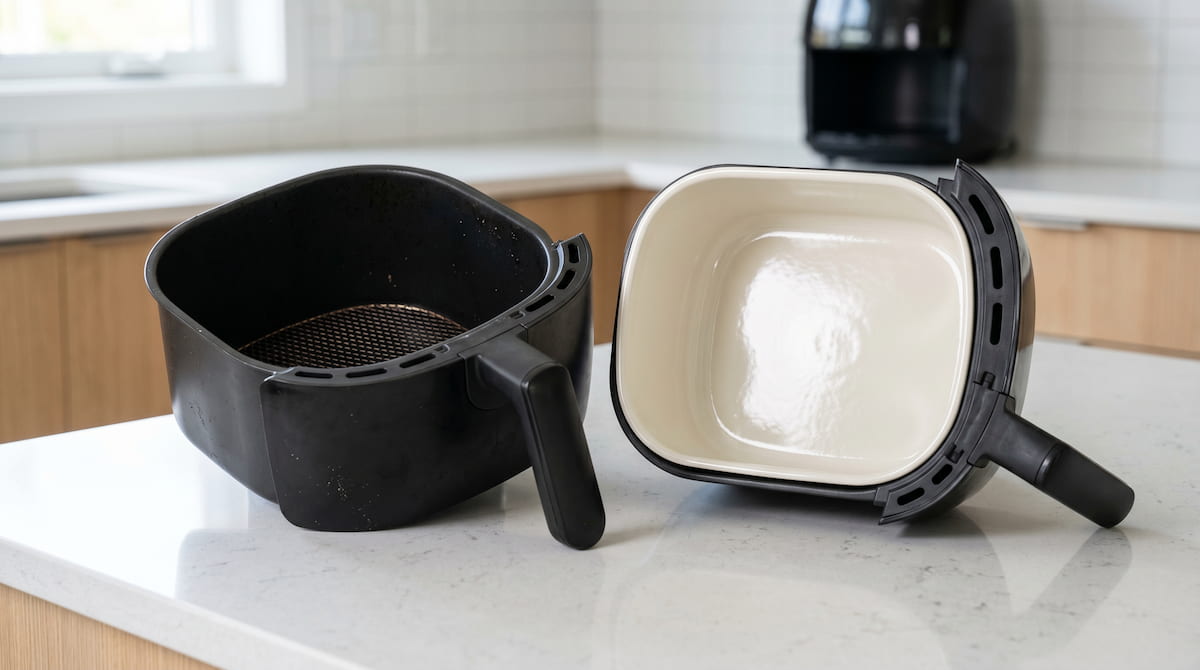
Ceramic-coated baskets contain no PTFE or PFAS — significantly reducing the chemical compounds released during cooking.
When Does Chemical Release Peak?
The conditions that drive the highest chemical output from an air fryer are predictable and largely avoidable:
- Scratched or damaged coating — the most significant risk factor. Once the coating surface is compromised, off-gassing increases dramatically at any temperature
- Temperatures above 400°F — thermal stress on nonstick coatings accelerates compound release, especially near the 500°F threshold where PTFE actively decomposes
- Empty preheating at max temperature — no food buffer means the basket surface absorbs the full heat load directly
- Grease buildup on the basket — burnt oil residue adds VOC output on top of any coating-related release
- Poor kitchen ventilation — doesn’t increase what’s released, but dramatically increases what you inhale by allowing compounds to accumulate
For a practical look at how smoke fits into this picture, our guide on whether air fryer smoke is toxic covers the visible side of this same issue.
Chemical Safety Checklist for Air Fryer Use
✅ Low chemical exposure — your setup is working:
- Basket is ceramic-coated, stainless steel, or glass
- No visible scratches, peeling, or discoloration on cooking surfaces
- Window open or range hood running during every cook
- Basket cleaned after each use — no grease buildup
- Cooking temperatures kept at or below 380°F for most meals
⚠️ Moderate concern — make adjustments:
- Standard nonstick basket that appears intact but is 2+ years old
- Occasional chemical smell that fades quickly
- Cooking in a kitchen without consistent ventilation
- Unable to confirm whether basket material is PTFE-free
❌ High concern — stop using and replace:
- Coating visibly scratched, peeling, or flaking
- Persistent chemical smell during normal cooking temperatures
- Family members reporting headaches or eye irritation after cooking sessions
- Basket material unknown and manufacturer provides no safety documentation
How to Reduce Chemical Exposure From Your Air Fryer
- Choose a ceramic or glass-interior model — this eliminates PTFE and PFAS release at the source rather than managing it after the fact
- Ventilate every time you cook — open a window, run the range hood, or use a fan. Our kitchen ventilation guide has specific tips for different kitchen layouts
- Keep cooking temperatures moderate — most recipes work well at 350–380°F with significantly less coating stress
- Use parchment or silicone liners — reduces direct oil contact with the basket surface, cutting down on burn-off VOCs
- Clean the basket after every use — grease left on the surface will burn during the next cook and add to VOC output
- Inspect the basket monthly — replace at the first sign of coating damage, not after it becomes severe

Consistent ventilation during cooking is the most accessible way to reduce chemical buildup from any air fryer in any kitchen.
Which Air Fryer Releases the Fewest Chemicals?
The answer comes down to material. Our family switched to the Ninja AF150AMZ specifically because its ceramic-coated basket carries no PTFE and no PFAS — meaning the two highest-risk chemical categories are removed entirely. The ceramic surface stays stable under normal cooking temperatures and doesn’t off-gas fluorinated compounds even with daily use.
For families who want the absolute lowest chemical output, the Big Boss 16Qt glass air fryer is the most inert option available. A borosilicate glass cooking chamber has nothing to degrade, nothing to scratch, and nothing to off-gas — regardless of temperature or how long you’ve owned it.
For a full side-by-side comparison of the safest materials across every budget, see our PFAS-free air fryer guide.
See Ninja AF150AMZ on Amazon → See Big Boss Glass Air Fryer on Amazon →Frequently Asked Questions
Do all air fryers release toxic chemicals?
Not all air fryers release the same chemicals. PTFE-based nonstick models carry the highest risk, especially when the coating is scratched or overheated. Ceramic-coated, stainless steel, and glass-interior models release significantly fewer harmful compounds during normal use.
Are the chemicals from air fryers dangerous to children?
Children are more vulnerable to airborne compounds because they breathe faster relative to body weight. Families with young children benefit most from switching to a PTFE-free model and maintaining consistent kitchen ventilation during cooking.
How do I know if my air fryer releases PFAS?
Check the manufacturer’s product page or documentation for explicit statements that the basket is PTFE-free and PFAS-free. If that language isn’t present and the basket has a nonstick coating, assume it may contain PTFE until confirmed otherwise.
Does cooking oil affect how many chemicals an air fryer releases?
Yes. Cooking oil that burns onto a basket surface adds VOC output on top of any coating-related release. Using a small amount of high smoke-point oil and keeping the basket clean significantly reduces this contribution.
Can I make my current air fryer safer without replacing it?
If the basket is intact and you can confirm it’s PTFE-free, consistent ventilation, moderate cooking temperatures, clean basket maintenance, and parchment liners can meaningfully reduce your exposure. If the coating is damaged or the material is unknown, replacement is the more reliable path.
The Bottom Line on Chemicals Air Fryers Release
The chemicals air fryers release are real — but the risk level varies enormously based on one primary factor: basket material. PTFE-based coatings carry the highest chemical release risk, especially as they age and wear. Ceramic, stainless steel, and glass interiors eliminate the most concerning compounds entirely.
Combined with consistent ventilation and clean cooking habits, choosing the right material makes daily air fryer use a genuinely low-risk activity for most families. If you’re ready to compare the safest options available, our PFAS-free air fryer guide covers the top-rated ceramic, stainless, and glass models in 2026.