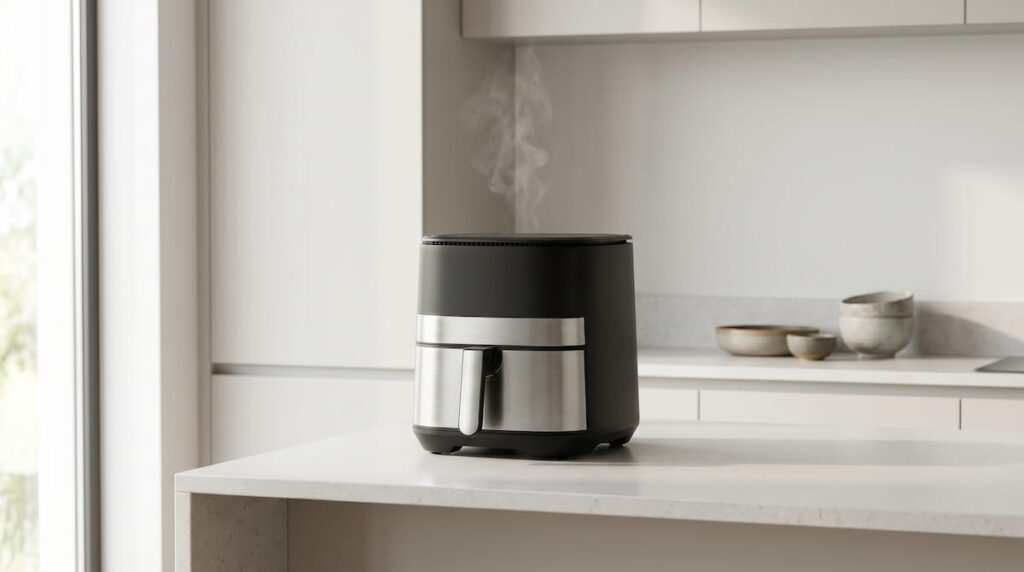
Air fryer smoke toxic concerns come up more than most appliance brands want to admit — and if you’ve ever seen your air fryer puffing out dark smoke or smelled something sharp and chemical during cooking, those concerns are worth taking seriously. The smoke itself isn’t always dangerous, but what’s in it depends heavily on your basket material and what’s burning.
After my wife mentioned a sharp smell coming from our old air fryer during high-heat cooking, I spent time looking into exactly what air fryer smoke contains. What I found changed how we cook and which appliance we use.
Here’s a straightforward breakdown of what’s actually in air fryer smoke, when it becomes a real health concern, and what our family does about it.
What Causes Smoke in an Air Fryer?
Not all air fryer smoke comes from the same source. There are two main types, and they carry very different risk levels:
1. Food-based smoke — This comes from grease dripping onto the heating element, or from high-fat foods burning at the bottom of the basket. It smells like burnt food, not chemicals. Unpleasant, but not the primary safety concern.
2. Coating-based smoke — This is the one that matters more for family health. When a nonstick coating — especially PTFE or Teflon-based — is overheated, scratched, or degrading, it begins to off-gas chemical compounds into the smoke. This smoke can smell faintly plastic or chemical, even when cooking normal food.
The distinction matters because coating-based smoke is the kind linked to air fryer VOC emissions and potential respiratory irritation — especially in poorly ventilated kitchens.
Is Air Fryer Smoke Actually Toxic?
The honest answer: it depends on what’s producing the smoke.
| Smoke Source | Toxic Risk | What It Contains |
|---|---|---|
| Burnt grease / food residue | ⚠️ Low–Moderate | Acrolein, aldehydes from oxidized oil |
| Overheated PTFE coating | ⚠️ Moderate–High | PFAS-related compounds, ultrafine particles |
| Damaged / peeling nonstick | ❌ High | Degraded coating particles, VOCs, fumes |
| Ceramic-coated basket | ✅ Very Low | Minimal off-gassing; PTFE-free |
| Stainless steel / glass interior | ✅ Very Low | No coating degradation; inert materials |
According to the EPA’s indoor air quality research, cooking-related VOCs and ultrafine particles are a measurable contributor to indoor air pollution. PTFE-based coatings are specifically noted as producing fluorinated compounds when heated beyond their stable range.
What Temperature Does Air Fryer Smoke Become Dangerous?
PTFE coatings are generally considered stable up to around 500°F under ideal conditions. But in practice, air fryer baskets can experience localized hot spots that exceed this — especially when the basket is dirty, the coating is worn, or you’re running max temperature.
For everyday cooking, most recipes run between 350–400°F. That’s within the safety range for an intact coating. The risk increases significantly when:
- The basket coating is scratched or visibly degrading
- You preheat the fryer empty at max temperature
- Grease residue is burning on the surface
- The unit is more than 3–4 years old with heavy daily use
If you’re seeing dark or chemically-scented smoke at normal cooking temperatures, that’s a sign something is wrong with the coating — not just the food. Our guide on ceramic basket safety for Ninja air fryers explains how to check your basket’s condition.
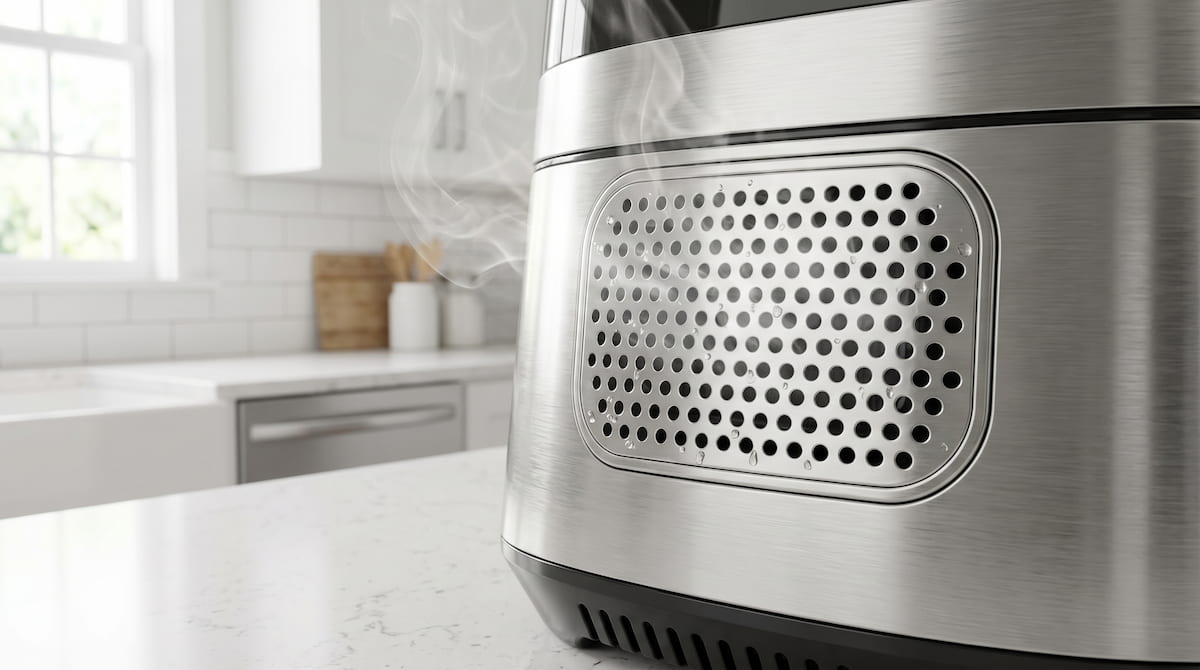
Light steam from an air fryer vent is normal. Dark or chemical-smelling smoke is a warning sign worth acting on.
Quick Safety Checklist: Is Your Air Fryer Smoke Safe?
✅ Normal and low-risk:
- Light white steam from the vents during cooking
- Faint food smell — nothing chemical or plastic
- Basket is ceramic, stainless, or glass with no visible damage
- Kitchen window open or range hood running
⚠️ Watch these warning signs:
- Smoke appears darker than usual
- Smell is sharp, plastic, or chemical — not just burnt food
- Smoke happens even when cooking low-fat foods at moderate temps
- Coating looks dull, discolored, or thinning in spots
❌ Stop using immediately if:
- Visible peeling or flaking on the basket interior
- Strong chemical odor every time you cook
- Smoke triggers your carbon monoxide or smoke detector at normal temperatures
- You can see bare metal beneath the coating
How to Reduce Toxic Smoke From Your Air Fryer
These habits make a real difference for everyday family cooking:
- Keep the basket clean — grease buildup is the most common cause of excess smoke. Clean after every use with warm soapy water and a soft cloth
- Use a parchment or silicone liner — reduces direct grease contact with the coating surface, which is where most burn-off occurs
- Don’t preheat empty at max temperature — this puts the most thermal stress on the coating with no food buffer
- Stay under 400°F when possible — most meals cook well at 360–380°F with less coating stress
- Ventilate every time — open a window or run your range hood. Our guide on how to ventilate your kitchen when using an air fryer covers this in detail
- Replace a damaged basket immediately — a scratched or peeling basket is the single biggest smoke risk factor you can control
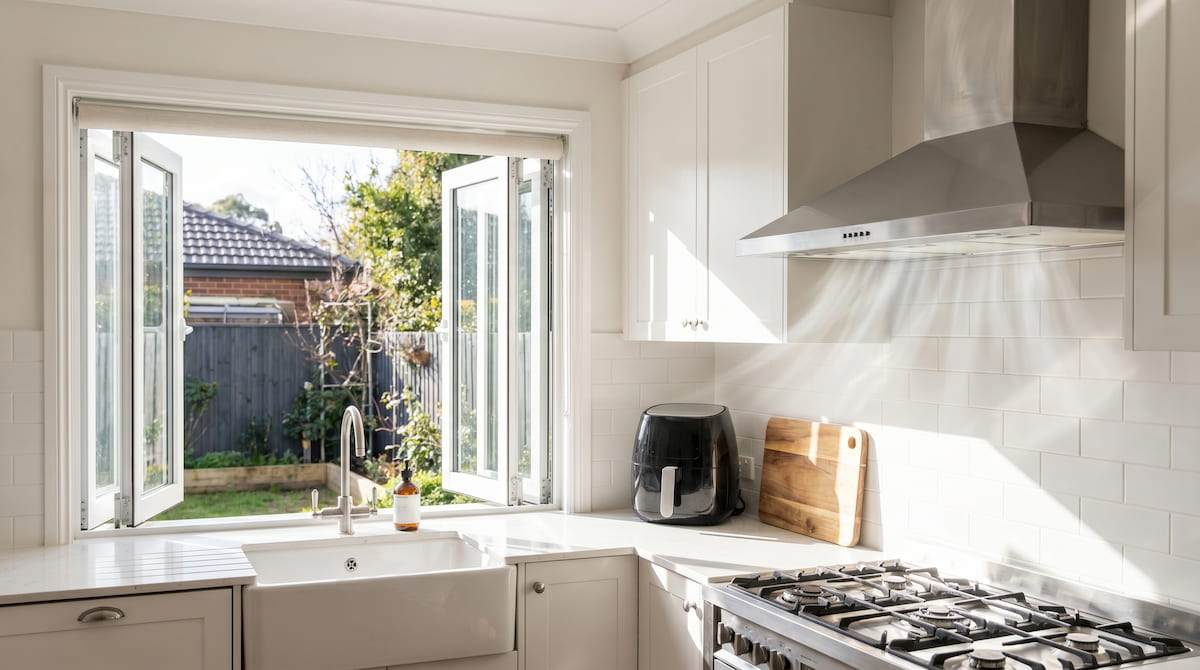
Running the range hood and opening a window are the two most effective ways to clear air fryer smoke from your kitchen quickly.
Which Air Fryer Produces the Least Toxic Smoke?
The safest air fryers for smoke reduction are those with no PTFE coating to degrade. Our family switched to the Ninja AF150AMZ specifically because its ceramic-coated basket is PTFE-free and PFAS-free — meaning even if temperatures run high, the coating isn’t releasing the same class of compounds as traditional nonstick.
For families who want zero coating risk, the Big Boss 16Qt glass air fryer eliminates the issue at the source — a glass cooking chamber has nothing to off-gas, regardless of temperature.
For a full side-by-side comparison of the safest materials, see our PFAS-free air fryer guide.
See Ninja AF150AMZ on Amazon → See Big Boss Glass Air Fryer on Amazon →Frequently Asked Questions
Is it normal for an air fryer to smoke?
Light steam is normal, especially with fatty foods. Visible dark smoke or a chemical smell is not normal and usually points to grease buildup, an overheated coating, or a basket that needs to be replaced.
Can air fryer smoke make you sick?
Occasional light smoke from food is unlikely to cause harm in a ventilated kitchen. Repeated exposure to smoke from a degrading PTFE coating is more concerning — especially for children, people with asthma, and pets like birds, which are extremely sensitive to fluorinated fumes.
Why does my air fryer smell like burning plastic when I cook?
A plastic or chemical smell usually means the coating is off-gassing — either because the unit is new and curing, or because the coating is damaged. If it persists after the first few uses, inspect the basket carefully and consider replacing it.
Does a ceramic air fryer produce less smoke than nonstick?
Yes, in most cases. Ceramic coatings are PTFE-free, so even if they run hot, they don’t release the fluorinated compounds associated with overheated Teflon-style coatings. Food-based smoke from grease is still possible, but the coating itself is far less reactive.
How do I get rid of air fryer smoke smell in my kitchen?
Open windows, run the range hood, and place a bowl of white vinegar on the counter for 30 minutes — it absorbs residual odors effectively. If the smell returns every time you cook, the basket coating is likely the ongoing source.
The Bottom Line on Air Fryer Smoke Toxicity
Air fryer smoke toxic risk is real — but manageable. Food-based smoke from grease is the most common cause and largely controllable through cleaning and liners. Coating-based smoke from damaged or low-quality PTFE baskets is the concern that matters most for long-term family health.
Switching to a ceramic or glass-interior model, keeping the basket clean, and ventilating your kitchen during cooking covers most of the risk. If your current basket is scratched or producing chemical-smelling smoke, that’s your clearest signal to upgrade.
Our PFAS-free air fryer guide compares the safest ceramic, stainless, and glass models available in 2026 — a good next step if you’re ready to make the switch.