
Air fryer VOCs — volatile organic compounds released during cooking — are something every family should understand before their next meal. The real question isn’t whether VOCs are present, but how much, what type, and whether your current air fryer is making it worse than it needs to be.
I started paying attention to this after my wife mentioned a faint plastic smell coming from our old air fryer while she was cooking chicken for the boys. I figured it was just “new appliance smell” — but after digging into the research, I realized coating material matters a lot more than most brands let on.
This guide breaks down what VOCs actually are in the context of air fryers, which materials release the most, and what our family does to keep indoor air clean.
What Are VOCs and Why Do They Matter in the Kitchen?
VOCs — volatile organic compounds — are gases released from certain solid or liquid materials when heated. In the kitchen, they can come from cooking oils, food itself, and the surface materials inside your appliance.
When an air fryer heats up to 375°F or higher, any coating or plastic component that isn’t fully heat-stable can begin off-gassing. This is especially common in cheap nonstick coatings that use PTFE (the compound in Teflon) or other PFAS-related chemicals.
According to the EPA’s indoor air quality guidelines, VOC concentrations indoors can be 2–5 times higher than outdoors, and cooking appliances are a known contributor. For families with kids, elderly members, or anyone with respiratory sensitivity, this is worth taking seriously.
Do All Air Fryers Release VOCs?
Technically, yes — to some degree. But the type and quantity of VOCs depends heavily on what the basket and interior are made of.
| Basket Material | VOC Risk Level | Notes |
|---|---|---|
| PTFE / Teflon Coating | ⚠️ High (above 500°F) | Releases PFAS-related fumes when overheated or scratched |
| Generic Nonstick | ⚠️ Medium–High | Often undisclosed coating composition |
| Ceramic Coating | ✅ Low | PTFE-free and PFAS-free when verified |
| Stainless Steel Interior | ✅ Very Low | No coating to degrade; safest for high-heat use |
| Glass Interior | ✅ Very Low | Inert material; does not off-gas under normal cooking temps |
When Does VOC Release Peak in Air Fryers?
Air fryer VOCs are most likely to spike under these specific conditions:
- First few uses — new coatings cure under heat and release residual manufacturing compounds
- High-temperature cooking (400°F+) — PTFE coatings begin to degrade more rapidly above 500°F, but stress starts earlier
- Scratched or damaged baskets — exposed substrate beneath a damaged coating can release more compounds
- Cooking fatty foods without a liner — oil residue burns on the coating surface and contributes to VOC output
- Poor ventilation — VOCs accumulate faster in closed kitchens or small apartments
If you’ve noticed that chemical smell during the first week of owning a new air fryer, that’s the coating settling. It usually fades. But if the smell persists or returns when the basket is scratched, that’s a sign worth paying attention to. For more on that, our guide on Ninja air fryer ceramic basket safety covers coating degradation in detail.
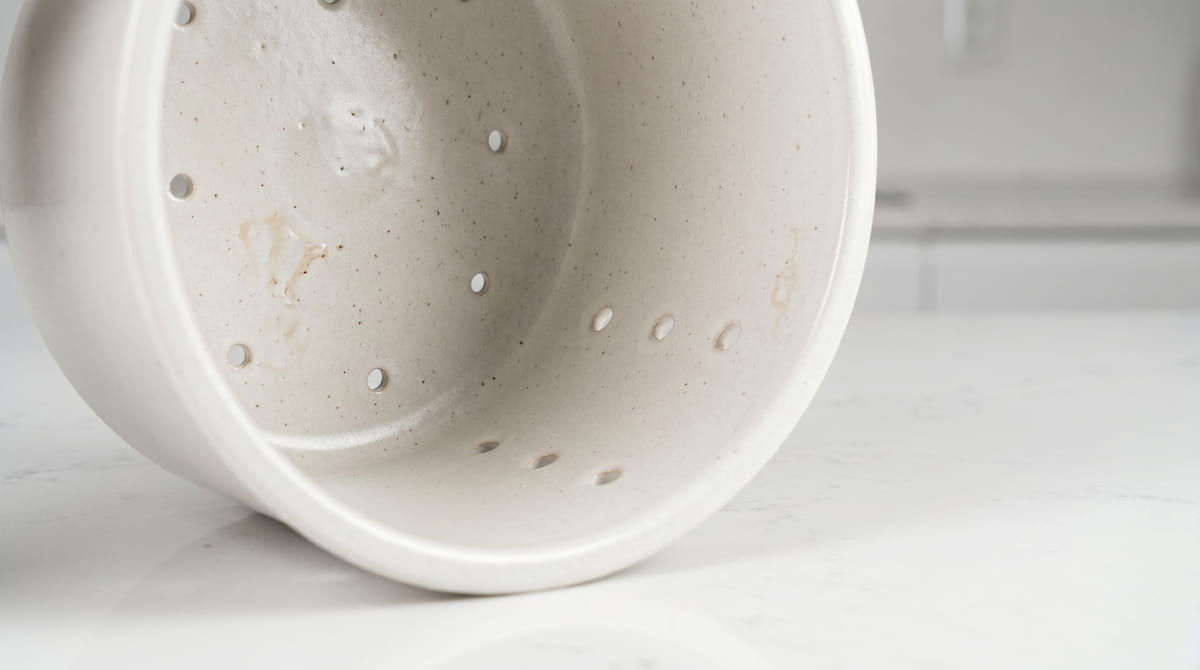
Ceramic-coated baskets are PTFE-free and significantly reduce VOC output compared to standard nonstick.
Ceramic vs Nonstick: Which Releases Fewer VOCs?
This is the question I spent the most time on when we replaced our old air fryer. The short answer: a verified ceramic-coated or stainless steel air fryer releases significantly fewer harmful VOCs under normal cooking temperatures.
PTFE-based coatings are heat-stable up to around 500°F under ideal conditions. But “ideal conditions” means no scratches, no oil residue buildup, and precise temperature control — none of which are guaranteed in everyday home cooking. Once the coating degrades, it off-gases more readily.
Ceramic coatings, by contrast, are made from inorganic silica-based compounds. They don’t contain PTFE or PFAS, so even if they chip over time, the material itself doesn’t produce the same class of compounds.
For a full breakdown of how these materials compare, see our PFAS-free air fryer guide — it covers ceramic, stainless, and glass options side by side.
Quick Safety Checklist: Is Your Air Fryer VOC Risk Low?
Run through this before your next cook:
✅ Safe signs:
- Basket is ceramic-coated, stainless steel, or glass
- No visible scratches or peeling on the basket surface
- Kitchen window open or range hood running
- No persistent chemical smell after first 3–4 uses
- Cooking below 400°F for most meals
⚠️ Watch for these warning signs:
- Faint chemical odor that returns regularly
- Coating looking dull, discolored, or slightly flaking
- Cooking in a small closed room without ventilation
- Fryer is more than 3–4 years old with heavy daily use
❌ Replace immediately if:
- Basket coating is visibly peeling or chipping
- Strong chemical smell during every use
- You can see bare metal beneath the coating surface
- Coating material is unknown (no PFAS-free certification from brand)
How to Reduce VOC Exposure When Using an Air Fryer
Even with a non-toxic model, good habits matter. Here’s what our family does:
- Run the first 2–3 uses empty — this burns off manufacturing residue before food contact
- Always ventilate — open a window, run the range hood, or use a small fan to push air toward a vent. Our full guide on how to ventilate your kitchen when using an air fryer has room-by-room tips
- Stay under 400°F when possible — most meals cook perfectly at 350–380°F
- Use parchment or silicone liners — reduces oil contact with the basket coating, which in turn reduces burn-off VOCs
- Inspect the basket monthly — catch early signs of coating damage before they become a bigger issue
- Don’t preheat empty at max temperature — this is when coating stress is highest

Opening a kitchen window during and after air fryer use is one of the simplest ways to reduce VOC buildup indoors.
Which Air Fryer Has the Lowest VOC Risk?
After switching away from a standard nonstick model, our family has been using the Ninja AF150AMZ. It uses a ceramic-coated basket that is PTFE-free and PFAS-free, which directly addresses the main source of air fryer VOC concern. The coating has stayed intact through consistent daily use, and we haven’t noticed any recurring chemical smell since the first two seasoning runs.
For families who want to go even further, glass-interior models like the Big Boss 16Qt eliminate the coating variable entirely — there’s no coating to degrade because the cooking chamber is borosilicate glass.
See Ninja AF150AMZ on Amazon → See Big Boss Glass Air Fryer on Amazon →Frequently Asked Questions
Are VOCs from air fryers dangerous?
At normal cooking temperatures with an intact non-toxic coating, the VOC output from most modern air fryers is low. The primary risk comes from overheated or damaged PTFE-based coatings, which can release compounds linked to respiratory irritation. Choosing a ceramic or stainless steel model significantly reduces this risk.
How long does the chemical smell from a new air fryer last?
For most models, the initial off-gassing smell from a new unit fades after 3–5 uses. If the smell persists beyond that, it may indicate a lower-quality coating that continues to degrade under heat.
Can air fryer VOCs affect children more than adults?
Yes. Children breathe at a higher rate relative to body weight and spend more time at floor level where some compounds settle. Families with young kids should prioritize ceramic or stainless models and keep kitchens well-ventilated during cooking.
Does cooking oil increase VOC output from air fryers?
It can. When oil burns onto a coated basket surface, the combustion process contributes additional VOCs. Using a small amount of high smoke-point oil and keeping the basket clean reduces this effect.
Is a glass air fryer completely VOC-free?
Glass itself is inert and doesn’t off-gas. However, the heating element and any plastic components in the unit can still contribute minor VOCs. Overall, glass-interior models like the Big Boss have the lowest coating-related VOC risk of any air fryer design.
The Bottom Line on Air Fryer VOCs
Air fryer VOCs are a real consideration — especially if your current model uses an older PTFE-based nonstick coating that’s showing wear. The good news is that switching to a ceramic-coated or glass-interior model, combined with simple ventilation habits, brings the risk down to a very manageable level for most families.
If you’re ready to compare specific non-toxic models, our PFAS-free air fryer guide covers the safest options available in 2026 across every budget and family size.