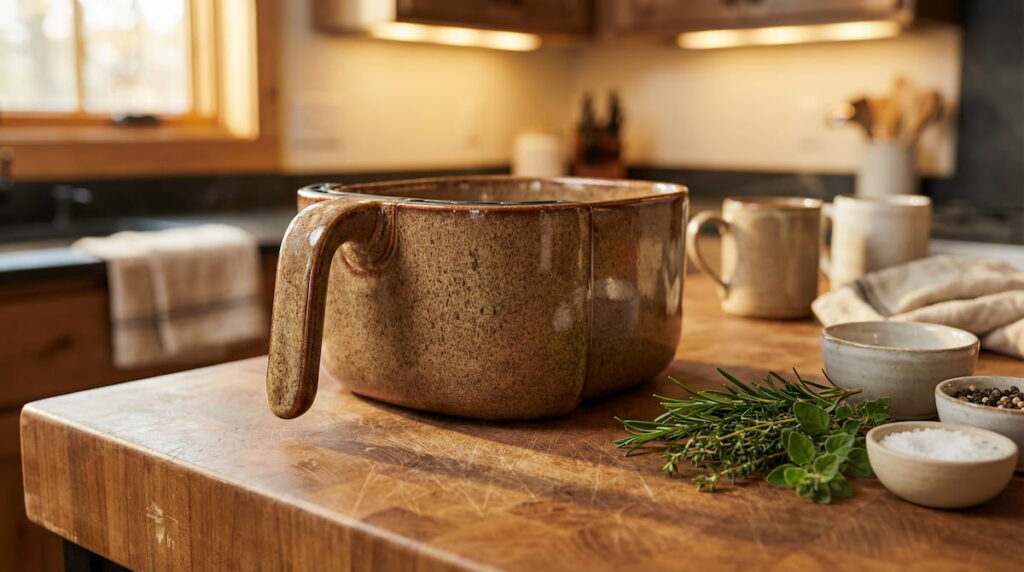
I didn’t pay much attention to what our air fryer basket was made of when we first bought one. It had a nonstick surface, it was easy to clean, and the food came out fine. That was enough for me at the time.
Then the smell started. Not every time — but occasionally at higher temperatures, there was something coming off that basket that didn’t sit right. My wife mentioned it first. Then I noticed it too. When I started researching what was actually in that coating, I went down a long road that eventually led me to ceramic air fryers — and a lot of questions about whether they’re actually safer.
Here’s what I found after months of reading through material specs, consumer reports, and manufacturer documentation during my breaks between bus routes.
For a full list of safer options: Best PFAS-Free Air Fryers for 2026
What Makes Ceramic Air Fryers Different?
Most standard air fryer baskets use PTFE-based nonstick coatings — the same family of materials used in Teflon pans. Some of these coatings were historically manufactured using PFAS chemicals, which raised health concerns at high temperatures.
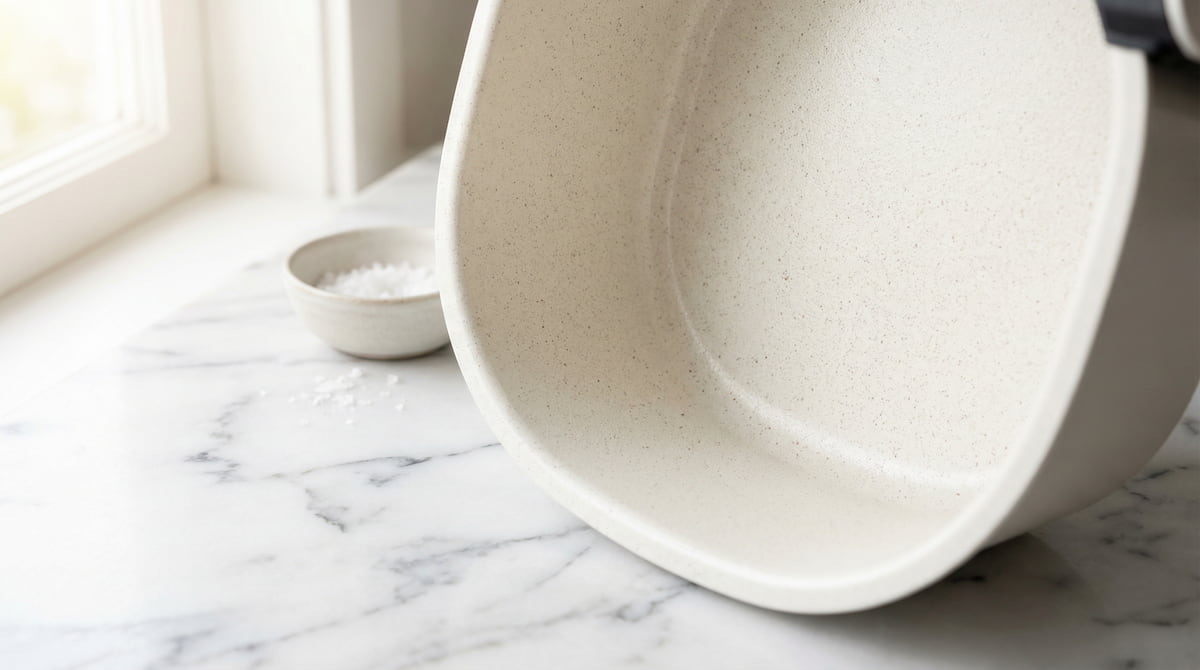
Ceramic coatings take a different approach. Instead of synthetic polymer coatings, they use a silica-based mineral layer baked onto the metal surface. The result is a nonstick surface that doesn’t rely on PTFE or PFAS chemistry.
That’s the core reason ceramic models get recommended for families who want to reduce chemical exposure in the kitchen — including ours.
Are Ceramic Air Fryers Actually Safe?
For most everyday cooking, yes. Here’s the honest breakdown:
What ceramic coatings do well:
- No PTFE or PFAS in the coating itself
- Stable at normal air frying temperatures (300°F–400°F)
- Easy to clean without harsh scrubbing
- Generally lower chemical risk than traditional nonstick
What to watch out for:
- Not all ceramic coatings are equal — some include binders or additives that aren’t always disclosed
- Ceramic coatings can chip or scratch if you use metal utensils or scrub too hard
- Once the coating is damaged, the underlying metal is exposed — replace the basket at that point
- “Ceramic-coated” doesn’t automatically mean the entire appliance is chemical-free — check what else is inside
My rule: look for products explicitly labeled PFAS-free and PFOA-free, not just “ceramic coated.” The label matters.
For a side-by-side material comparison: Ceramic vs Stainless Steel Air Fryer
PFAS-Free Air Fryer Options Worth Considering
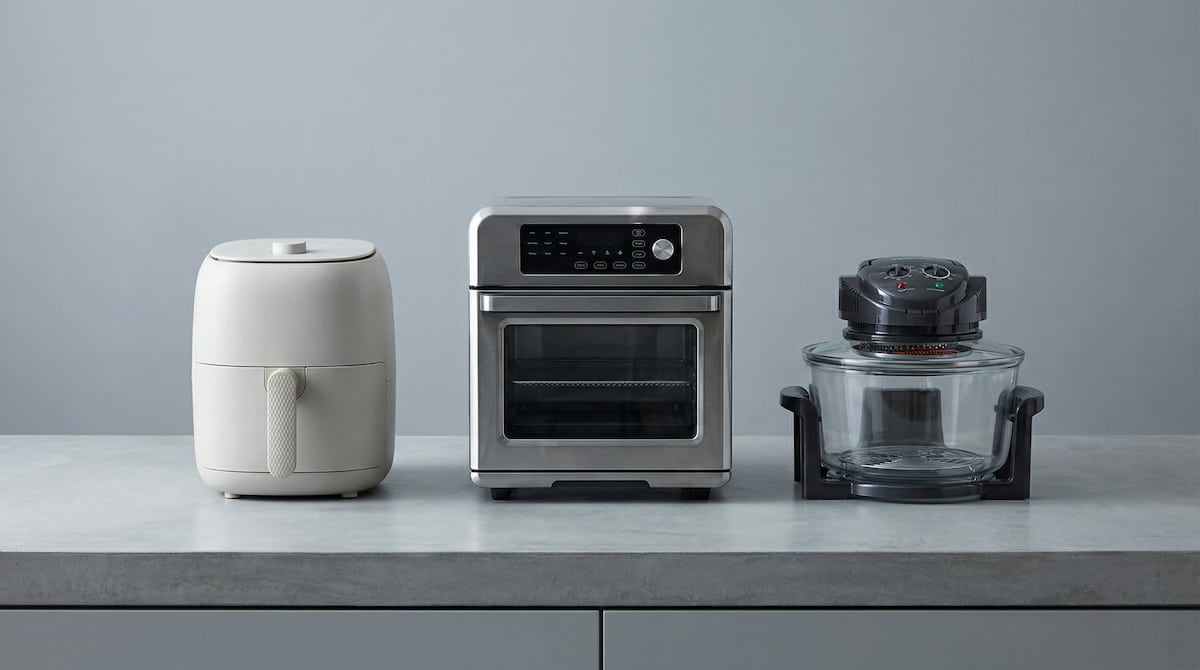
After going through the research, these are the three material categories I’d actually recommend — and the specific models I point people toward.
| Model | Material | Capacity | Best For |
|---|---|---|---|
| Ninja AF150AMZ | Ceramic-coated basket | 5.5 QT | Everyday PFAS-free cooking |
| Instant Pot Omni Plus | Stainless steel interior | 26 QT | Family-sized meals |
| Big Boss 16Qt | Glass bowl | 16 QT | Fully coating-free cooking |
Ninja AF150AMZ — Best Ceramic Pick
This is the one we use for everyday cooking. The ceramic-coated basket is PFAS-free, holds up well with regular use, and doesn’t produce any off-putting smells even at higher temperatures. At 5.5 quarts it’s compact enough for our counter but big enough for most weeknight meals.
Honest downside: like any ceramic coating, it needs gentle care. No metal utensils, no abrasive scrubbing.
Instant Pot Omni Plus — Best Stainless Steel Pick
If you want to skip coatings entirely, stainless steel is the cleanest option. The Omni Plus has a stainless interior — no coating means no degradation concerns over time. It’s bigger and better suited for families cooking larger portions or doing batch prep.
Honest downside: food sticks more without a coating, so you’ll need to use parchment liners or a light oil spray.
Big Boss 16Qt — Best Glass Pick
The most transparent option — literally. A glass cooking bowl means no coatings of any kind, and you can watch the food cook through the sides. It’s a halogen-style air fryer, which works differently from basket models but delivers a fully non-coated cooking environment.
Honest downside: it takes up more counter space and the glass bowl needs careful handling.
How to Keep Your Ceramic Air Fryer Safe Long-Term
Ceramic coatings are only as safe as their condition. Here’s what I actually do to keep ours in good shape:
- Use silicone or wooden utensils only — metal scratches the coating
- Hand wash with a soft sponge — dishwasher cycles can wear the coating faster
- Check the basket surface every few weeks for chips or scratches
- Replace the basket (not the whole unit) if the coating shows visible damage
- Avoid cooking spray aerosols — they build up residue that’s hard to remove without scrubbing
Frequently Asked Questions
Are ceramic air fryer coatings completely free of chemicals?
Most are free from PTFE and PFAS, but “ceramic coated” isn’t a regulated term. Some coatings include binders or adhesion agents. Look specifically for products labeled PFAS-free and PFOA-free rather than relying on “ceramic” as a blanket safety guarantee.
Can ceramic coatings handle high air fryer temperatures?
Yes, ceramic coatings are generally stable at typical air frying temperatures between 300°F and 400°F. Problems are more likely to occur from physical damage — scratching or chipping — than from heat alone.
Is a glass air fryer safer than a ceramic one?
From a materials standpoint, glass has no coatings at all, which makes it the simplest option. Ceramic is a close second — mineral-based and free from synthetic chemicals. The right choice depends more on your cooking style and capacity needs than on safety alone.
How long do ceramic coatings last?
With proper care — soft utensils, gentle cleaning, no abrasive scrubbing — a ceramic-coated basket can last 2–3 years. Heavy daily use or rough handling shortens that significantly.
What’s the difference between ceramic and nonstick?
Traditional nonstick coatings use PTFE (Teflon-type materials), which have been associated with PFAS chemistry. Ceramic coatings use mineral-based silica layers and don’t contain PTFE or PFAS. Both provide nonstick surfaces, but through very different chemistry. For more detail: Ceramic vs Nonstick Air Fryer
Want to see all the safest air fryer options in one place?
→ See the Complete PFAS-Free Air Fryer Guide for 2026
Affiliate Disclosure: This post contains affiliate links. If you purchase through our links, we may earn a small commission at no extra cost to you. We only recommend products we’ve genuinely researched and believe are worth considering.