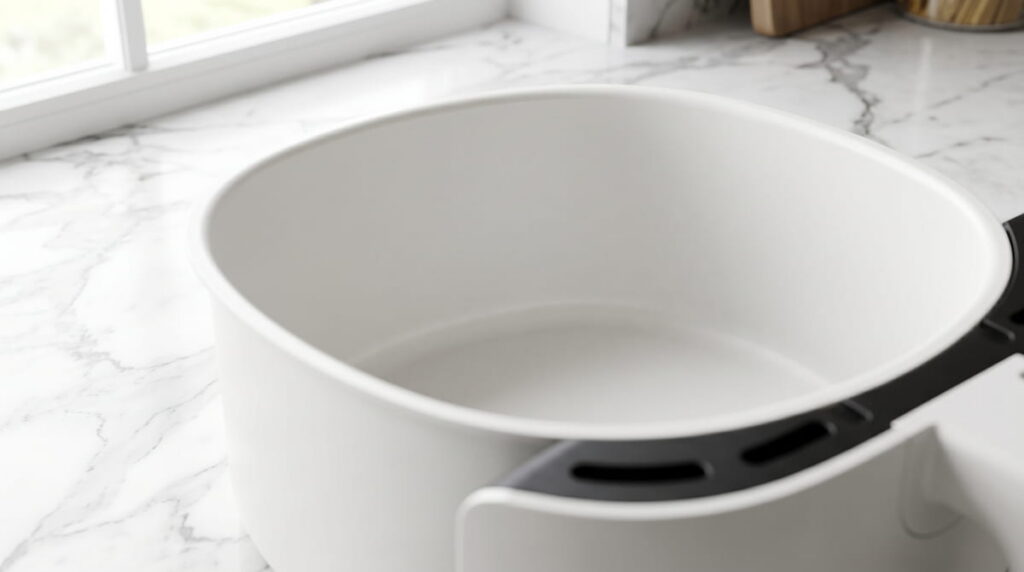
Are ceramic coated air fryers actually safe? Yes — ceramic coatings are genuinely safer than PTFE-based nonstick coatings for daily family cooking, but understanding exactly why requires looking at what ceramic coatings are actually made of and how they behave under the heat conditions your air fryer reaches every day.
I’m Wook, a bus driver and dad of two teenage boys. When I started researching air fryer safety after our CO detector kept triggering, ceramic came up constantly as the safer alternative to PTFE. But I wanted to understand the chemistry — not just take a marketing claim at face value. Here’s what I found after months of digging into the actual science.
What Is Ceramic Coating Actually Made Of?
Despite the name, ceramic air fryer coatings are not pure ceramic in the traditional sense. They are sol-gel coatings — a silica-based (silicon dioxide) material applied over an aluminum or steel base using a chemical bonding process. The result is a hard, smooth surface that mimics many properties of ceramic without being fired clay.
The critical safety distinction is what ceramic coatings do not contain:
- No PTFE (polytetrafluoroethylene)
- No PFOA (perfluorooctanoic acid)
- No PFAS (per- and polyfluoroalkyl substances) of any kind
- No fluoropolymer chemistry
This is why ceramic coatings are classified as PFAS-free — and why the fume and flaking concerns associated with Teflon-style coatings simply don’t apply to them.
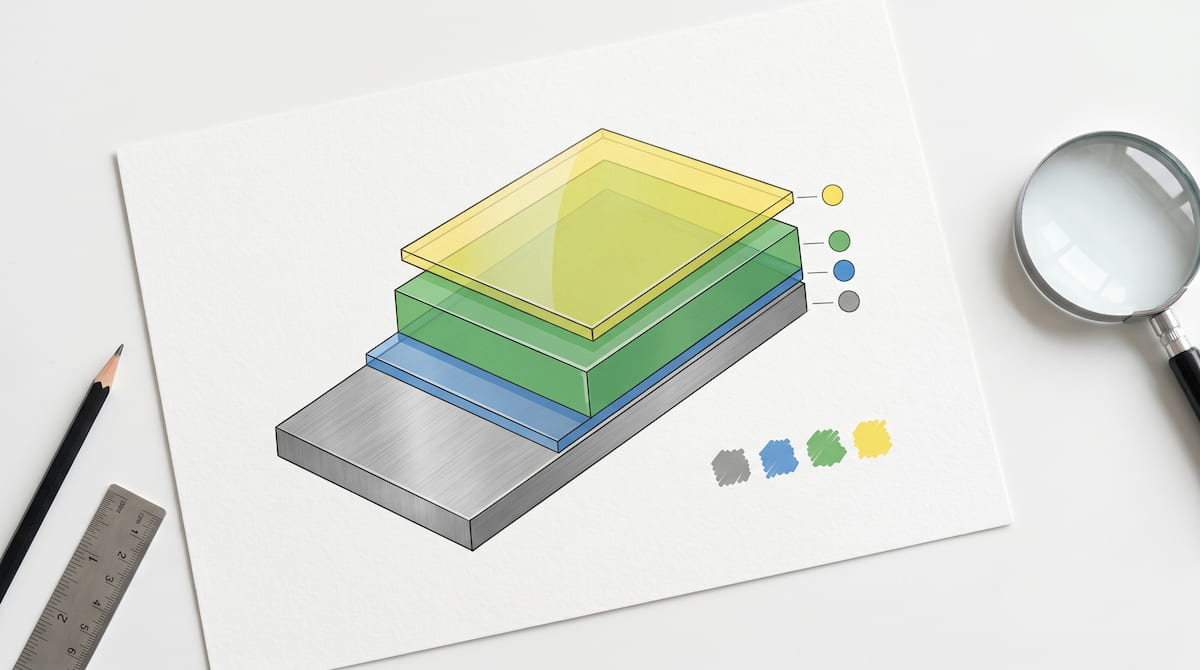
Are Ceramic Coated Air Fryers Actually Safe? The Science
Silicon dioxide — the primary component of ceramic coatings — is one of the most chemically inert materials used in food contact applications. It does not react with food acids, does not break down under normal cooking temperatures, and does not release detectable chemical compounds during heating.
According to the EPA’s PFAS resource page, the health concerns associated with nonstick coatings are specifically linked to fluoropolymer chemistry — PTFE, PFOA, and related compounds. Ceramic coatings contain none of these, which is why they represent a meaningfully different safety profile rather than just a marketing rebrand.
The practical safety picture for ceramic coated air fryers:
| Safety Factor | Ceramic Coating | PTFE Coating |
|---|---|---|
| PFAS chemicals present | ✅ None | ❌ Yes |
| Fume risk when overheated | ✅ Minimal | ⚠️ Medium-High |
| Flake chemical risk | ✅ Inert particles | ⚠️ Fluoropolymer particles |
| Safe for birds and pets | ✅ Yes | ❌ No — polymer fume fever risk |
| Scratch durability | 🟡 Moderate | 🟡 Moderate |
Are There Any Concerns With Ceramic Coatings?
Ceramic coatings are genuinely safer than PTFE — but that doesn’t mean they’re without any considerations. Here’s the honest picture:
Concern 1: Coating Wear Over Time
Ceramic coatings are harder than PTFE but still wear down with daily use, metal utensils, and abrasive cleaning. A worn ceramic surface loses its nonstick properties faster than it loses its safety profile — meaning it becomes less convenient to cook with before it becomes a safety concern. This is a very different wear pattern than PTFE, where degradation and safety risk progress together.
Concern 2: Quality Varies Between Brands
Not all ceramic coatings are equal. Some budget models use thinner ceramic layers that wear faster and may contain lower-quality binding agents. Sticking to established brands — Ninja, Cosori, GreenPan — that specifically certify their coatings as PTFE-free and PFAS-free is the safest approach.
Concern 3: “Ceramic” Is Sometimes a Marketing Term
Some products marketed as “ceramic” contain ceramic particles mixed into a conventional coating rather than a true sol-gel ceramic surface. Reading the full product description and looking for explicit PTFE-free and PFAS-free certification — rather than just the word “ceramic” — ensures you’re getting the real safety benefit.
What Our Family Uses and Why
After researching every major coating type, our family uses the Ninja AF150AMZ as our primary daily air fryer. Ninja explicitly certifies the AF150AMZ basket as PTFE-free and PFAS-free — not just “ceramic” as a marketing label, but a specific chemical guarantee about what the coating does and does not contain.
In over eight months of daily use since switching, we’ve had zero chemical smell, zero detector alarms, and zero coating concerns. Our full guide on the Ninja ceramic basket covers exactly what makes it different from generic ceramic claims and how to verify the certification on any model you’re considering.
How to Make Your Ceramic Basket Last Longer
Ceramic coatings are safer than PTFE but require the same basic care habits to maintain their surface integrity:
- Use only silicone, wood, or nylon utensils — metal tools scratch ceramic faster than most families expect
- Hand wash with a soft sponge and mild dish soap — dishwashers accelerate ceramic wear significantly
- Let the basket cool completely before washing — thermal shock weakens the bonding layer over time
- Use parchment paper liners for sticky or high-sugar foods — reduces direct surface contact and extends coating life
- Inspect monthly under bright light — catch early wear before it progresses to significant damage
Quick Safety Checklist for Ceramic Air Fryer Use
- ✅ Coating explicitly certified PTFE-free and PFAS-free — not just labeled “ceramic”
- ✅ Surface intact with no visible scratches or peeling — safe for daily cooking
- ✅ Silicone utensils only — no metal tools inside the basket
- ✅ Hand washed after every use — maintains coating integrity longest
- ⚠️ Surface showing moderate wear — monitor closely, consider replacement basket
- ❌ Visible peeling or flaking — replace basket even though ceramic risk is lower than PTFE
For families who want to compare ceramic against stainless steel and glass options across every price point, our PFAS-Free Air Fryer Guide covers the complete 2026 landscape of non-toxic cooking surfaces.
Frequently Asked Questions
Is ceramic coating safe to eat off of?
Yes — silicon dioxide, the base material of ceramic coatings, is chemically inert and not absorbed by the body. Even if small ceramic particles enter food through normal wear, they pass through the digestive system without being absorbed — a fundamentally different situation than PTFE flakes.
Does ceramic coating contain lead or cadmium?
Reputable ceramic coatings from established brands do not contain lead, cadmium, or other heavy metals. Look for products that explicitly state they are free of lead, cadmium, PTFE, and PFAS — all four certifications together indicate a genuinely safe coating.
How long does ceramic coating last in an air fryer?
With proper silicone utensils and hand washing, a quality ceramic basket typically maintains its nonstick performance for 1.5 to 3 years of daily use. The coating becomes less nonstick before it becomes a safety concern — the first sign of wear is food sticking more, not a chemical smell.
Is ceramic better than stainless steel for air fryers?
Both are PFAS-free and safe for daily cooking. Ceramic is easier to clean and more nonstick. Stainless steel is more durable, requires no replacement, and is completely coating-free. For most families, ceramic is more convenient; for families who want zero coating of any kind, stainless steel is the permanent solution.
Can ceramic air fryer coatings cause cancer?
There is no credible scientific evidence linking ceramic air fryer coatings to cancer. The cancer concern historically associated with nonstick cookware relates specifically to PFOA — a chemical used in manufacturing older PTFE coatings that has since been phased out. Ceramic coatings contain no PFOA, no PTFE, and no PFAS of any kind.
Next in this cluster: how does ceramic actually compare to Teflon side by side — and is the safety difference real enough to justify switching? We cover the full comparison in our guide on whether ceramic is better than Teflon for air fryers.