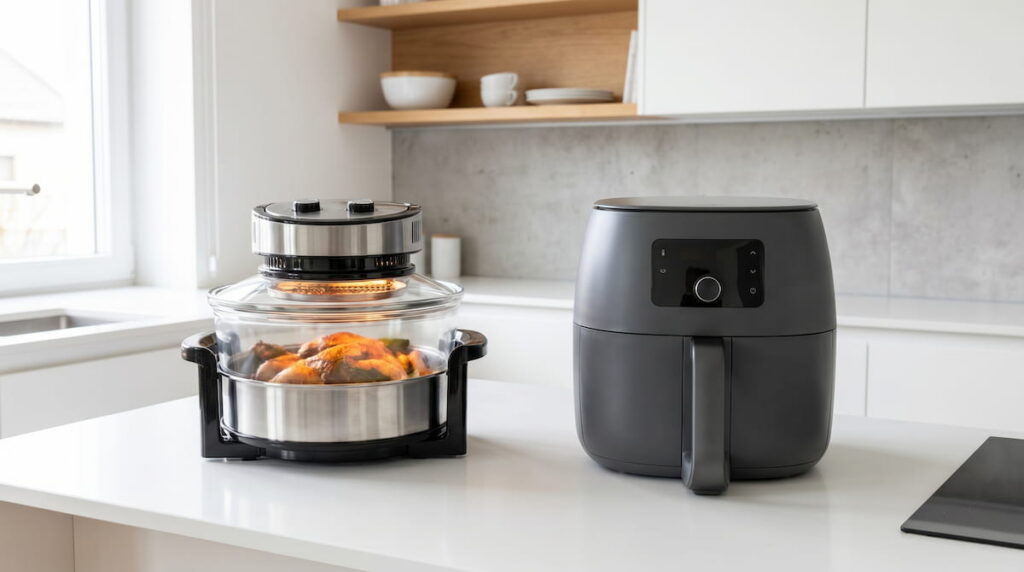
When comparing a glass air fryer vs plastic air fryer, the material difference isn’t just about looks — it directly affects what chemicals may end up in your food and your kitchen air. As someone who switched to a glass model after noticing a plastic smell every time I cooked, I want to break this down honestly for families who care about what they’re breathing and eating.
What Are Glass Air Fryers Made Of?
Glass air fryers, like the Big Boss 16Qt, use a borosilicate or tempered glass bowl as the main cooking chamber. The food never touches plastic during the cooking process. The heating element sits above, and hot air circulates around the glass bowl — meaning no plastic surfaces are exposed to high heat where your food is actually cooking.
This matters because plastics, when heated repeatedly, can release volatile organic compounds (VOCs) and, in lower-quality models, chemicals associated with PFAS concerns. Glass doesn’t do this.
What Are Plastic Air Fryers Made Of?
Most standard basket-style air fryers have an exterior plastic housing and a drawer mechanism made of plastic. The basket itself is usually metal with a nonstick coating — but the drawer, handle, and surrounding components are plastic. When the air fryer heats up, those plastic parts get warm too.
Not all plastics are the same. Food-grade, BPA-free plastics are safer, but “BPA-free” doesn’t always mean chemical-free. Some BPA replacements like BPS have raised similar concerns. And lower-cost plastic air fryers may not specify exactly what grade of plastic is used.
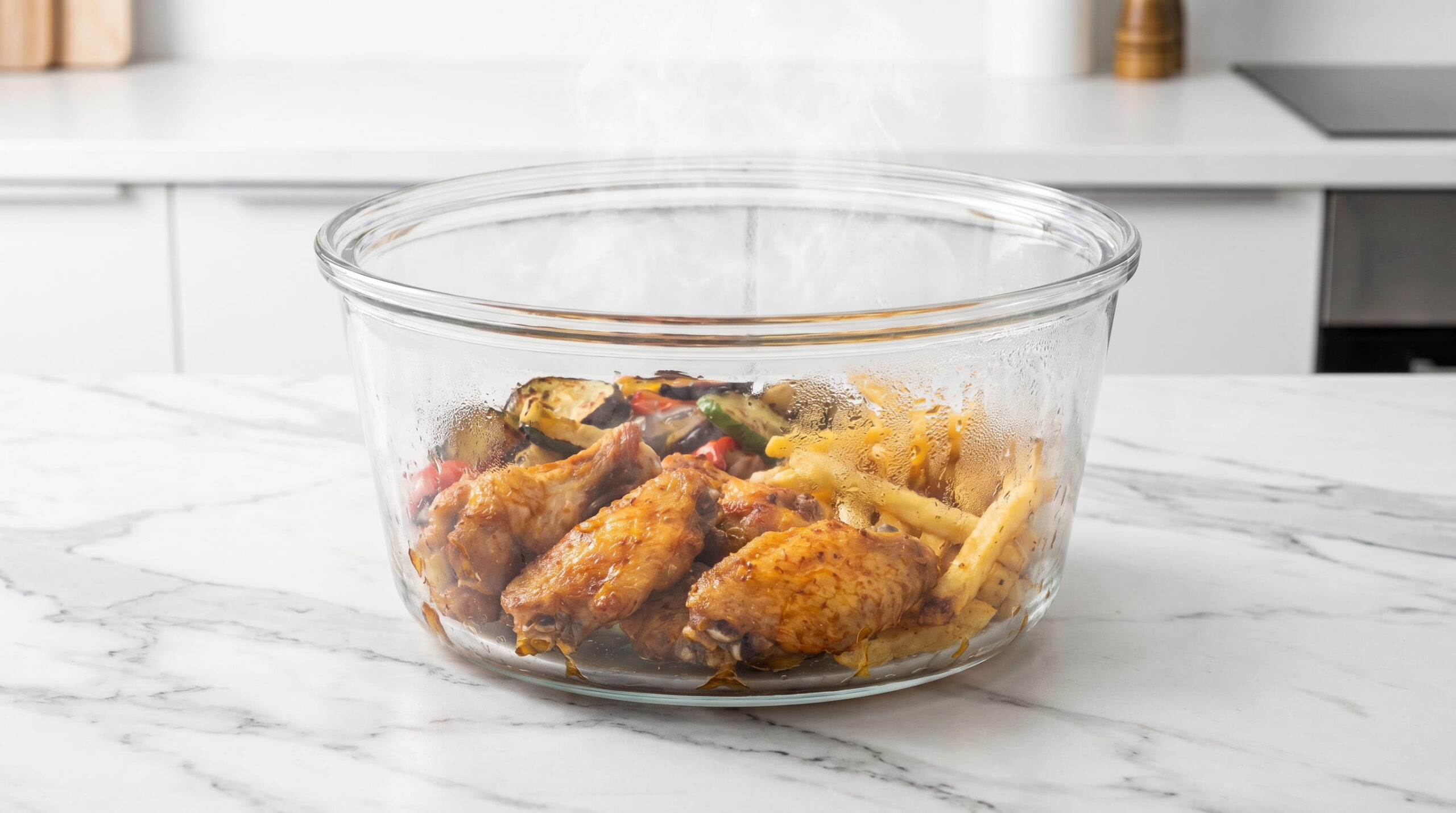
A glass air fryer bowl keeps food completely away from plastic surfaces during cooking.
Glass vs Plastic Air Fryer: Safety Comparison
| Factor | Glass Air Fryer | Plastic Air Fryer |
|---|---|---|
| PFAS / Toxic Coating Risk | Very low — glass bowl, no nonstick coating | Depends on basket coating quality |
| Plastic Off-Gassing Risk | Minimal — food contact surface is glass | Possible with repeated high-heat use |
| Durability | Glass can crack if dropped; otherwise long-lasting | Plastic housing can warp over time |
| Ease of Cleaning | Very easy — glass bowl is smooth | Coated baskets need gentle cleaning |
| Visibility While Cooking | Can see food through glass bowl | No visibility — drawer style |
| Capacity | Often large (Big Boss = 16Qt) | Varies widely (2Qt–8Qt typical) |
| Price Range | Mid-range ($60–$120) | Budget to premium ($30–$200+) |
Does Plastic in an Air Fryer Actually Release Fumes?
This is the question most families don’t think to ask. The short answer: it depends on the quality of plastic and how hot the exterior gets.
In most basket-style air fryers, the plastic housing doesn’t get as hot as the interior cooking chamber. But the drawer — which slides in and out and sits directly below the heating zone — does warm up significantly with repeated use. Over months of daily cooking, lower-grade plastic components can begin to show wear, discoloration, or emit a faint smell.
If you’ve ever noticed your kitchen smelling slightly off after cooking, and your air fryer has a plastic drawer, that’s worth paying attention to. The research on air fryer fumes suggests that coating degradation and off-gassing are real concerns — and plastic components are part of that picture.
Glass eliminates this variable entirely. The cooking surface is inert at high temperatures, which is exactly what you want when cooking for kids or anyone with respiratory sensitivities.
The Plastic Smell Problem: When Should You Worry?
A new plastic air fryer almost always smells on first use — manufacturers typically recommend running it empty for 10–15 minutes to burn off manufacturing residues. That’s normal.
What’s not normal:
- Persistent plastic smell after several months of use
- Visible warping or discoloration on the drawer or housing
- Smell intensifying rather than fading over time
- Headaches or throat irritation that correlate with cooking sessions
If you’re experiencing any of these, it may be time to look at a glass or ceramic alternative. Our guide on why air fryers smell like burnt plastic covers this in more detail.
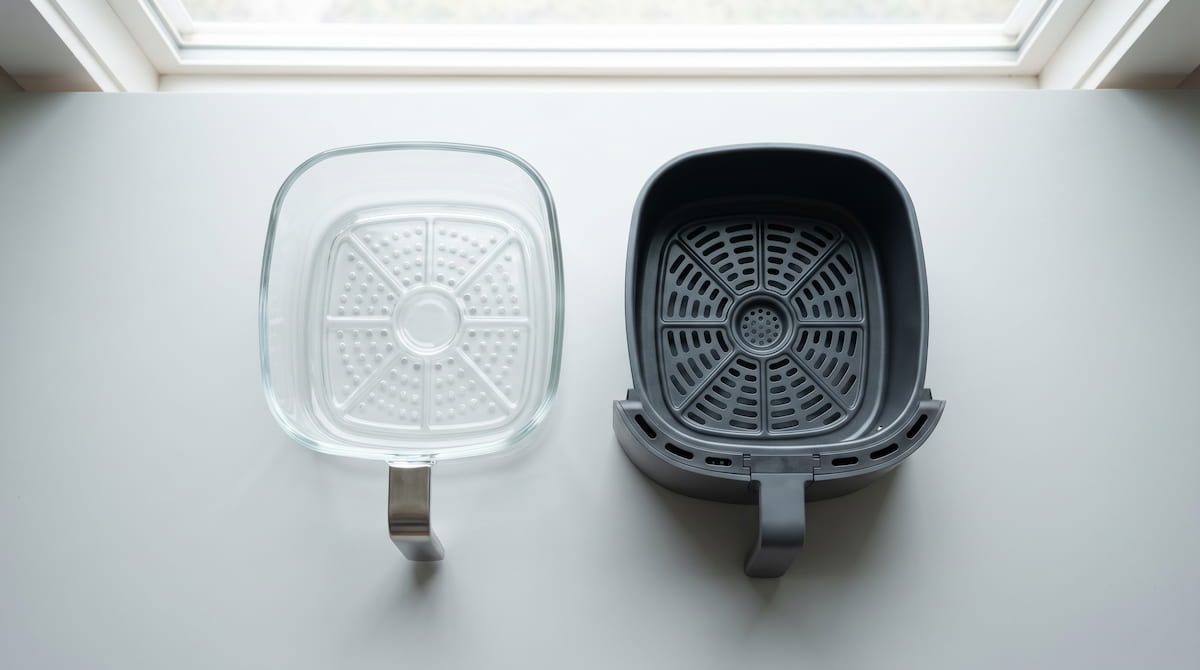
Glass and plastic baskets side by side — the material difference matters more than most people realize.
Which Families Should Choose a Glass Air Fryer?
A glass air fryer is particularly worth considering if:
- You or a family member has asthma, allergies, or chemical sensitivities
- You cook daily and want a material that won’t degrade over time
- You prefer to see your food while it cooks
- You want to avoid any PFAS or nonstick coating concerns entirely
- You’re cooking large batches — the Big Boss 16Qt handles a whole chicken comfortably
For most of these situations, the Big Boss 16Qt Glass Air Fryer is the standout option. It uses a glass bowl with no nonstick coating, a stainless steel rack, and a halogen heating element — no plastic in the food contact zone at all. We reviewed it in detail in our PFAS-free basket comparison guide.
Which Families Might Be Fine With a Plastic Air Fryer?
Plastic-bodied air fryers aren’t automatically unsafe. A high-quality ceramic-coated basket inside a plastic-framed unit — like the Ninja AF150AMZ — keeps the food contact surface PFAS-free even if the exterior housing is plastic. The key is what material touches your food, not what the outside is made of.
If budget is a priority and you want a compact, reliable daily driver, a well-reviewed ceramic basket air fryer in a plastic housing is a reasonable middle ground. Just avoid the cheapest no-name models where plastic quality is unknown. See our full breakdown on the best PFAS-free air fryers for vetted options across all material types.
Quick Safety Checklist: Glass vs Plastic
✅ Glass air fryer safe signs:
- Borosilicate or tempered glass bowl
- Stainless steel rack and tray
- No nonstick coating on food contact surfaces
- Halogen or quartz heating element
⚠️ Plastic air fryer — check these before buying:
- Is the basket ceramic-coated or stainless? (avoid bare nonstick)
- Is the plastic BPA-free? (minimum standard)
- Does the brand disclose material specs?
- Any user reviews mentioning persistent smell after months of use?
❌ Avoid if:
- No material disclosure from the brand
- Basket coating chips or peels quickly (common in cheap models)
- Strong chemical smell that doesn’t fade after break-in period
FAQ
Is a glass air fryer actually safer than plastic?
For the food contact surface, yes — glass is chemically inert at cooking temperatures and doesn’t release fumes or leach compounds the way degraded plastic or worn nonstick coatings can. For overall safety, the basket material matters most.
Do plastic air fryers release toxic fumes?
High-quality plastic-bodied air fryers with food-grade components typically don’t release harmful fumes during normal use. The risk is higher with cheap, unbranded models or units where plastic components are visibly degrading.
Is the Big Boss Glass Air Fryer actually PFAS-free?
Yes — the Big Boss 16Qt uses a glass bowl with no nonstick coating. There is no PTFE, PFOA, or PFAS-related coating applied to the cooking surface. The rack is stainless steel.
Can a plastic air fryer warp over time?
The plastic housing can show minor warping or discoloration with heavy daily use over years, particularly around the drawer mechanism. This is more cosmetic than dangerous in most cases, but it’s a sign the unit is aging.
What’s the safest material for an air fryer overall?
Glass and stainless steel are the two safest materials for the food contact zone. Ceramic-coated baskets are a solid middle option. Bare nonstick (Teflon/PTFE) is the one to avoid, especially in older or scratched units.
Our Pick: Best Glass Air Fryer for Families
If you’re ready to move away from plastic and nonstick coatings entirely, the Big Boss 16Qt Glass Air Fryer is the clearest choice for families. It’s large enough for a whole chicken, easy to clean, and the glass bowl means zero coating concerns — ever.
For a broader comparison of all three safe material types, visit our PFAS-free air fryer guide — it covers glass, ceramic, and stainless steel side by side with our current top picks for 2026.