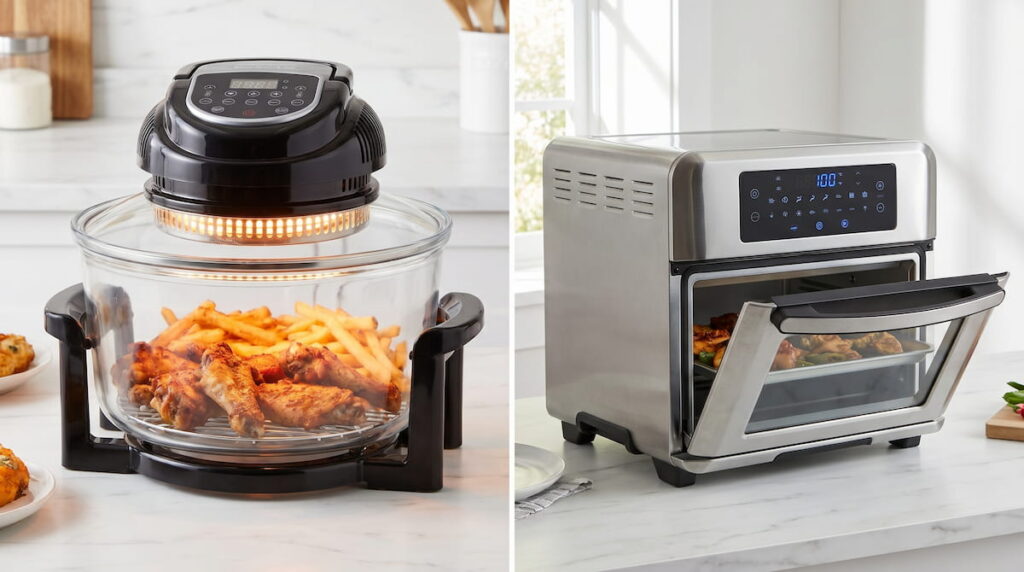
Glass vs stainless steel air fryer — which is actually safer for daily family cooking? Both are completely PFAS-free and represent the two most chemically inert cooking surfaces available in the air fryer category. The safety difference between them is negligible. The practical differences in cooking, cleaning, and daily use are where the real comparison lives.
I’m Wook, a bus driver and dad of two teenage boys. Our family has evaluated both formats seriously — and we use different surfaces for different cooking tasks. Here’s the complete honest breakdown so you can make the right call for how your household actually cooks.
Glass vs Stainless Steel Air Fryer: Safety First
Both glass and stainless steel air fryers are PTFE-free, PFAS-free, and contain no coating chemistry of any kind on their cooking surfaces. From a chemical safety standpoint, neither surface produces fumes, neither degrades under heat, and neither requires replacement due to coating wear.
According to the EPA’s PFAS resource page, the health concerns around air fryer cooking surfaces are specifically tied to fluoropolymer chemistry — a category both glass and stainless steel are completely outside of. Choosing between them is not a safety decision — it’s a practical cooking decision. For context on why this matters compared to standard nonstick models, see our guide on what chemicals air fryers release by material type.
| Safety Factor | Glass | Stainless Steel |
|---|---|---|
| PFAS-free | ✅ Yes | ✅ Yes |
| Fume risk when heated | ✅ Zero | ✅ Zero |
| Coating flake risk | ✅ None — no coating | ✅ None — no coating |
| Safe for birds and pets | ✅ Yes | ✅ Yes |
| Chemical smell risk | ✅ Zero | ✅ Zero |
| Safety degrades over time | ✅ Never | ✅ Never |
What Most People Get Wrong About This Comparison
The biggest misconception is that one must be safer than the other. Both glass and stainless steel are completely inert cooking surfaces with no coating chemistry involved — there is no meaningful safety gap between them. Anyone telling you glass is “more natural” or stainless steel is “more durable therefore safer” is conflating safety with practical performance characteristics.
The second misconception is that stainless steel air fryers always have a fully stainless interior. Some models marketed as stainless steel have stainless exterior panels but PTFE-coated interior trays. Always confirm the interior cooking surfaces specifically — not just the housing. The Instant Pot Omni Plus is one of the clearer examples of genuine stainless cooking trays at a family-friendly price point.
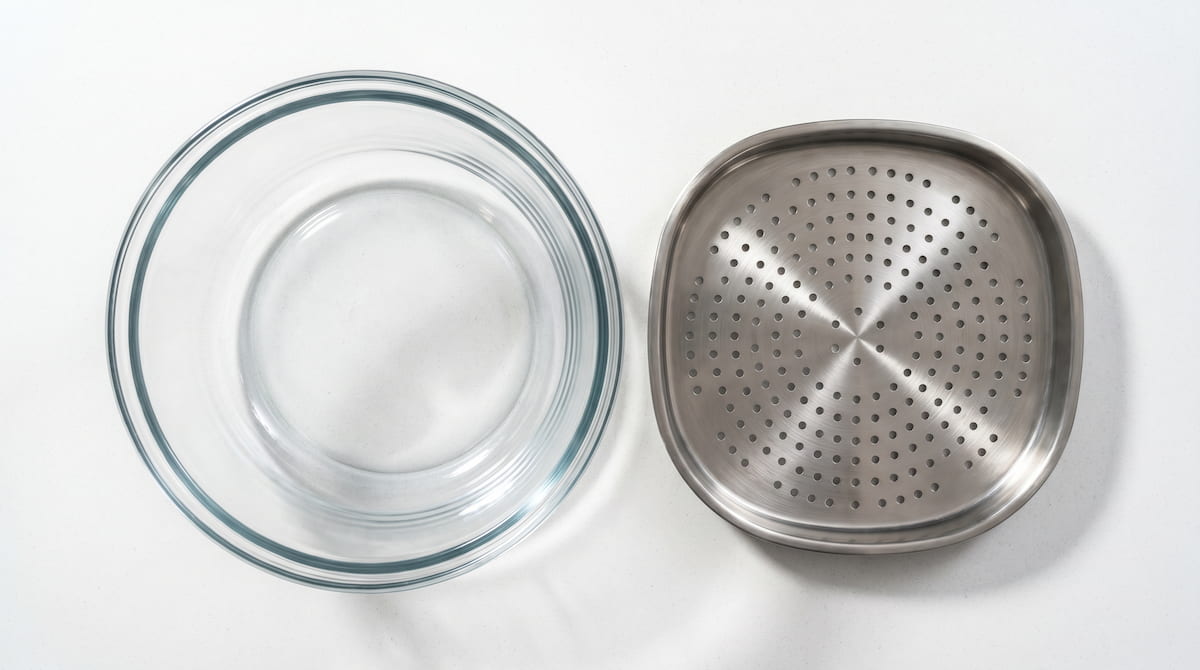
The third misconception is that glass air fryers are impractical because of fragility. Borosilicate glass — the type used in quality glass air fryers — is the same material used in laboratory glassware and quality bakeware. It’s designed for repeated thermal cycling. The fragility concern is real only if dropped on a hard floor — which is different from being fragile during normal cooking use. Our guide on whether glass air fryers are safer than nonstick covers this in detail.
Where Glass and Stainless Steel Actually Differ
Cooking Method and Results
Glass air fryers use a halogen heating element mounted above the bowl, cooking food primarily from the top down with circulating hot air. This produces excellent browning on the top surface and good results for larger cuts of meat — but flat foods like fries or wings may need occasional shaking or flipping for even crisping on all sides.
Stainless steel oven-style air fryers use a rear-mounted convection fan with multiple rack positions, cooking food more evenly from all sides simultaneously. Flat foods, multiple small items, and anything that benefits from even all-around crisping typically performs better in a stainless oven-style format.
Capacity and Format
The Big Boss 16Qt glass bowl holds a generous volume in a round bowl format — whole chickens sit naturally, but flat sheet-pan style cooking is less practical. The Instant Pot Omni Plus 18L uses rectangular flat trays, which suits meal prep, multiple food items cooking simultaneously, and sheet-pan style cooking far better.
Durability
Stainless steel is essentially indestructible under normal kitchen use. A stainless tray dropped on a tile floor dents at most — it doesn’t shatter. Glass bowls, even borosilicate quality, carry a breakage risk from drops that stainless steel simply doesn’t have. For households with young children or busy kitchens, this is worth weighing honestly.
Cleaning
Both surfaces clean well with warm soapy water. Glass has a slight edge for visual cleanliness — you can see food residue clearly against the transparent surface. Stainless steel trays can go in the dishwasher without concern, which glass bowls generally cannot due to thermal shock risk.
Price
Glass air fryers are generally less expensive than equivalent-capacity stainless oven-style models. The Big Boss 16Qt sits at a lower price point than the Instant Pot Omni Plus 18L — making it the more accessible coating-free upgrade for budget-conscious families.
Full Practical Comparison
| Factor | Glass (Big Boss 16Qt) | Stainless Steel (Omni Plus 18L) |
|---|---|---|
| Cooking method | Halogen top-down + convection | Rear convection fan, even heat |
| Best food types | Whole meats, roasts, vegetables | Fries, wings, sheet pan meals |
| Capacity | 16 quarts (round bowl) | 18 liters (rectangular trays) |
| Durability | 🟡 Good — breakage risk if dropped | ✅ Excellent — essentially indestructible |
| Dishwasher safe | ⚠️ Hand wash recommended | ✅ Yes |
| Visual cooking monitor | ✅ Yes — transparent bowl | 🟡 Window on door only |
| Price point | ✅ Lower | 🟡 Higher |
| Best household size | 4–6 people | 4–6 people |
Which Should Your Family Choose?
Choose Glass If:
- You primarily cook whole meats, roasts, and large vegetable batches
- You have pet birds or household members with chemical sensitivities
- Budget is a consideration and you want the most affordable coating-free option
- You enjoy watching food cook and want visual feedback during the process
Choose Stainless Steel If:
- You cook a variety of foods including flat items like fries and wings that benefit from even all-around crisping
- You have young children and want to avoid any glass breakage risk
- You want dishwasher-safe trays for faster daily cleanup
- Meal prep with multiple food items cooking simultaneously is part of your routine
Our Family’s Pick for Each Situation
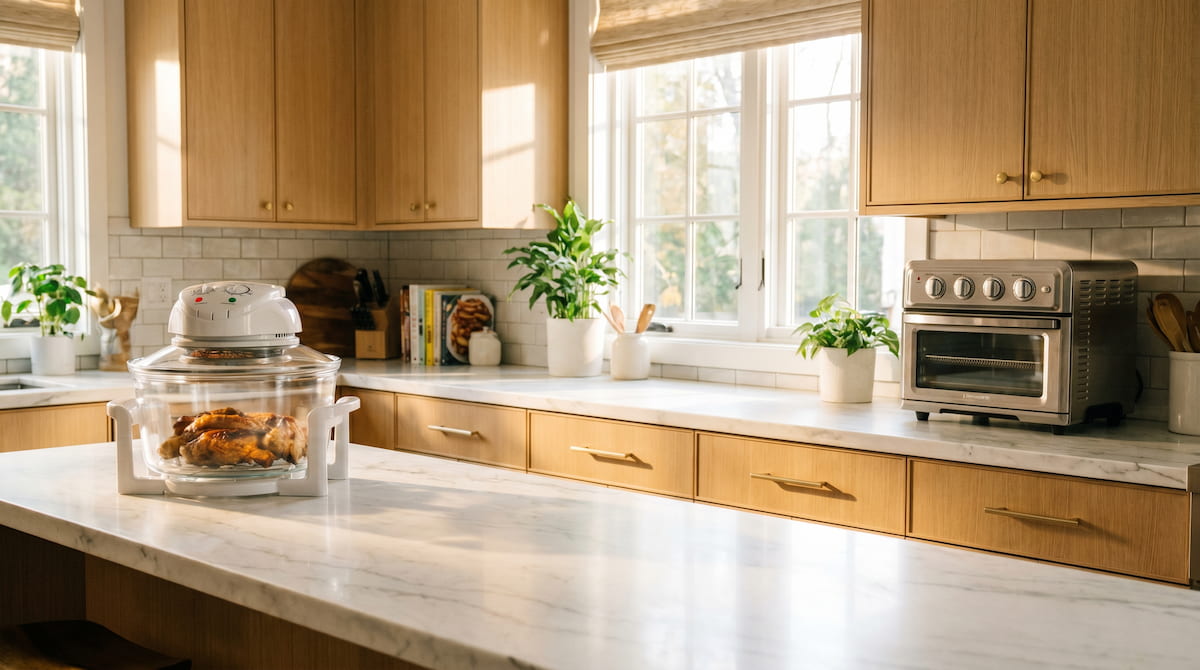
For the most budget-accessible coating-free option that handles whole family meals — the Big Boss 16Qt Glass Air Fryer is hard to beat. For families who want the most versatile coating-free cooking platform with dishwasher-safe trays and better all-around crisping — the Instant Pot Omni Plus 18L is worth the higher investment.
And for families where counter space, budget, or cooking volume makes either of these impractical — the Ninja AF150AMZ ceramic basket delivers a verified PTFE-free, PFAS-free cooking surface at a much smaller footprint and lower price than either coating-free format.
See Big Boss 16Qt on Amazon → See Instant Pot Omni Plus on Amazon → See Ninja AF150AMZ on Amazon →Frequently Asked Questions
Is glass or stainless steel safer for air frying?
They are equally safe — both are completely PFAS-free with no coating chemistry involved. There is no meaningful safety difference between a glass cooking chamber and a stainless steel interior. The choice between them is entirely practical, not safety-based.
Does food taste different cooked in glass vs stainless steel?
No — neither surface transfers flavor to food. Any taste differences are entirely a function of cooking method and heat distribution, not the material itself.
Can glass air fryer bowls crack during cooking?
Borosilicate glass bowls are thermal-shock resistant and designed for repeated heating cycles. Normal air fryer cooking temperatures do not crack quality borosilicate bowls. The breakage risk is from physical impact — dropping the bowl on a hard surface — not from cooking heat.
Is the Instant Pot Omni Plus actually stainless steel inside?
Yes — the cooking chamber interior and included trays are stainless steel with no PTFE coating. It’s one of the most genuinely non-toxic large-capacity options available for families at its price point.
Which is easier to clean — glass or stainless steel air fryer?
Glass has a slight visual advantage — you can see residue clearly against the transparent surface. Stainless steel trays are dishwasher safe, which makes the cleaning process faster for daily use. Both surfaces handle food residue well with warm soapy water and a soft brush.
Are glass and stainless steel air fryers safe for birds?
Yes — both are completely safe for households with pet birds. The PTFE fume risk that makes nonstick coatings dangerous for birds does not apply to either glass or stainless steel cooking surfaces. For more on this, see our guide on air fryer safety for pets and birds.
Is a glass air fryer worth it over ceramic for daily cooking?
For most families, ceramic is more practical — smaller footprint, more affordable, and easier to fit into a daily cooking routine. Glass is the right choice when eliminating every possible coating variable is the priority, or when you regularly cook whole meats and roasts that benefit from the bowl format. Our guide on PFAS-free air fryers compares all three material types side by side.
The Bottom Line: Glass vs Stainless Steel Air Fryer
From a safety standpoint, glass and stainless steel are tied — both are the most chemically inert cooking surfaces available in the air fryer category, with no coating chemistry, no PFAS, and no degradation concern over time. The right choice between them comes down entirely to how your family cooks: glass for whole meats and roasts, stainless for versatile everyday cooking and meal prep.
For a full comparison of every PFAS-free option including ceramic models, our PFAS-Free Air Fryer Guide covers the complete 2026 landscape.