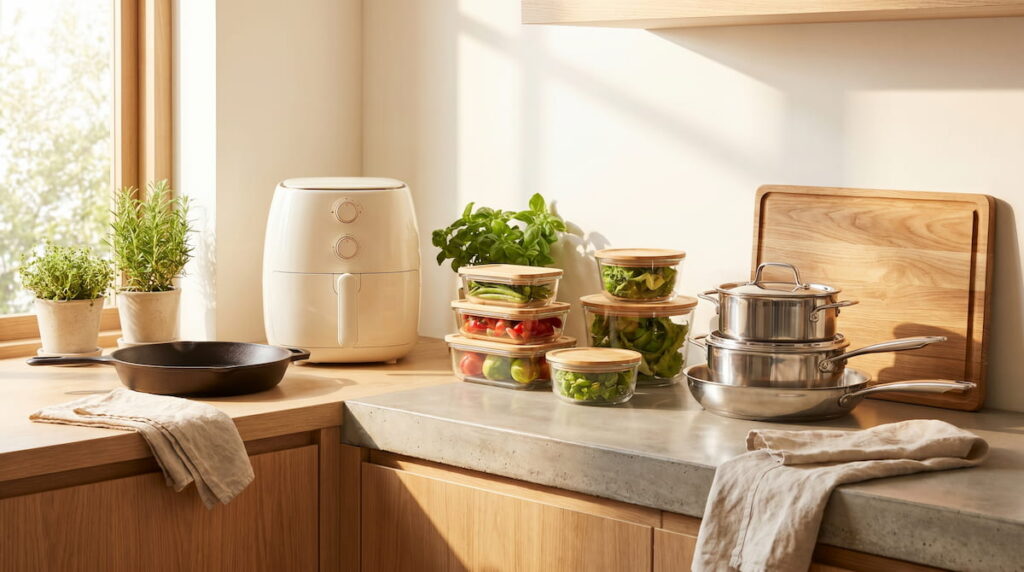
A non toxic kitchen checklist for families is the fastest way to identify what needs to change and what order to change it in. Most families don’t need to replace everything at once — they need to know which items carry the most risk and address those first. I went through this process in our own kitchen, item by item, and this is the checklist I wish I’d had at the start.
Why Families Need a Different Approach to Kitchen Safety
Adults cooking for themselves can absorb a moderate level of chemical exposure from cookware and food storage without dramatic health consequences. Young children are a different story. Children eat more food relative to their body weight than adults, which means the same PFAS exposure from a scratched nonstick pan or a worn air fryer basket produces a proportionally higher dose in a small body with a still-developing endocrine and immune system.
The EPA has identified PFAS compounds as an area of serious ongoing health concern, with research linking chronic exposure to immune system effects, hormone disruption, and developmental impacts in children. The kitchen is the primary PFAS exposure point for most households — and the good news is that the highest-risk items are also the most replaceable.
Non Toxic Kitchen Checklist for Families: Room by Room
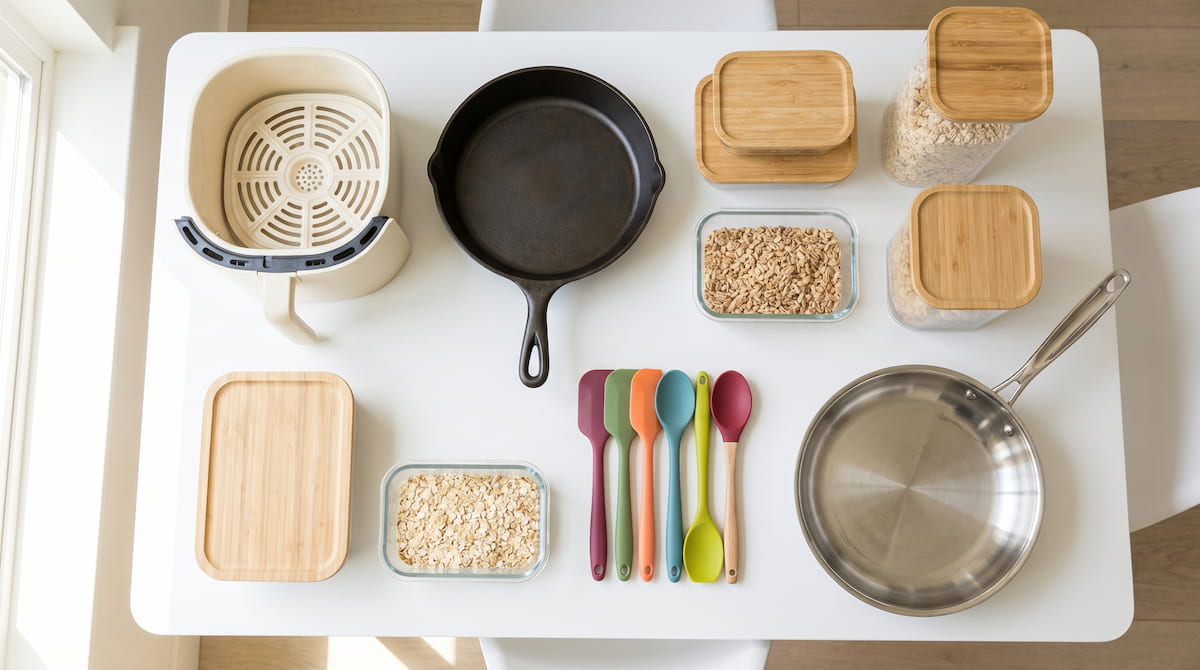
The core non-toxic kitchen essentials for families: ceramic air fryer, cast iron skillet, glass containers, silicone utensils, and stainless steel cookware.
✅ Cooking Appliances
Air fryer basket coating — Check whether your air fryer has a PTFE-coated nonstick basket or a ceramic-coated basket. PTFE baskets that are scratched or worn release fluorinated compounds at cooking temperatures. Replace with a ceramic-coated model. The Ninja AF150AMZ is the model I’d recommend for families — ceramic basket, compact size, and it handles everything from baby food through family dinners.
Countertop oven or toaster oven — Many countertop ovens use PTFE-coated interior walls or racks. Check the manufacturer specs. If it’s PTFE-coated, the Instant Pot Omni Plus is the family-sized replacement with a stainless steel interior and no PTFE anywhere on the cooking surfaces.
Slow cooker insert — Most slow cooker inserts are ceramic or stoneware — generally safe. Check for cracks in the glaze, which can allow leaching. Replace cracked inserts.
✅ Cookware
Everyday nonstick frying pan — The highest-priority cookware swap in most family kitchens. A scratched PTFE nonstick pan used daily for eggs, proteins, and vegetables is the biggest cookware-based PFAS source in the average household. Replace with ceramic-coated, cast iron, or stainless steel.
Nonstick saucepan — Used for purees, oatmeal, soups, and sauces — often at direct food contact for extended periods. Replace with stainless steel. Stainless steel saucepans require slightly more attention to prevent sticking but last indefinitely with no coating to monitor.
Baking sheets and roasting pans — Nonstick-coated baking sheets are common in family kitchens and see significant oven heat. Replace with uncoated stainless steel sheets or use silicone baking mats to line existing pans.
Pots for boiling and steaming — Standard stainless steel stockpots have no coating concern. If yours are stainless steel already, check this item off and move on.
✅ Food Storage
Plastic food containers — Replace hot-food storage containers with glass first. Plastic containers used for warm food, purees, or microwave reheating are the highest-exposure plastic items in a family kitchen. Glass containers eliminate chemical migration regardless of temperature.
Plastic water bottles and sippy cups — Check for BPA-free labeling, and consider stainless steel or glass options for children’s daily hydration. BPA-free doesn’t mean PFAS-free — look for products that explicitly state no PFAS in manufacturing.
Plastic wrap and food storage bags — Lower priority than containers, but beeswax wraps and reusable silicone bags eliminate the plastic-contact question for food stored in the refrigerator.
✅ Utensils and Small Tools
Metal utensils used in nonstick cookware — Metal tongs, spatulas, and spoons scratch PTFE coatings faster than any other single factor. Switch to silicone-tipped or wooden utensils for anything used in coated cookware or the air fryer basket. This extends coating life significantly while you’re transitioning to safer materials.
Cutting boards — Wooden or bamboo cutting boards are the safest option for families. Plastic cutting boards develop knife grooves over time that harbor bacteria and can shed microplastics. Replace plastic boards with wood as they wear out.
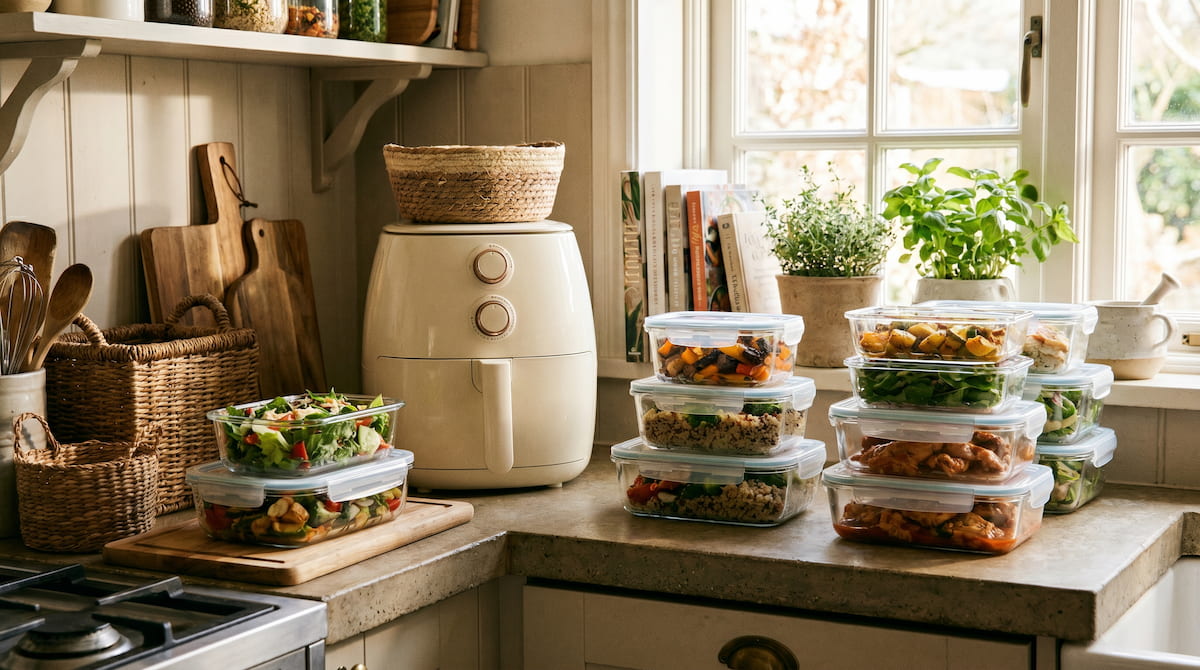
Glass food storage containers paired with a ceramic air fryer cover the two highest-exposure areas in a family kitchen — cooking surface and food storage.
Non-Toxic Kitchen Checklist: Priority Order
| Priority | Item | Replace With | Status |
|---|---|---|---|
| 1 | PTFE air fryer basket | Ceramic air fryer | ☐ Done |
| 2 | Nonstick frying pan | Ceramic or cast iron | ☐ Done |
| 3 | Plastic hot-food containers | Glass containers | ☐ Done |
| 4 | Nonstick saucepan | Stainless steel | ☐ Done |
| 5 | Metal utensils in coated pans | Silicone or wood | ☐ Done |
| 6 | Nonstick baking sheets | Stainless steel or silicone mat | ☐ Done |
| 7 | Plastic cutting boards | Wood or bamboo | ☐ Done |
| 8 | Kids’ plastic water bottles | Stainless steel or glass | ☐ Done |
What Doesn’t Need to Change
Stainless steel cookware you already own is fine — no coating, no PFAS concern. Cast iron pans are fine and actually beneficial for small amounts of dietary iron. Glass bakeware like Pyrex is fine. Silicone bakeware and utensils rated for high heat are fine. Wooden utensils and cutting boards are fine. The items on this checklist are specifically the ones with synthetic coatings or plastics that contact food at heat — everything else in a standard kitchen is lower priority or not a concern at all.
For a deeper look at the specific PFAS sources worth prioritizing, our guide on how to reduce PFAS exposure in your kitchen covers the full swap priority order. And for the air fryer specifically — the highest-priority item on this list — our PFAS-free air fryer guide covers every safe material option available in 2026.