PTFE vs PFAS air fryer — these two terms appear constantly in non-toxic cookware discussions, and they’re often used interchangeably when they shouldn’t be. Understanding the relationship between them, and what each one actually means for your air fryer basket, is what allows you to evaluate safety claims accurately rather than just taking marketing language at face value.
I spent considerable time working through the chemistry on this after finding that different brands use “PFAS-free” and “PTFE-free” in inconsistent ways — sometimes meaning the same thing, sometimes not. Here’s the clear breakdown.
What Is PTFE?
PTFE stands for polytetrafluoroethylene. It’s a specific synthetic fluoropolymer — a long carbon chain with fluorine atoms bonded to every carbon. PTFE is the compound that makes Teflon nonstick coatings work. It’s slippery, heat-resistant, and chemically stable under normal conditions.
PTFE is what most standard nonstick air fryer baskets are coated with. When intact and used below 500°F, PTFE is largely stable. When scratched, degraded, or overheated above its stable range, it releases fluorinated compounds into food and air — the primary safety concern around nonstick cookware in family kitchens.
What Are PFAS?
PFAS stands for per- and polyfluoroalkyl substances. It’s a broad category of thousands of synthetic chemicals that all share a carbon-fluorine bond structure. PTFE is one member of the PFAS family — but PFAS includes many other compounds beyond just PTFE.
PFAS are sometimes called “forever chemicals” because the carbon-fluorine bond is extraordinarily strong and resists breakdown in the environment and the human body. According to the EPA’s PFAS resource page, long-term PFAS exposure has been linked to hormonal disruption, immune system effects, and certain cancers at elevated doses.
In cookware manufacturing, PFAS beyond just PTFE have historically been used in the production process — even when the final coating itself was PTFE. This is where the distinction between “PTFE-free” and “PFAS-free” becomes important.
PTFE vs PFAS: How They Relate
| Term | What It Is | In Nonstick Coatings | Health Concern |
|---|---|---|---|
| PTFE | One specific fluoropolymer | The nonstick coating itself | Off-gassing when overheated or scratched |
| PFAS | Broad family of thousands of chemicals | Includes PTFE + manufacturing chemicals | Bioaccumulation, hormonal and immune effects |
| PFOA | One specific PFAS compound | Historically used to manufacture PTFE | Banned in US manufacturing since 2013 |
The key relationship: all PTFE is PFAS, but not all PFAS is PTFE. PTFE is one specific member of the PFAS family. When a manufacturer says “PFOA-free,” they mean they stopped using one specific manufacturing chemical — but the coating itself may still be PTFE. When they say “PTFE-free,” the coating chemistry is fundamentally different.
What Most People Get Wrong About PTFE vs PFAS in Air Fryers
The most common confusion is treating “PFOA-free” as equivalent to “PFAS-free.” PFOA was phased out of US cookware manufacturing by 2013 under EPA pressure. Most nonstick cookware made since then is PFOA-free — but that doesn’t mean it’s PFAS-free or PTFE-free. The coating itself is still PTFE, which is still a PFAS compound. “PFOA-free” is a low bar.
The second misconception is that “PFAS-free” and “PTFE-free” always mean the same thing. They should — PTFE is a PFAS — but some manufacturers use “PFAS-free” to mean they eliminated PFAS manufacturing chemicals while still using a PTFE coating. This is technically inconsistent but it happens. The safest language to look for is explicit confirmation of both: “PTFE-free AND PFAS-free.”
The third misconception is that ceramic coatings automatically contain no PFAS of any kind. Quality ceramic coatings marketed as PTFE-free and PFAS-free — like the Ninja AF150AMZ basket — genuinely contain no fluoropolymer chemistry. But “ceramic” alone without explicit PTFE-free and PFAS-free certification doesn’t guarantee the manufacturing process used no PFAS compounds. The explicit certification matters. Our guide on Ninja ceramic basket safety covers what verified PTFE-free certification actually means.
What “PTFE-Free” vs “PFAS-Free” Actually Means on an Air Fryer Label
| Label Claim | What It Means | Still Contains PTFE? | Trust Level |
|---|---|---|---|
| PFOA-free | One manufacturing chemical removed | Yes — coating is still PTFE | ⚠️ Low — minimum standard |
| PFAS-free | No PFAS compounds (should mean no PTFE) | Should be no — verify | ⚠️ Medium — confirm PTFE-free too |
| PTFE-free | The specific fluoropolymer coating is absent | No | ✅ High — most specific claim |
| PTFE-free + PFAS-free | Both the coating and manufacturing chemicals absent | No | ✅ Highest — look for both |
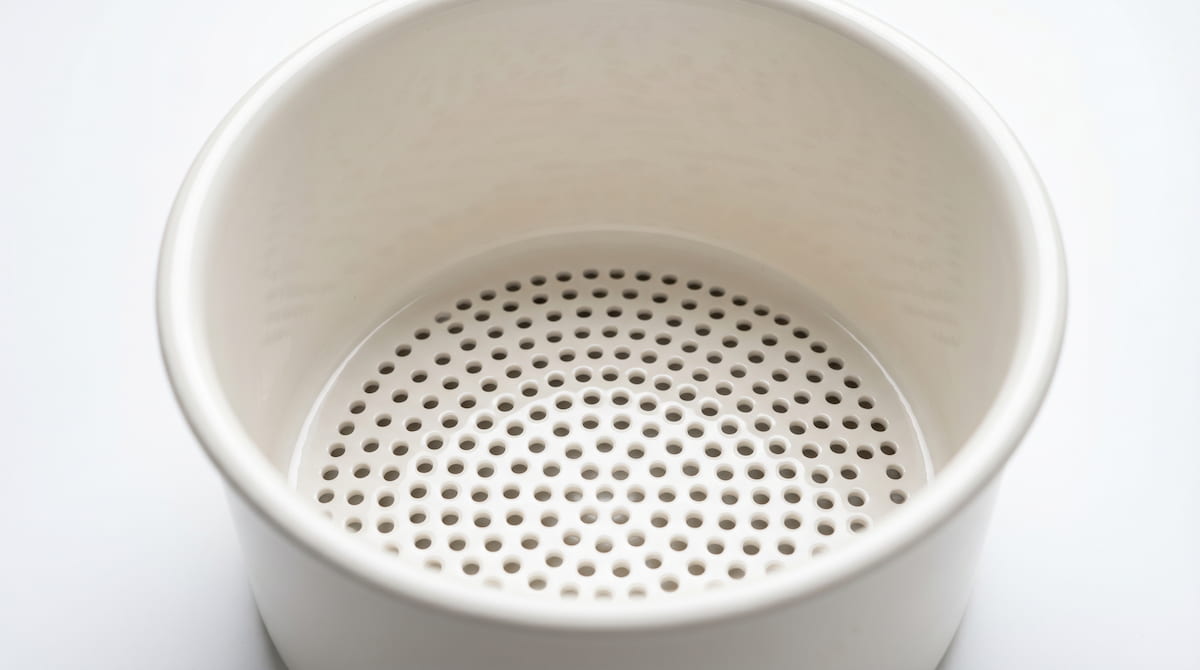
A verified PTFE-free and PFAS-free ceramic basket — the explicit dual certification is what families should look for, not just “PFOA-free” or vague “non-toxic” language.
Why This Matters Specifically for Air Fryers
Air fryers run at higher temperatures than most stovetop cooking — regularly hitting 375–400°F, with basket surfaces that can run 50–100°F hotter than the display shows. This temperature range puts PTFE coatings closer to their degradation threshold than most people realize.
Our guide on what temperature PTFE breaks down covers exactly why the gap between display temperature and actual basket surface temperature matters for coating safety. The practical takeaway: an air fryer operating with a PTFE basket at 400°F on the display may have basket surfaces approaching 470–500°F — the beginning of the meaningful PTFE degradation range.
Combined with a scratched or aging coating, that temperature reality is why families increasingly prioritize PTFE-free and PFAS-free air fryer baskets. For a full breakdown of what these coatings release at different temperatures, see our guide on what chemicals air fryers release by material type.
Which Air Fryers Are Genuinely PTFE-Free and PFAS-Free?
Three surface types meet both standards without ambiguity:
Ceramic-coated baskets (verified) — silica-based coatings with explicit PTFE-free and PFAS-free certification. The Ninja AF150AMZ is the most established example with documented material certification and strong long-term durability data.
Stainless steel interiors — no coating of any kind means no PTFE, no PFAS, and no coating-related chemical concern at any temperature. The Instant Pot Omni Plus 18L is the most practical large-capacity stainless option for family cooking.
Glass cooking chambers — borosilicate glass is completely chemically inert with no coating chemistry whatsoever. The Big Boss 16Qt is the most accessible glass option for family-sized cooking.
See Ninja AF150AMZ on Amazon → See Instant Pot Omni Plus on Amazon → See Big Boss Glass Air Fryer on Amazon →
Even with a non-toxic basket, kitchen ventilation during air fryer use is still the right habit — it clears cooking vapor and food-based particles regardless of coating type.
Frequently Asked Questions
Is PTFE the same as PFAS?
PTFE is a specific type of PFAS — it’s one member of the broader PFAS chemical family. All PTFE is PFAS, but PFAS includes thousands of other compounds beyond just PTFE. When evaluating air fryer safety claims, looking for “PTFE-free” is more specific and meaningful than looking for “PFAS-free” alone.
What does PFOA-free mean on an air fryer?
PFOA was a specific PFAS compound historically used in the manufacturing process for PTFE coatings. PFOA-free means that manufacturing chemical was eliminated — but the coating itself may still be PTFE. Most cookware has been PFOA-free since 2013. It’s a minimum standard, not a meaningful safety differentiator in 2026.
Is a PFAS-free air fryer the same as a PTFE-free air fryer?
It should be — PTFE is a PFAS, so a truly PFAS-free air fryer should contain no PTFE. However, some manufacturers use “PFAS-free” inconsistently. For maximum clarity, look for explicit “PTFE-free AND PFAS-free” language from the manufacturer, not just one or the other.
Are ceramic air fryers really PFAS-free?
Verified ceramic-coated air fryers with explicit PTFE-free and PFAS-free certification — like the Ninja AF150AMZ — genuinely contain no fluoropolymer chemistry. “Ceramic” alone without certification doesn’t guarantee this. The explicit dual certification is what families should look for when evaluating claims.
Why do some air fryers say “non-toxic” without specifying PTFE-free?
Because “non-toxic” is unregulated marketing language with no specific meaning. A PTFE-coated basket can legally be marketed as non-toxic under normal use conditions. Families who want to avoid PTFE specifically need to look for explicit “PTFE-free” language — “non-toxic” doesn’t confirm it.
Does PFAS exposure from air fryers accumulate in the body?
PFAS compounds, including PTFE breakdown products, are associated with bioaccumulation — they build up in body tissue over time rather than being excreted efficiently. This is why repeated daily exposure from a degrading PTFE basket is a more significant concern than a single incident. Switching to a PTFE-free model reduces this ongoing daily exposure.
The Bottom Line on PTFE vs PFAS in Air Fryers
PTFE is a specific fluoropolymer that’s one member of the broader PFAS chemical family. For air fryer safety evaluation: “PFOA-free” is a minimum standard that most cookware already meets. “PTFE-free” is the more meaningful specific claim. “PTFE-free AND PFAS-free” together is the clearest confirmation of a genuinely non-fluoropolymer cooking surface.
Ceramic, stainless steel, and glass air fryer surfaces all meet both standards without ambiguity. For a full comparison of the safest options across every format and price point, our PFAS-free air fryer guide covers the complete 2026 landscape.