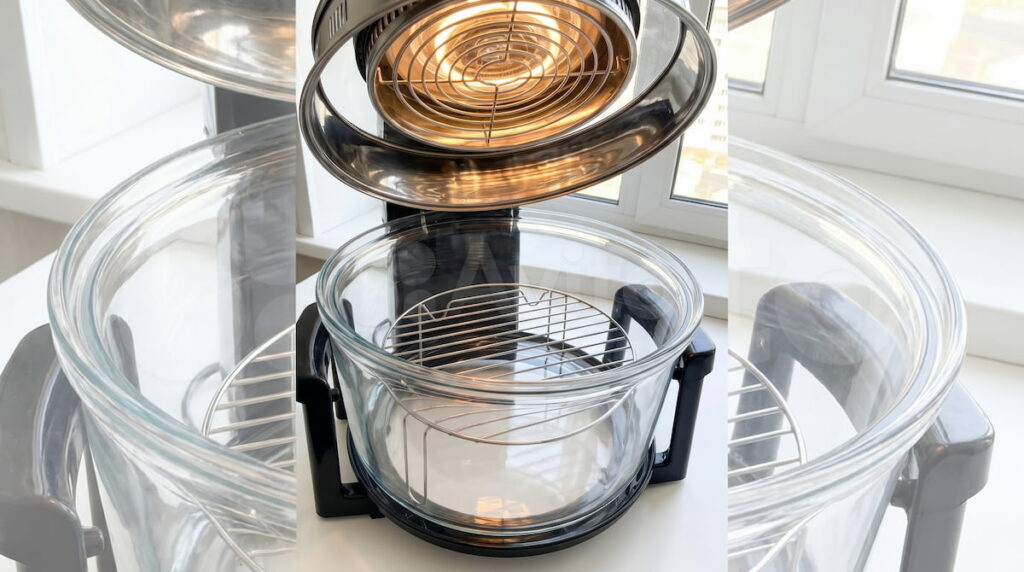
Are glass air fryers non toxic? The glass bowl itself is completely non-toxic — but a complete answer requires looking at every component that contacts your food or the air inside the cooking chamber. The bowl, the rack, the lid, and the heating element all matter, and not every glass air fryer scores perfectly on all four.
I’m Wook, a bus driver and dad of two teenage boys. When I researched glass air fryers as the most thorough non-toxic option, I quickly realized that “glass air fryer” tells you about the bowl but not about everything else. Here’s the complete component-by-component breakdown so your family has the full picture before buying.
Are Glass Air Fryers Non Toxic? Component by Component
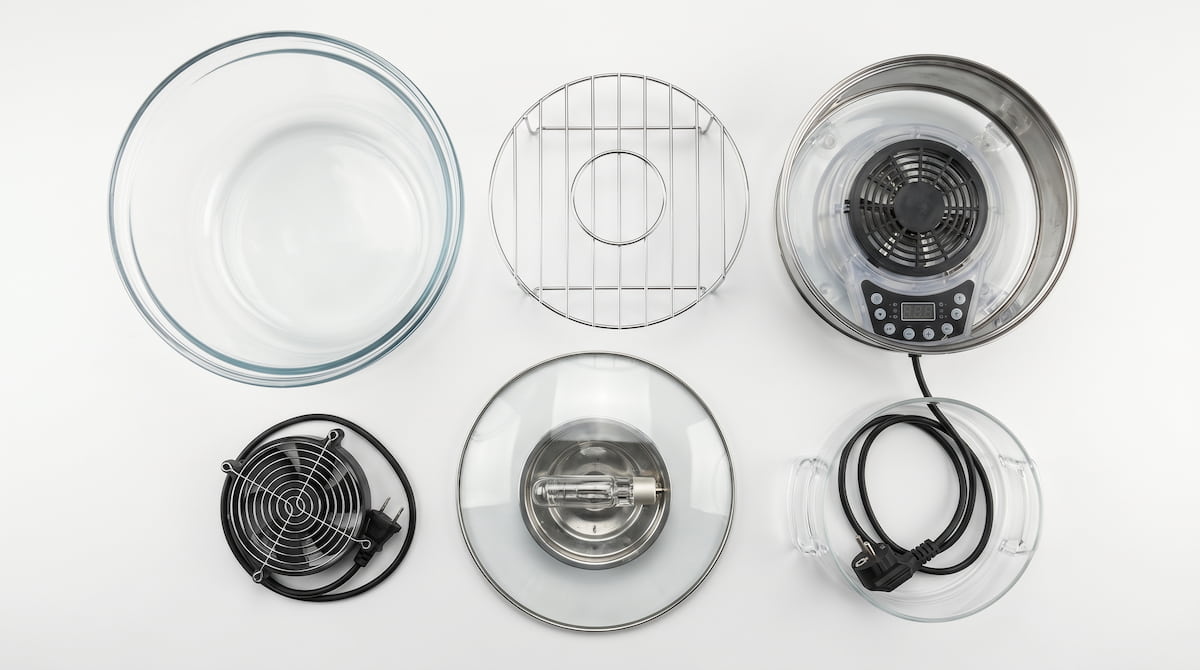
A glass air fryer has four primary components that interact with your food or kitchen air during cooking. Each deserves individual evaluation:
Component 1: The Glass Bowl
This is the primary cooking surface — and it’s the cleanest part of the equation. Quality glass air fryers use borosilicate glass, a compound of silica and boron oxide that is completely chemically inert at any temperature a home air fryer reaches. Borosilicate glass contains no PTFE, no PFAS, no heavy metals, and no coating chemistry of any kind.
The glass bowl is genuinely non-toxic in the fullest sense of the term. It does not react with food, does not release any compounds under heat, and does not degrade with repeated cooking cycles. This is the same material used in laboratory glassware and high-quality cookware precisely because of its chemical stability.
Component 2: The Stainless Steel Rack
The rack that holds food inside the glass bowl is typically stainless steel — food-grade 304 stainless in quality models. Like the glass bowl, stainless steel racks contain no PTFE, no PFAS, and no coating chemistry. The chromium oxide layer that gives stainless steel its corrosion resistance is stable and inert at cooking temperatures.
The key verification step here is confirming the rack is uncoated stainless steel — not a stainless-look rack with a nonstick coating applied for food release. Check the product description specifically for “stainless steel rack” or “chrome rack” language, and look for PTFE-free confirmation that covers all components, not just the bowl.
Component 3: The Lid and Heating Element
This is where some glass air fryers have nuance worth understanding. The lid assembly contains the halogen heating element — a tungsten filament inside a quartz glass tube. Quartz glass is chemically inert and produces no toxic compounds. The halogen bulb itself produces only heat and light — no chemical byproducts.
The lid housing is typically high-temperature plastic or die-cast metal. Quality models use food-safe plastics rated for high-temperature use. The lid does not contact food directly, and the distance between the heating element housing and the food surface means any off-gassing from plastic lid components is minimal — but it’s worth verifying the lid material in the product specifications if chemical sensitivity is a primary concern.
Component 4: The Base Unit
The base unit contains the fan motor, controls, and structural housing — none of which contact food or the interior air during normal cooking. Standard heat-resistant plastic housing is typical and presents no meaningful food safety concern at normal operating distances from food.
Full Non-Toxic Component Scorecard
| Component | Material | Non-Toxic Rating | Food Contact |
|---|---|---|---|
| Glass bowl | Borosilicate glass | ✅ Completely inert | Direct |
| Cooking rack | Stainless steel (304) | ✅ No coating — inert | Direct |
| Heating element | Halogen in quartz glass | ✅ Inert — heat and light only | No contact |
| Lid housing | High-temp plastic or metal | 🟡 Verify material — no direct contact | No contact |
| Base unit | Plastic/metal housing | ✅ No food contact | No contact |
How Glass Air Fryers Compare to Other Non-Toxic Options
Understanding where glass air fryers sit in the full non-toxic landscape helps families choose the right level of solution for their specific situation:
| Air Fryer Type | PFAS-Free | Coating-Free | Fume Risk |
|---|---|---|---|
| Glass bowl | ✅ Yes | ✅ Yes | ✅ Zero |
| Stainless steel | ✅ Yes | ✅ Yes | ✅ Zero |
| Ceramic (PTFE-free) | ✅ Yes | 🟡 Has coating | ✅ Minimal |
| PTFE nonstick | ❌ No | ❌ Has coating | ⚠️ Medium-High |
According to the EPA’s PFAS resource page, the health concerns around nonstick cookware are specifically tied to fluoropolymer chemistry — which glass, stainless steel, and certified ceramic coatings are all completely outside of.
The Big Boss 16Qt: Our Glass Air Fryer Recommendation
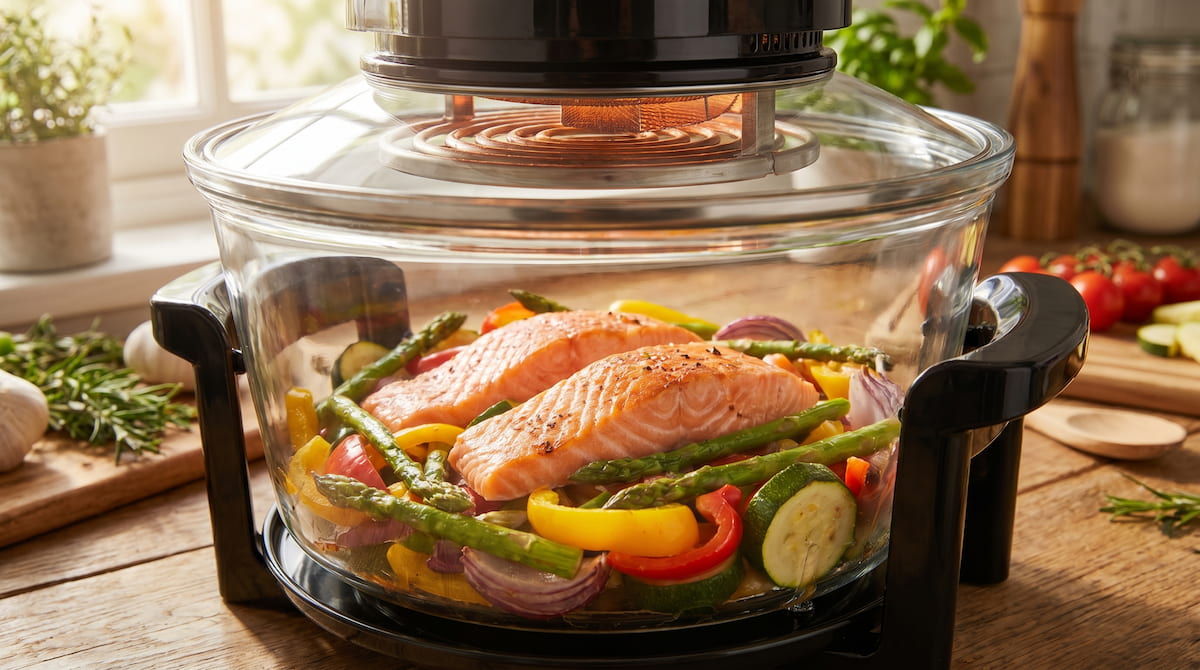
The Big Boss 16Qt Glass Air Fryer uses a borosilicate glass bowl, a stainless steel cooking rack, and a halogen heating element — covering the three most important non-toxic checkpoints comprehensively. It’s the most widely available and best-documented glass air fryer option for US families, and its 16-quart capacity makes it genuinely practical for households of four to six.
Who Benefits Most From a Glass Air Fryer
- ✅ Households with pet birds — glass produces zero PTFE fumes under any condition
- ✅ Families with chemical sensitivities or respiratory concerns
- ✅ Households with young children who want the most complete non-toxic solution
- ✅ Families cooking primarily whole meats, roasts, and large vegetable batches
- ✅ Budget-conscious families wanting a coating-free upgrade at a lower price than stainless oven models
Quick Non-Toxic Verification Checklist for Glass Air Fryers
- ✅ Bowl confirmed as borosilicate glass — not standard soda-lime glass
- ✅ Cooking rack confirmed as stainless steel — not coated chrome
- ✅ Product listing states PTFE-free on all cooking surfaces
- ✅ Heating element confirmed as halogen or infrared in quartz housing
- ⚠️ Lid material not specified — contact manufacturer if chemical sensitivity is a primary concern
- ❌ Any mention of nonstick coating on rack or bowl — not a true glass non-toxic model
If a glass air fryer’s footprint or price point isn’t the right fit for your household, our PFAS-Free Air Fryer Guide covers every verified non-toxic option across ceramic, stainless, and glass formats for 2026. For families considering the ceramic route, our Ninja ceramic basket guide covers the most popular PTFE-free basket option in detail.
Frequently Asked Questions
Is borosilicate glass safe for cooking at high temperatures?
Yes — borosilicate glass is specifically engineered for thermal stability and is used in laboratory equipment, high-quality cookware, and industrial applications that require reliable performance across wide temperature ranges. Air fryer cooking temperatures are well within its safe operating range.
Does the glass bowl in a glass air fryer contain BPA?
BPA (bisphenol A) is a chemical found in certain plastics — not in glass. Borosilicate glass bowls are inherently BPA-free because they contain no plastic compounds of any kind.
Are glass air fryers safe for birds?
Yes — glass air fryers are one of the two safest options for households with pet birds, alongside stainless steel models. Neither surface produces PTFE fumes under any cooking condition. PTFE fumes from nonstick coatings are acutely dangerous to birds even at normal cooking temperatures.
Can you put acidic foods in a glass air fryer?
Yes — borosilicate glass does not react with acidic foods. Tomatoes, citrus-marinated proteins, and vinegar-based dishes are all completely safe to cook in a glass bowl. This is another advantage over some metal surfaces that can react with prolonged acidic food contact.
Is the Big Boss glass air fryer truly non-toxic throughout?
The glass bowl and stainless steel rack — the surfaces that contact your food — are completely non-toxic. The halogen heating element in quartz glass produces no chemical byproducts. The lid housing material is the one component worth verifying if maximum chemical neutrality is a priority for your household.
Next in this cluster: is a glass air fryer actually safer in practice — not just in theory — and what does the real-world cooking and safety experience look like for families who have made the switch? We cover the complete picture in our guide on whether glass air fryers are safer overall.