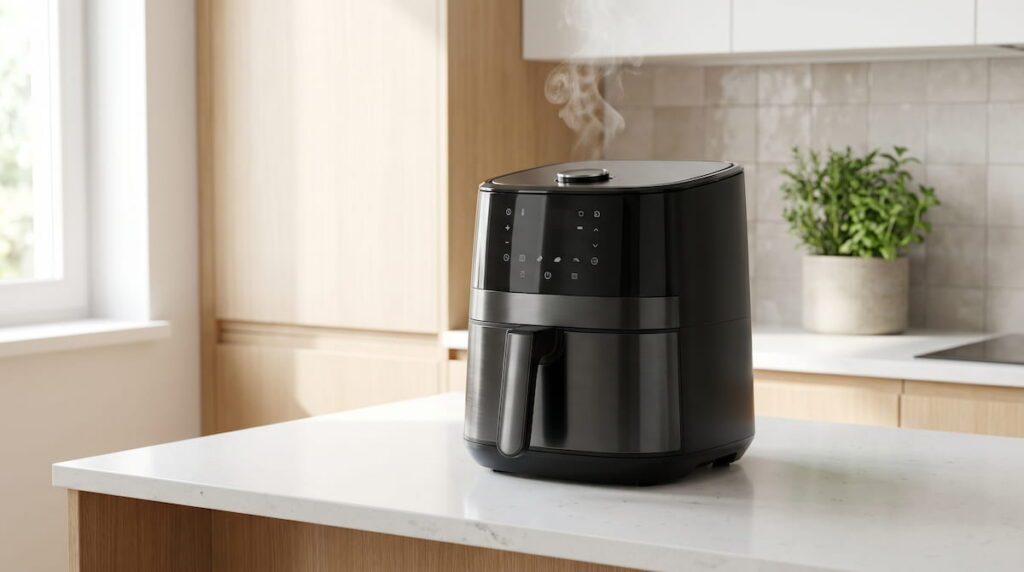
Do air fryers produce carbon monoxide? No — electric air fryers do not produce carbon monoxide under any normal operating condition. But that doesn’t mean the air coming out of your air fryer is completely clean, and understanding the difference matters for every family cooking indoors every day.
I’m Wook, a bus driver and dad of two teenage boys. After our CO detector triggered twice in one month during air fryer use, I spent a lot of time researching exactly what an air fryer actually releases into your kitchen air. Here’s the honest, science-based answer.
Why Air Fryers Cannot Produce Carbon Monoxide
Carbon monoxide is produced by incomplete combustion — a chemical reaction that requires burning a carbon-based fuel like gas, wood, charcoal, or oil in conditions where there isn’t enough oxygen to complete the reaction. Electric air fryers use a resistive heating element powered by electricity. There is no fuel being burned, no combustion reaction, and therefore no pathway for CO production.
This is the same reason electric ovens, toasters, and microwaves don’t produce CO. The risk of carbon monoxide poisoning from an electric cooking appliance is essentially zero under normal use conditions.
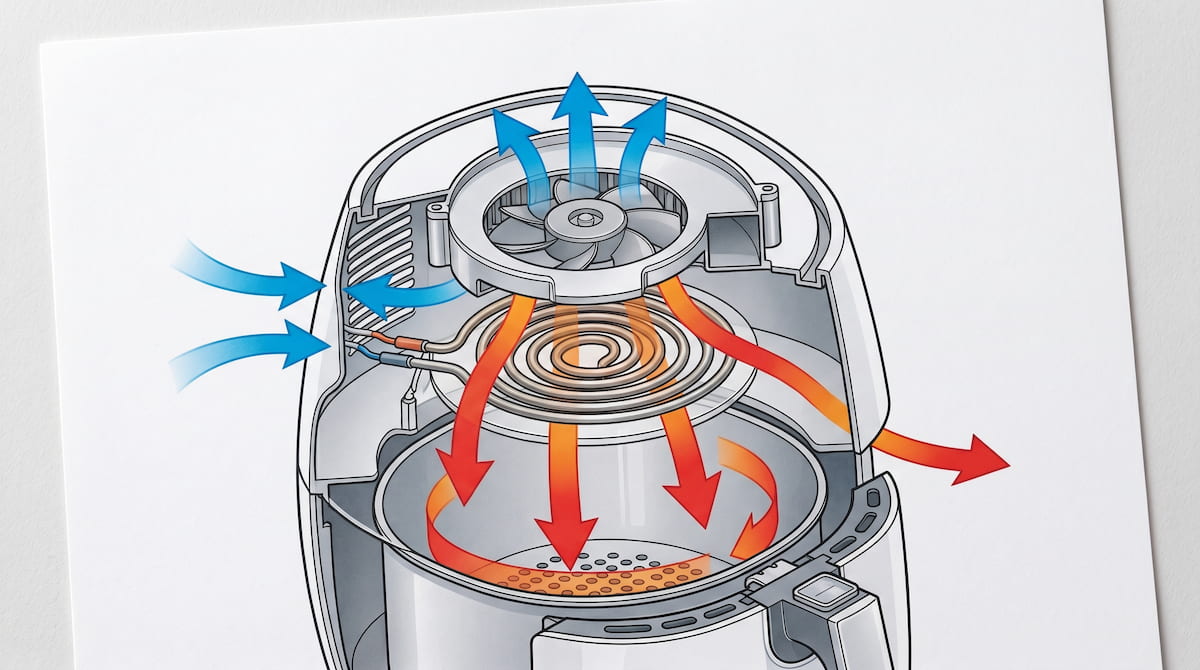
So What Do Air Fryers Actually Release?
While CO isn’t a concern, air fryers do release other airborne compounds worth knowing about — especially for families cooking in smaller kitchens with limited ventilation.
| What’s Released | Source | Risk Level |
|---|---|---|
| Grease smoke particles | Fatty food cooking at high heat | 🟡 Low — ventilate kitchen |
| Acrolein | Overheated cooking oils | ⚠️ Medium — avoid oil overheating |
| Fluoropolymer fumes | Degrading PTFE coating above 500°F | ⚠️ Medium-High — switch to PFAS-free |
| Plastic or chemical smell | New unit burn-off or damaged coating | ⚠️ Inspect basket immediately |
| Steam and water vapor | Moisture in food during cooking | ✅ None — completely harmless |
The most significant concern for daily family cooking isn’t CO — it’s fluoropolymer fumes from degrading PTFE coatings. According to the EPA’s PFAS resource page, certain fluoropolymer breakdown products have raised health concerns with repeated exposure, particularly in enclosed spaces with poor ventilation. For a full breakdown of these compounds, see our guide on what chemicals air fryers release by material type.
What Most People Get Wrong About Air Fryers and CO Detectors
The most common misconception is that if a CO detector goes off during air fryer use, it must be producing carbon monoxide. It isn’t — and understanding why the detector is triggering is more useful than assuming it’s a CO problem.
Modern combination detectors often include sensors for smoke particles and volatile organic compounds alongside the dedicated CO sensor. Fumes from a degrading PTFE coating — not CO — are the most common reason an air fryer triggers these devices. The detector is doing its job correctly; the basket coating is the problem, not the appliance type.
The second misconception is that switching off the air fryer after a detector alarm is enough. If the coating is the source, the issue will recur every time you cook until the basket is replaced. Our guide on what happens when air fryer coating gets scratched explains exactly what a degrading basket releases and when to replace it.
The third misconception is that ventilation alone prevents detector triggers from coating fumes. Ventilation dilutes airborne compounds after they’re released — it doesn’t prevent a degrading coating from releasing them in the first place. The coating material is the root fix; ventilation is a supplement.
What About Burnt Food?
Heavily burnt food in an air fryer can produce small amounts of polycyclic aromatic hydrocarbons (PAHs) and acrylamide — compounds associated with high-heat cooking generally. These are present in any high-heat cooking method, including conventional ovens and grills. They are not carbon monoxide, and the quantities produced in normal air fryer cooking are comparable to other standard cooking methods.
The practical takeaway: burning food is worth avoiding on general cooking quality grounds — the air quality concern is secondary and minor compared to proper ventilation habits.
The Real Indoor Air Quality Risk With Air Fryers
The situation our family dealt with — a CO detector triggering during air fryer use — turned out to be caused by our scratched PTFE-coated basket releasing fumes, not by actual carbon monoxide. Once we switched to the Ninja AF150AMZ with its PTFE-free, PFAS-free ceramic basket, the detector stopped triggering entirely.
This is why coating type matters so much for daily family cooking. A ceramic or stainless steel basket eliminates the fluoropolymer fume variable completely — meaning the only things your air fryer releases are heat, steam, and normal cooking vapor. Our guide on the Ninja ceramic basket covers exactly what PTFE-free means in practice.
Quick Safety Checklist for Clean Indoor Air
✅ Good setup for clean kitchen air:
- Open a window or run the range hood during every cook session
- Use a PTFE-free ceramic or stainless basket to eliminate fume risk
- Keep basket clean — grease residue is the primary smoke source
- Inspect basket monthly for scratches, peeling, or discoloration
⚠️ Investigate immediately if:
- Chemical smell during cooking — stop and inspect basket
- CO or smoke detector triggers repeatedly during air fryer use
- Basket coating shows visible scratches, discoloration, or wear
❌ Stop using and replace if:
- Headache or dizziness during or after cooking sessions
- Coating visibly flaking or peeling
- Detector continues triggering after improving ventilation
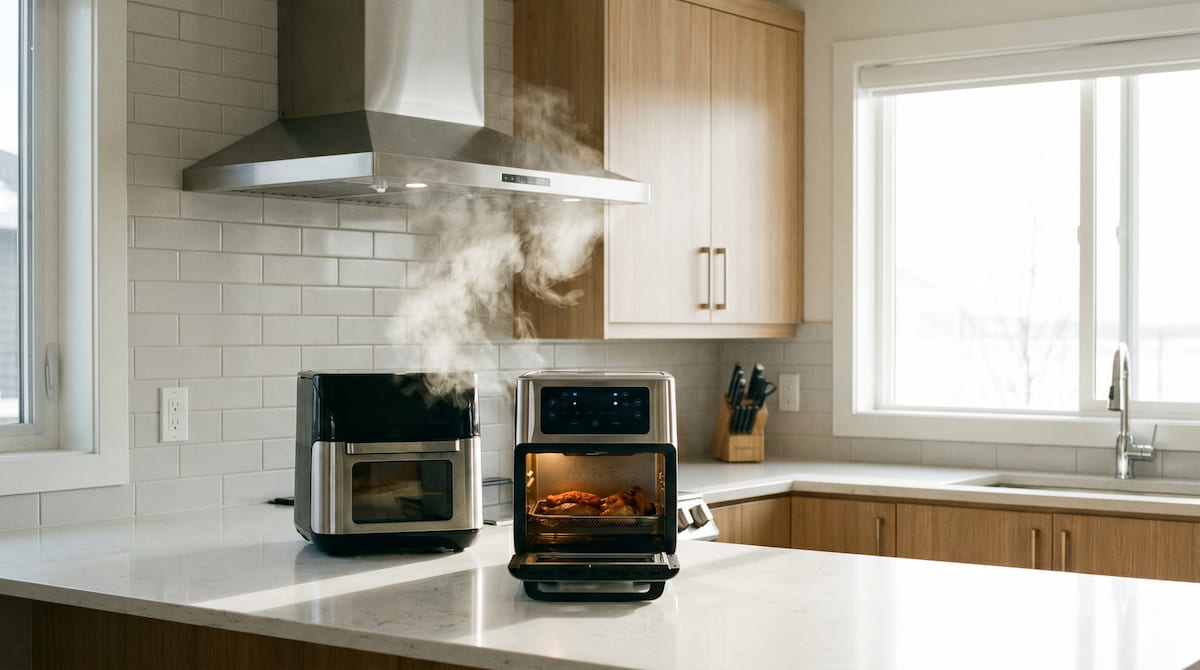
How to Keep Your Kitchen Air Clean While Air Frying
- Run the range hood or open a window — eliminates most indoor air quality concerns from any cooking method
- Use a PFAS-free basket — ceramic or stainless steel removes the coating fume variable entirely
- Don’t preheat empty baskets at high heat — this accelerates coating breakdown faster than cooking food does
- Clean the basket after every use — grease buildup is the main driver of smoke during subsequent sessions
For more on how air fryer fumes affect indoor air quality specifically, see our guide on air fryer VOC emissions by material type and our full air fryer breathing safety guide.
See Ninja AF150AMZ on Amazon →Frequently Asked Questions
Do air fryers produce carbon monoxide?
No. Electric air fryers cannot produce carbon monoxide because they use electric heating elements, not combustion. CO requires burning a carbon-based fuel — a process that doesn’t occur in any electric cooking appliance.
Can an air fryer set off a carbon monoxide alarm?
Yes — but not because it produces CO. Smoke particulates and fumes from degrading PTFE coatings can trigger some combination detector sensors. If this happens repeatedly, inspect your basket coating and improve kitchen ventilation. Switching to a ceramic or stainless basket typically resolves the issue.
What actually triggers CO detectors during air fryer use?
Most commonly: smoke from grease buildup, fumes from a degrading PTFE-coated basket, or a combination detector reacting to VOCs rather than CO specifically. Replacing the basket with a ceramic or stainless option and improving ventilation addresses all three causes.
Is it safe to use an air fryer in a small kitchen?
Yes, with ventilation. Open a window or run a range hood during cooking. In very small enclosed kitchens, a PFAS-free ceramic or stainless basket is particularly important since there’s less air volume to dilute cooking vapors. See our guide on air fryers and carbon monoxide detectors for more on this specific scenario.
Should I be worried about air fryer fumes around my kids?
With a PTFE-free ceramic or stainless basket and basic kitchen ventilation, the fume concern is minimal. The main precaution for families with young children is avoiding PTFE-coated baskets that are scratched, peeling, or being used at very high temperatures regularly.
What’s the difference between air fryer smoke and CO?
Carbon monoxide is an odorless, colorless gas produced by combustion — electric air fryers cannot produce it. Air fryer smoke is visible particulate matter from grease or food burning, with a distinct smell. PTFE fumes are a separate category — often described as chemical or plastic-smelling — that come specifically from degrading nonstick coatings, not from the food or the appliance type itself.
The Bottom Line on Air Fryers and Carbon Monoxide
Electric air fryers do not produce carbon monoxide — full stop. The concern worth paying attention to is fluoropolymer fumes from PTFE-coated baskets, which can trigger detectors and affect indoor air quality in ways that CO doesn’t. Switching to a ceramic or stainless basket, keeping the kitchen ventilated, and maintaining a clean basket resolves the vast majority of air quality concerns associated with daily air fryer use.
For a full comparison of the safest non-toxic models available in 2026, our PFAS-free air fryer guide covers ceramic, stainless, and glass options side by side.